

Overview
Red light therapy devices and tools have so much to offer in the way of health benefits, and for many people it’s worth the investment. Physical therapist Dr. Mike Belkowski uses red light technology in his Montana practice, and explains that “you have something as simple as light, red and near infrared light, that can optimize the health and the functioning of your mitochondria.” Belkowski goes on to say that RLT “can lead to all these amazing benefits from hair health, skin health, athletic performance, sleep, reducing anxiety and depression, heart health, joint health…it goes on and on and on.”
While in the past you could only access these devices by going to a professional like a dermatologist, today there’s a wide range of red light therapy products on the market for at-home use. According to doctor and board-certified anesthesiologist Dr. Azza Halim, red light therapy has existed for some time, but people are only recently becoming aware of it. She explained that “because of social media, TikTok, more people are trying it, getting on that bandwagon.”
Below, we’ve grouped 18 devices by what they’re actually good for – not by price or brand – and pulled out the specs that actually matter, like wavelength, irradiance, coverage, and FDA status, instead of just repeating what’s printed on the box.
Find the Right Device for Your Goal
Quick Picks
![novaa back pad]() Best for Back & Spine ReliefNovaa Back PadGo to Review
Best for Back & Spine ReliefNovaa Back PadGo to Review- At Official Website
![nunawave oral care pro]() Best for Oral HealthNunawave Oral Care ProGo to Review
Best for Oral HealthNunawave Oral Care ProGo to Review- At Official Website
![rlt home total spectrum max]() Best for Full-body RecoveryRLT Home Total Spectrum MAXGo to Review
Best for Full-body RecoveryRLT Home Total Spectrum MAXGo to Review- At Official Website
![platinumled biomax 900]() Best for Muscle Recovery & Skin HealthPlatinumLED Biomax 900Go to Review
Best for Muscle Recovery & Skin HealthPlatinumLED Biomax 900Go to Review- At Official Website
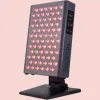
![hooga ultra 360]() Best Compact Quad-Wavelength PanelHooga Ultra 360Go to Review
Best Compact Quad-Wavelength PanelHooga Ultra 360Go to Review- At Official Website
![glokore led mask]() Best Budget LED MaskGlokore LED MaskGo to Review
Best Budget LED MaskGlokore LED MaskGo to Review- At Official Website
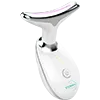
![my derma dream myoglow wand]() Best for Skin FirmnessMy Derma Dream MyoGlow WandGo to Review
Best for Skin FirmnessMy Derma Dream MyoGlow WandGo to Review- At Official Website
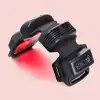
![recharge health flexbeam]() Best Pain Management WrapRecharge Health FlexbeamGo to Review
Best Pain Management WrapRecharge Health FlexbeamGo to Review- At Official Website
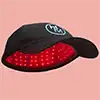
![hairmax powerflex laser cap 202]() Best Light Therapy Cap For Hair LossHairmax PowerFlex Laser Cap 202Go to Review
Best Light Therapy Cap For Hair LossHairmax PowerFlex Laser Cap 202Go to Review- At Official Website

What Is Red Light Therapy?
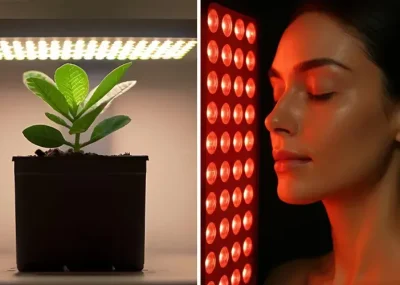
Red light therapy (also called photobiomodulation, or PBM) uses low-level red and near-infrared (NIR) light to stimulate activity inside your cells’ mitochondria – the structures that produce cellular energy. The two wavelength ranges do different jobs. Red light, generally 630–670nm, doesn’t travel very far into the body, so most of what it’s doing happens right at the skin’s surface – that’s the range tied to collagen production and complexion changes. Near-infrared, generally 810–850nm, gets further into tissue, which is why it shows up more in devices built for muscles, joints, and deeper aches.
In a study published in Photomedicine and Laser Therapy, researchers Alexander Wunsch and Karsten Matuschka found that red and infrared light therapy twice a week for 30 weeks significantly boosted collagen production, improved skin texture, and reduced fine lines and wrinkles.
World-renowned dermatologist Dr. Rox Anderson has explained that there is some evidence that yellow, red, or near infrared light therapy has anti-inflammatory benefits for skin, at exposure doses of about 3–10 J/cm² given every other day.
In a study in the Journal of Cutaneous and Aesthetic Surgery, scientists Sanjeewani Fonseka, Kumudu Hasanka Heshani Narankotuwa, and Dilan Dileepa Jayarathne Bandara found that red light therapy successfully treated three patients with seborrheic dermatitis.
Near-infrared light therapy expert Ari Whitten, M.S., author of The Ultimate Guide to Red Light Therapy, notes that for wrinkle reduction and anti-aging purposes, “you will likely notice effects within a few weeks,” and that for a small, targeted device, he specifically recommends one built around a 670nm wavelength, “because 670nm will activate cytochrome c oxidase in the mitochondria more effectively than lower wavelengths like 610nm.”
Does Red Light Therapy Actually Work?
The honest answer is: it depends what you’re using it for. Photobiomodulation is one of the more heavily studied light-based therapies, but the strength of the evidence varies a lot by use case – and most published studies use professional-grade equipment with higher irradiance than most at-home devices can deliver. Here’s how the evidence breaks down:
Strong evidence
- Skin aging and collagen production – supported by controlled trials, including the Wunsch/Matuschka study cited above.
- Superficial wound healing and minor skin conditions – supported by clinical studies including the Fonseka et al. seborrheic dermatitis trial above.
- Short-term relief from minor joint and muscle pain – reasonably well studied, though effect sizes vary by dose and device.
Moderate/emerging evidence
- Post-exercise muscle recovery – plausible mechanism (reduced inflammation, improved circulation), studies are smaller and more mixed.
- Hair regrowth (low-level laser/LED therapy) – FDA-cleared for androgenetic alopecia in several devices, but effect sizes are modest and highly dependent on consistent, long-term use.
Preliminary/anecdotal
- Body contouring/toning claims from multi-modality devices (light plus vibration, heat, or electrical stimulation) – plausible for circulation and skin appearance, but the “sculpting” or fat-loss framing used in some marketing outpaces what light therapy alone is shown to do.
- Mood, sleep, and “brain health” claims – plausible based on mitochondrial mechanisms, but human evidence at consumer-device doses is limited.
How We Picked
We evaluated every device on this list against the same five criteria:
- Trusted manufacturers. All of our selections come from companies with a track record of making safe, quality red and infrared light therapy tools.
- Science and evidence. We prioritized devices that publish real wavelength, irradiance, and dose specs, and that fall within the ranges supported by published photobiomodulation research (roughly 630–670nm for red, 810–850nm for near-infrared).
- FDA status, correctly labeled. We note whether a device is FDA-cleared (reviewed for safety and efficacy for a specific use) or FDA-registered (the manufacturer is registered with the FDA, which is a much lower bar and doesn’t mean the device’s efficacy claims were reviewed). These get used interchangeably in marketing, so we call out the difference where it matters.
- Cost-benefit. We selected a range of devices at different prices, and prioritized the ones offering the best value for their power output and coverage.
- Real-world feedback. Where available, we cross-checked manufacturer claims against ratings on independent platforms (Amazon, Trustpilot, Google) rather than relying on testimonials alone.
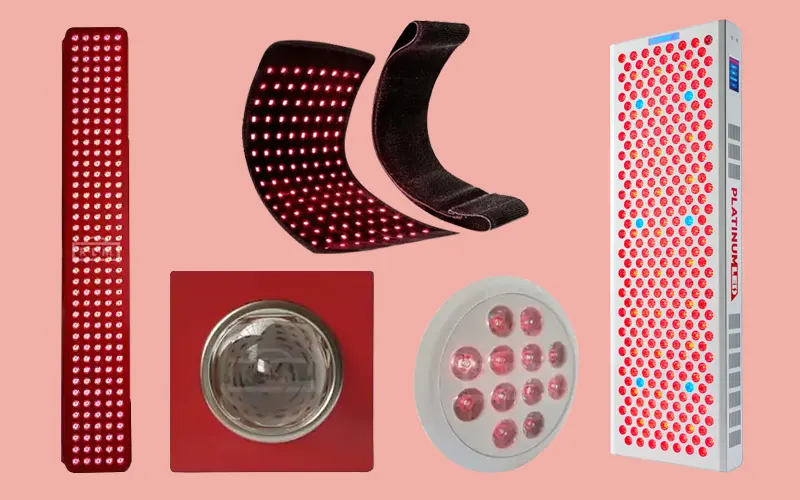
Device Types: Which Form Fits Your Goal?
Full-body and large panels
These deliver the highest coverage and, generally, the strongest output – a good fit if your goal is whole-body recovery, chronic pain relief, or treating multiple areas without repositioning constantly.
Face masks and facial tools
Designed for targeted skin support, these shine red (and often blue or infrared) light directly onto the face to address fine lines, acne, and overall complexion.
Handheld and spot devices
Smaller units for localized pain points or small treatment areas. More affordable and portable, but less efficient for larger body regions.
Wraps, pads, and belts
Flexible designs that contour around joints, the back, or the abdomen – a strong fit for arthritis, tendonitis, or post-workout soreness.
Caps and hair patches
Designed specifically for scalp coverage, using low-level laser or LED light for androgenetic alopecia support.
What to Look For When Choosing a Red Light Device
- Wavelength. Look for red light in the 630–670nm range and near-infrared in the 810–850nm range. A device offering both gives you the most flexibility.
- Irradiance (mW/cm²), not just LED count or wattage. Irradiance tells you how much light energy actually reaches your skin at a given distance – it’s the number that predicts results. If a listing doesn’t publish irradiance at a stated distance, treat that as a red flag.
- Treatment/session distance. Many devices are only effective within a specific distance range. Using a device too far away can mean you’re not getting a therapeutic dose even with the timer running the full session.
- Coverage area. Match the panel or pad size to what you’re actually treating.
- EMF output. If low EMF is a priority for you, see our best low-EMF red light therapy devices roundup for options specifically tested on this.
- FDA clearance vs. FDA registration. “FDA-cleared” means the device went through a review process for a specific therapeutic claim. “FDA-registered” (or “Class II medical device”) often just means the manufacturer is registered with the FDA – it says less about efficacy. We call out which applies to each device below.
- Warranty and return window. A warranty longer than 30 days and a real return policy are both signs a manufacturer stands behind its output claims.
Affordable vs. Premium: What You Actually Gain as You Spend More
Under $300 (handhelds, small masks, mini panels)
Good for spot-treating a single area or testing whether RLT is worth it before committing to a bigger device.
$300–$800 (mid-size panels, wraps, premium masks)
This is where most people land – meaningfully better coverage and irradiance, a real timer, multiple modes, and a longer warranty.
$800+ (full-body panels, medical-grade systems)
Best output consistency, broadest coverage, and features like app control and programmable timers.
How to Use a Red Light Device Correctly
- Frequency and duration. Most protocols call for 10–20 minutes per area, 3–5 times a week.
- Distance. Follow the manufacturer’s recommended distance – this is where the device’s published irradiance number actually applies.
- Skin prep. Start with clean, dry skin and remove photosensitizing topicals (like retinoids) beforehand.
- Eye protection. Use the protective eyewear that comes with the device, especially for close-range facial sessions.
- Track progress. Photos in consistent lighting, or a simple log, make gradual change much easier to notice.
- Timeline. Budget at least 4–8 weeks of consistent use before judging whether a device is working for you.
Safety Essentials
- Protect your eyes from direct exposure, especially during close-range facial treatments.
- Check your medications. If you take photosensitizing drugs or have a photosensitive condition, talk to your doctor before starting.
- Be cautious around active cancer treatment. Avoid using red light directly over areas of active cancer unless cleared by your oncologist.
- Pregnancy and breastfeeding. Research is limited; check with your provider first.
- Darker skin tones can be more sensitive to visible light spectra in some cases – start with shorter sessions and monitor your skin’s response.
- Don’t fall asleep under a device. Most reported burns or irritation come from extended, unsupervised sessions.
Can You Use HSA/FSA Funds on Red Light Therapy?
Some red light therapy devices qualify as HSA/FSA-eligible expenses when used to address a diagnosed medical condition, typically with a letter of medical necessity from a licensed provider. Eligibility varies by device and by plan – see our full red light therapy HSA/FSA guide for which devices commonly qualify and how to get an LMN.
The Best Red Light Therapy Devices of 2026
Ranked and grouped by what they’re actually best for. Every entry lists wavelength, irradiance (where the manufacturer publishes it), coverage, session time, and FDA status.
Our Pick:
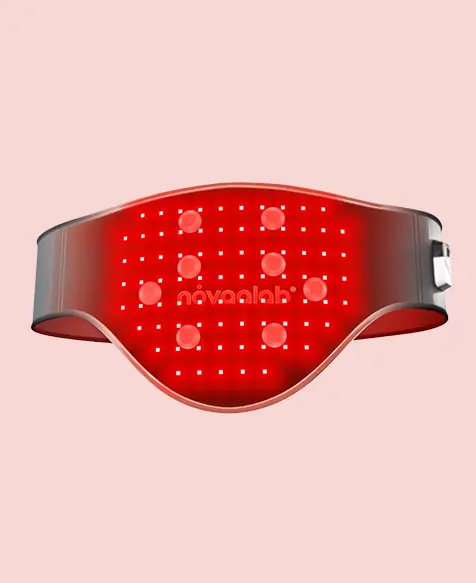
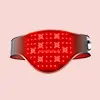
1. Novaa Back Pad
Best For: Lower-back pain, muscle tension, a relaxing daily routine
Device Type: Wearable wrap/pad
Price: $369.00
Features: Deep-Tissue Penetration, Triple-Action Relief, CE and RoHS certified, 60-day risk-free trial, warranty extendable to 3 years, HSA/FSA eligible

Pros & Cons
Pros
- Combines light, heat, and vibration for a more complete relief experience
- Cordless and lightweight
- Easy to use consistently
Cons
- Purpose-built for the lower back rather than full-body use
More to Know
Best for Oral Health
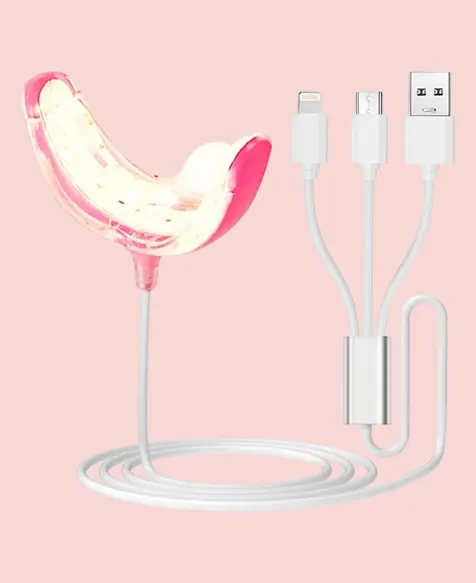
2. Nunawave Oral Care Pro
Best For: Gum health, oral bacteria reduction
Device Type: Intraoral LED mouthguard
Price: $79.95
Features: Combined red and blue light therapy, Adjustable Intensity Levels, Multi-Mode Functionality, Eco-Friendly Materials, Rechargeable, USB-compatible design
Pros & Cons
Pros
- Fills an oral-health use case most red light roundups skip entirely
- Combines red and blue light for a dual mechanism (healing + antibacterial)
- Mouthguard format – dual protection for bruxism patients with concurrent gum disease
Cons
- May take time to adjust to wearing a mouthguard, especially for first-time users
- Specific studies on this device (vs. general photobiomodulation research) are limited
More to Know
Best Full-Body Panels
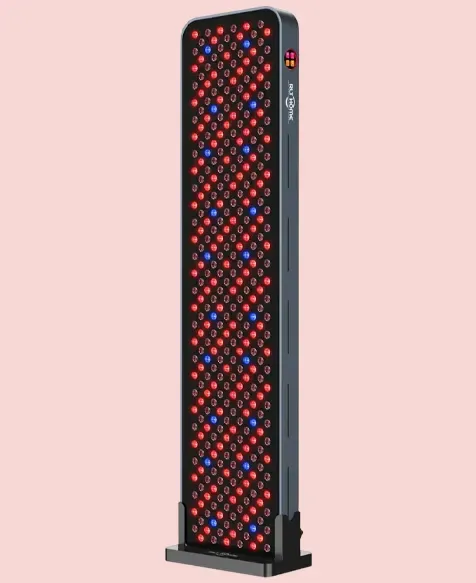
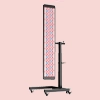
3. RLT Home Total Spectrum MAX
Best For: Full-body recovery, sleep support, deep-tissue penetration
Device Type: Full-body panel
Price: $1,595.00
Features: FDA-registered (general wellness), 3-year warranty, 60-day risk-free trial, HSA/FSA eligible, CE & RoHS, widest published wavelength range of any panel in this guide
Pros & Cons
Pros
- Widest wavelength spread of any panel here
- Strong irradiance for a full-body unit
- HSA/FSA eligible
Cons
- At roughly 31 lbs, it needs a dedicated spot rather than being easy to move around
More to Know
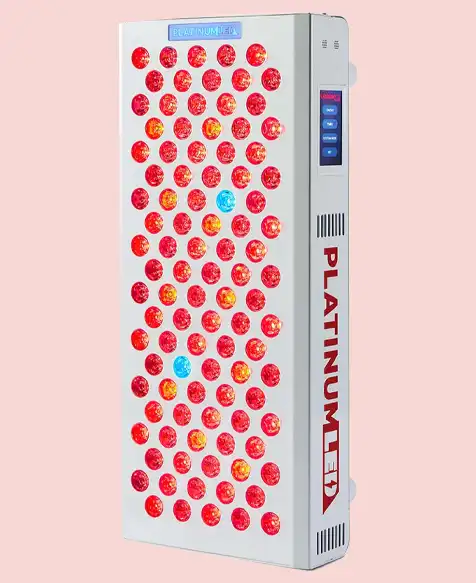
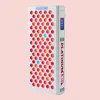
4. PlatinumLED Biomax 900
Best For: Full-body pain and inflammation, mood, energy
Device Type: Full-body panel
Price: $1,299
Features: FDA Class II medical device, zero-EMF emissions, 3-year warranty, 60-day satisfaction guarantee, touchscreen remote with total control system, ETL/UL, CE and ROHS certified
Pros & Cons
Pros
- Zero EMF emissions
- Touchscreen remote
- Strong wavelength range for full-body use
Cons
- Online-only purchasing
- Premium price reflects the output tier
More to Know
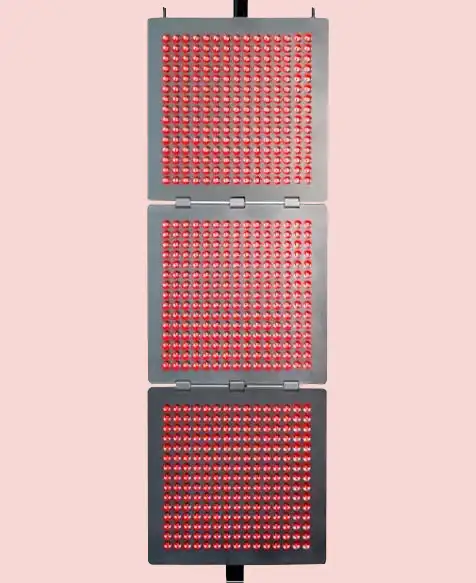
5. Truelight Energy Trism
Best For: Skin health, muscle healing and recovery
Device Type: 3-panel modular full-body set
Price: $850.55
Features: Zero-EMF, hand-held remote, steady or pulsating modes, CE (Low Voltage and EMC), RoHS, 60-day money-back guarantee & 1-year warranty
Pros & Cons
Pros
- Reasonable price for a full-body panel set
- Lightweight and portable
- Zero EMF
Cons
- High demand can mean stock issues
- Results vary by individual as with all RLT devices
More to Know
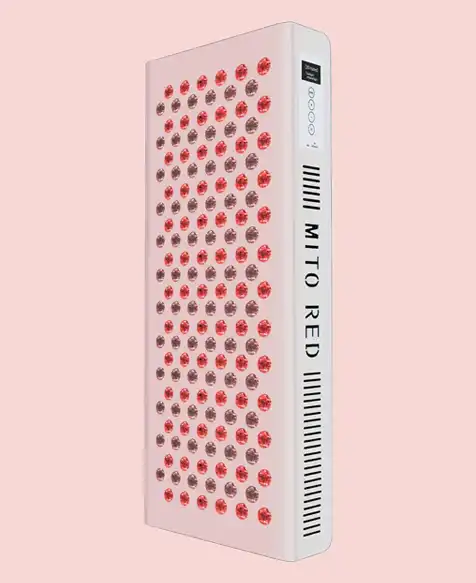
6. Mito Red Light MitoPRO 750
Best For: Full-body recovery, muscle support, general wellness
Device Type: Modular panel
Price: $749.00
Features: App compatibility, touchscreen interface, BSCI certified, ISO 9001/14001, ETL certified, FDA Class II registered, 3-year warranty, 60-day money-back guarantee
Pros & Cons
Pros
- Widest published wavelength range in this list
- Modular sizing
- App control
Cons
- Full-body coverage requires the larger (and pricier) models in the lineup
More to Know
Best Targeted & Portable Panels
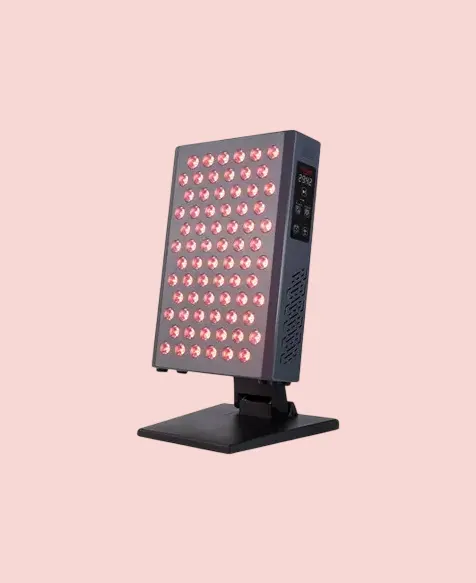
7. Hooga Ultra 360
Best For: Face, upper body, and joint-level skin rejuvenation
Device Type: Quad-chip tabletop panel
Price: $399.00
Features: Touchscreen controls, flicker-free output, dual cooling fans, 50,000+ hour LED lifespan, 3-year warranty, 60-day returns,
Pros & Cons
Pros
- Genuinely high irradiance for its size
- Four-wavelength blend from every point on the panel
- Expandable with other Hooga Ultra units
Cons
- Smaller coverage than a full-body panel by design
- Best suited to targeted rather than whole-body sessions
More to Know
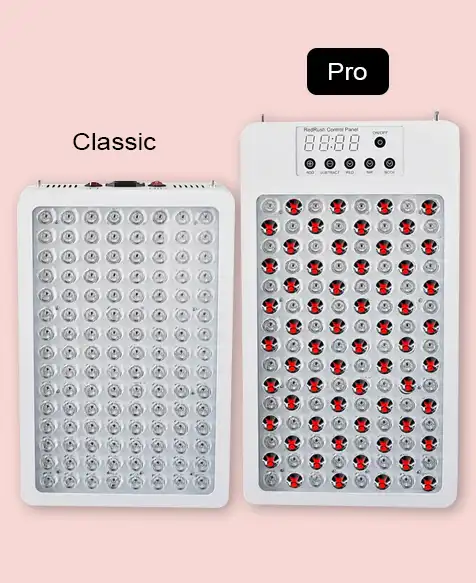
8. Redrush 400 Pulse
Best For: Pain relief and skin health
Device Type: Portable panel
Price: $529
Features: FDA Class II registered medical device, 360-watt power output, 60-day trial period, 2 Year Warranty
Pros & Cons
Pros
- FDA Class II registered
- Solid power output for a portable panel
Cons
- Not a full-body solution; targeted-treatment format
More to Know
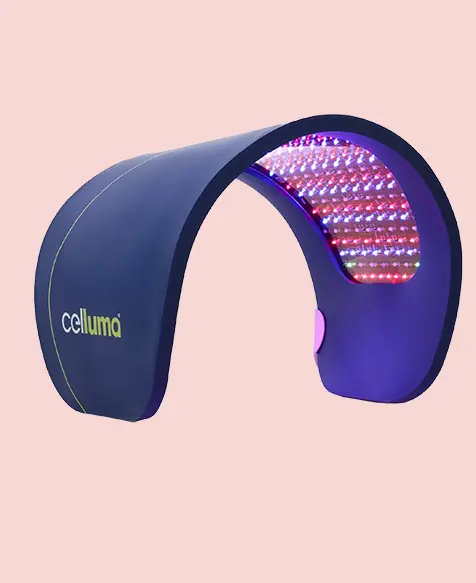
9. Celluma PRO
Best For: Acne, wrinkles, pain management
Device Type: Flexible, hands-free LED panel
Price: ~$1,795
Features: FDA-cleared for aging skin, pain management, and acne, 3 treatment modes, 2-year warranty; Rechargeable
Pros & Cons
Pros
- Flexible, hands-free design that works over curved or irregular areas
- Established clinical-grade brand
- 2-year warranty
Cons
- 3 wavelengths only – no amber, yellow, or green modes
- No returns accepted on used products
More to Know
Best for Face & Anti-Aging

10. Glokore LED Mask
Best For: Budget-friendly, multi-concern facial skin care
Device Type: Wireless face mask
Price: ~$109.99
Features: 30-day money-back guarantee, 1-year warranty, Wireless and adjustable fit, 7 Colour Modes
Pros & Cons
Pros
- Low price point relative to the mask category
- Wireless and adjustable fit
- Straightforward 30-day guarantee
Cons
- Independently verified specs (irradiance, exact wavelengths) are limited
- Some reported inconsistency in build quality per user feedback
More to Know
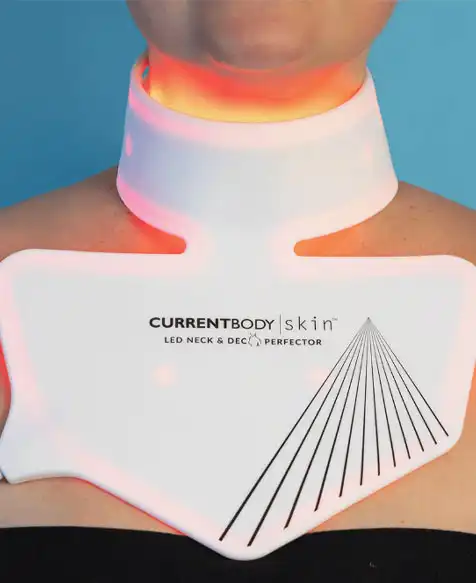
11. CurrentBody Skin LED Neck and Dec Perfector
Best For: Anti-aging for the neck and décolletage
Device Type: Portable, hands-free targeted device
Price: $509.99
Features: Clinically tested, 2-year warranty, 30-day returns
Pros & Cons
Pros
- Purpose-built for an area most masks skip
- Hands-free design
- Clinically tested claims
Cons
- Treatment is limited to neck/décolletage only
- Price is high for the coverage area
More to Know
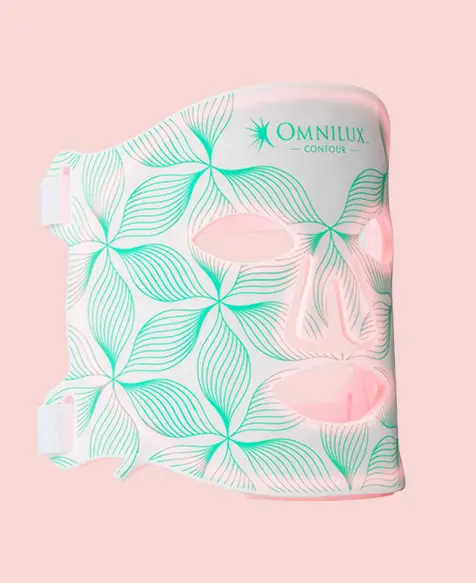
12. Omnilux Contour Face
Best For: Fine lines, wrinkles, overall skin rejuvenation
Device Type: Full-face LED mask
Price: ~$396
Features: FDA-cleared, most clinically studied consumer mask brand in this guide, 40+ Clinical Studies, FDA-Cleared, CE, TGA, Close-Contact Delivery, 10-Minute Protocol
Pros & Cons
Pros
- Strongest clinical-research backing of any mask on this list
- FDA-cleared
- Short 10-minute sessions
Cons
- Premium price point relative to mask-format competitors
- Face-only coverage
More to Know
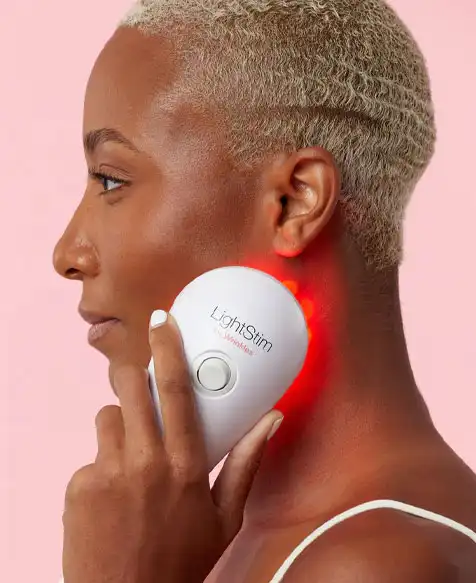
13. LightStim Elipsa
Best For: Combined fine lines and acne, general skin health
Device Type: Full-face LED mask
Price: ~$2,495
Features: FDA-cleared, MultiWave technology (4 wavelengths), two dedicated treatment modes for acne and wrinkles
Pros & Cons
Pros
- Two dedicated treatment modes
- Highest LED density in the mask category
- FDA-cleared
Cons
- The most expensive mask on this list by a wide margin
More to Know
Best for Body Toning

14. My Derma Dream MyoGlow Wand
Best For: Arm, neck, and general skin firmness/tone
Device Type: Handheld, cordless, multi-technology device
Price: $79.00
Features: Combines LED light therapy with electroporation, thermal warmth, and sonic massage
Pros & Cons
Pros
- Combines four treatment modalities in one cordless device
- Easy to move across arms/neck
- Non-invasive alternative to in-office contouring treatments
Cons
- LED-specific dosing isn’t independently published
- “Sculpting” framing in marketing outpaces what’s proven for light therapy alone – treat results expectations conservatively
More to Know
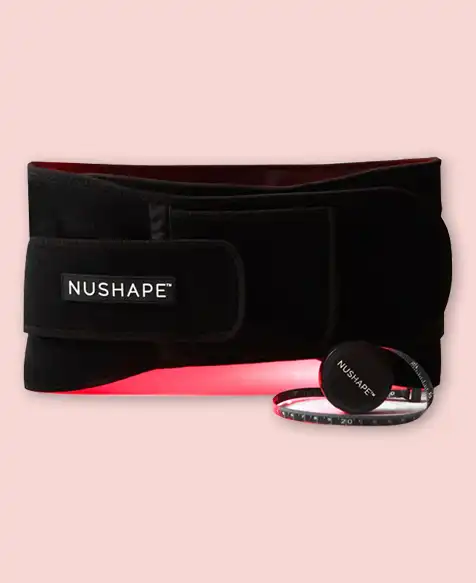
15. Nushape Lipo Wrap
Best For: Body sculpting, cellulite reduction, and muscle recovery
Device Type: Wrap
Price: $499
Features: Dual 635nm/850nm wavelength technology, removable and washable LED panel, 51″ neoprene wrap with optional extender straps, money-back guarantee
Pros & Cons
Pros
- Uses a wavelength combination (635nm + 850nm) with real published research behind it for circumference reduction
- Removable, washable LED panel and a 51″ length with extender straps for a range of body sizes
- Backed by a money-back guarantee
Cons
- Cited studies back the underlying wavelength technology, not the Nushape wrap specifically – treat “inches lost” figures as what’s plausible for the technology, not a guarantee for this product
- Results build gradually and depend on consistent use alongside diet and exercise, not the wrap alone
More to Know
Best for Pain & Recovery
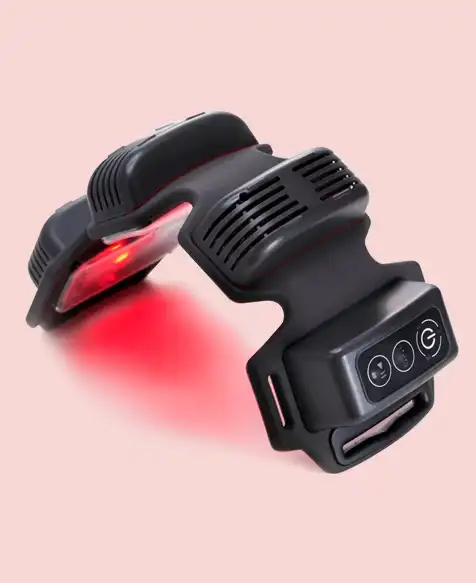
16. Recharge Health Flexbeam
Best For: Pain management, exercise recovery
Device Type: Wearable belt/pad
Price: $499
Features: Multiple treatment modes, wearable design built for use while moving, research-backed wavelength combination
Pros & Cons
Pros
- Genuinely portable/wearable
- Multiple treatment modes
- Research-backed wavelength combination
Cons
- Consistency of use matters more with a wearable than a stationary panel
More to Know
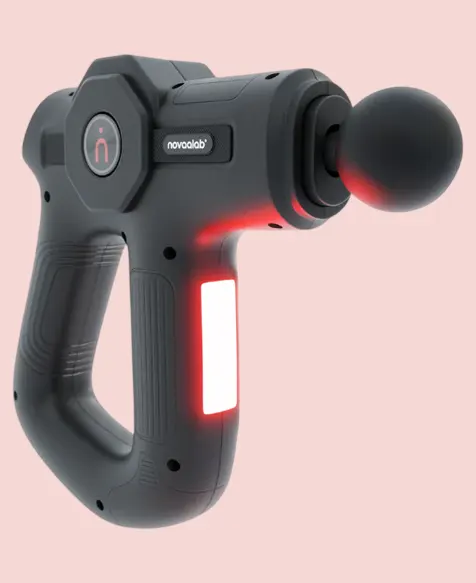
17. Novaa Pulse R
Best For: Targeted muscle relief and faster workout recovery
Device Type: Handheld percussion massager with integrated red light therapy
Price: $319.20
Features: Dual PulseLight® technology (percussion + red light in one device), 30 adjustable speed levels, 6 interchangeable massage heads, CE and RoHS certified, 60-day guarantee
Pros & Cons
Pros
- Combines percussion therapy with red light for deeper, more complete recovery
- 64 clinical-grade LEDs with up to 132 mW/cm² irradiance
- 30 customizable speed levels and 6 interchangeable heads for precision targeting
- Lightweight (2 lbs) and whisper-quiet motor
Cons
- Mainly sold through the official website, so shopping around isn’t really an option
- Built for targeted muscle groups rather than full-body coverage – not a substitute for a full-body panel
More to Know
Best for Hair Regrowth
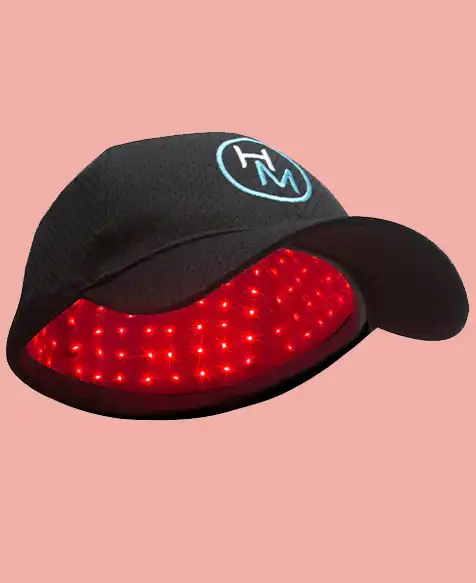
18. Hairmax PowerFlex Laser Cap 202
Best For: Hair regrowth
Device Type: Cap (low-level laser therapy)
Price: $1,599
Features: FDA-cleared for hair regrowth, hands-free wireless design, built for both men and women
Pros & Cons
Pros
- FDA clearance specific to hair regrowth
- Wireless/hands-free design
- Designed for both men and women
Cons
- High upfront cost
- Results require long-term consistency and patience
More to Know
Frequently Asked Questions
Q: What is the most effective red light therapy device?
Q: How do I know which red light therapy device to buy?
Q: Are at-home red light therapy devices worth it?
Q: Can I use my HSA or FSA card for red light therapy?
Q: Is red light therapy safe?
Q: How long does it take to see results from red light therapy?
Quick Comparison Table
| Device | Category | Wavelengths | Coverage | Session | FDA Status | Price |
|---|---|---|---|---|---|---|
| Novaa Back Pad | Pain / wrap | 660nm / 850nm | 50″x7″ pad | ~20 min | — | $369.00 |
| Nunawave Oral Care Pro | Oral care | Red + NIR | Mouth | 20 min | — | $79.95 |
| RLT Home Total Spectrum MAX | Full-body | 7 (480–1064nm) | 49.2″x11.8″ | 10–20 min | FDA-registered | $1,595.00 |
| PlatinumLED Biomax 900 | Full-body | 6, R+/NIR+ | Full body | 30 min | FDA Class II | $1,299 |
| Truelight Energy Trism | Full-body | 4 colors incl. NIR | 3-panel set | 20 min | — | $850.55 |
| MitoPRO 750 | Full-body | 6 (590–850nm) | Upper/lower body | 10–20 min | FDA Class II reg. | $749.00 |
| Hooga Ultra 360 | Targeted panel | 4 (630–850nm) | 31″x27″ @18″ | Adjustable | FDA-registered | $399.00 |
| Redrush 400 Pulse | Targeted panel | Red + NIR | Portable | 5–10 min | FDA Class II reg. | $529 |
| Celluma PRO | Flexible panel | Blue/red/NIR | Flexible, any body part | Up to 30 min | FDA-cleared | By request |
| Glokore LED Mask | Face mask | Multi-color | Full face | 10–20 min | — | $109.99 |
| CurrentBody Skin Neck & Dec Perfector | Targeted (neck) | 6 wavelengths | Neck/décolletage | 10 min | FDA-cleared | $509.99 |
| Omnilux Contour Face | Face mask | Red + NIR | Full face | 10 min | FDA-cleared | $396 |
| LightStim Elipsa | Face mask | Blue/amber/red | Full face | 12–16 min | FDA-cleared | ~$2,495 |
| MDD MyoGlow Wand | Body toning | Red/blue/amber | Arms/neck | Short daily | — | $79.00 |
| Nushape Lipo Wrap | Body toning | 635nm / 850nm | 51″ wrap | 15–30 min | — | $499 |
| Flexbeam | Wearable | 660nm / 850nm | Targeted | 10–20 min | FDA Class II | $499 |
| Novaa Pulse R | Percussion + light | 630nm / 660nm | Targeted | Varies | — | $319.20 |
| Hairmax Laser Cap | Hair cap | Laser (hair-specific) | Full scalp | 15–30 min | FDA-cleared | $1,599 |
Advertisement

*All individuals are unique. Your results can and will vary.
Conclusion
Science and research demonstrate real benefits from red and infrared light therapy – for reducing pain and inflammation, supporting skin health, and aiding wound healing, among other evidence-backed uses. What’s changed in the last few years isn’t the science so much as access: red light therapy devices are now available for at-home use across almost every price point and treatment goal.
Use the goal-based sections above to match a device to what you’re actually trying to treat, check the specs that matter (wavelength, irradiance, coverage), and set a realistic timeline – most people need several weeks of consistent use before judging results.