

Sunburn will make your skin hot, irritated and prone to sensitivity. Excessive amounts of ultraviolet (UV) radiation can cause damage to the skin and evoke an inflammatory reaction, a response to injury. If you already have a red light mask or panel, you may be asking yourself if it can help.
Researchers are studying red light therapy, also called photobiomodulation (PBM), for different skin conditions and types of wounds. But it is not a proven first-line treatment for sunburn. There is not much direct evidence of the use of consumer products on newly sunburned skin.
Start with gentle care: cool the skin, drink water, and protect the area from further sun exposure. These are not actions that can be taken by a light device. It can be useful to know what the research has included and what it has not been able to answer before attempting to try one.
What Is Red Light Therapy?
Red light therapy uses red or near-infrared light to influence how cells respond. Researchers call this approach photobiomodulation. Home devices include face masks, panels, and handheld lights, while clinical studies may use specialized lasers.
| Feature | What it means | Red light | Common devices use wavelengths around 630–660 nanometers (nm), which you can see as red light. |
|---|---|
| Near-infrared light | Common devices use wavelengths around 810–850 nm, beyond what your eyes can see. |
| Difference from UV | Red and near-infrared light occupy different parts of the light spectrum from the UV rays that cause sunburn. |
| Difference from heat treatments | PBM aims to influence cells through light rather than deliberately heating tissue. Some devices still feel warm during use. |
The wavelength tells you which type of light a device produces. It does not tell you whether that device suits damaged skin. How strong the light is, how much it reaches the skin, and the treatment settings also matter. A familiar wavelength on a label does not prove a sunburn benefit.
Can Red Light Therapy Help Sunburn?
Research gives scientists reasons to investigate this question, but it does not yet give consumers a proven treatment for fresh sunburn. The type of injury and equipment matter when interpreting the findings.
What Does the Research Say?
A review of light therapy in skin discusses inflammation, tissue repair, burns, scars, and other skin concerns. These subjects involve different injuries and stages of recovery. Treating a surgical wound or an older scar does not answer whether a home panel helps ordinary sunburn.
Findings also vary. A systematic review of burn-wound research included 51 studies involving animals. Its combined analysis of four studies found no statistically significant improvement in wound shrinkage or collagen buildup. The authors called for more consistent research and human trials.
Small study groups, different wavelengths, and different amounts of light make comparisons difficult. Medical lasers and closely controlled treatment plans also differ from consumer masks and panels. These limits matter especially when the question concerns recently UV-damaged skin.
Can Red Light Therapy Reduce Sunburn Redness and Inflammation?
Redness and tenderness reflect the skin’s response to UV injury. Researchers have investigated how PBM affects inflammatory responses and tissue recovery, but those findings do not establish that a consumer device reduces acute sunburn redness.
Broader research on red light therapy for skin covers concerns beyond sunburn. Evidence for one concern cannot automatically support another. Readers should not expect a device to quickly remove redness, stop peeling, or prevent the damage that caused the burn.
Can Red Light Therapy Help With Sunburn Pain or Healing?
A small randomized trial involving second-degree burns compared standard care plus a specialized near-infrared laser with standard care plus a sham treatment. Among 24 patients, the laser group had less pain and faster wound healing.
That finding deserves further study, but the trial did not test a home mask on uncomplicated sunburn. Clinicians treated different injuries with specific equipment alongside standard burn care. Consumers should not copy that treatment plan or replace wound care with a device. The findings do not establish a proven wavelength, dose, distance, or session length for home sunburn treatment.
Should You Use Red Light Therapy on Fresh Sunburn?
Fresh sunburn calls for gentle care first. If you want to use a light device while your skin remains inflamed, speak to a dermatologist before starting.
Is Red Light Therapy Safe for Sunburned Skin?
- General safety has limits: Studies on other skin concerns do not automatically establish safety on fresh sunburn. The American Academy of Dermatology notes that red light therapy can cause temporary pain or skin irritation.
- Skin responses vary: Device strength, exposure length, skin sensitivity, and skin tone can affect the response. Watch for discomfort, warmth, or increased redness. The Academy also cautions that visible light can contribute to dark spots, particularly in darker skin tones.
- Damaged skin needs medical guidance: Avoid experimenting on severely inflamed, blistered, or broken skin. Seek medical advice for significant symptoms. Speak to a healthcare professional before device use if you are pregnant, have a health condition, or take medication that increases light sensitivity. Follow the manufacturer’s instructions and eye-safety guidance.
The American Academy of Dermatology notes that red light devices can cause temporary pain or skin irritation. People with darker skin tones may also face a greater risk of dark spots from visible light.
Can Red Light Therapy Make Sunburn Worse?
- A device may add irritation: Red light differs from UV light, but excessive exposure, warmth, or unsuitable settings could aggravate sensitive skin. This possibility does not mean every device will worsen every sunburn.
- Stop if discomfort increases: Do not continue through burning sensations or worsening redness. Because researchers have not established a home treatment for fresh sunburn, testing different settings adds uncertainty when the skin already needs gentle care.
What About Near-Infrared Light?
- Deeper does not mean better for sunburn: Near-infrared light is invisible and generally reaches deeper into tissue than visible red light. That difference does not establish better results for a fresh UV injury.
- It does not establish protection from lasting damage: Current evidence does not justify claims that a home near-infrared device reverses UV damage or prevents skin cancer. A change in soreness or redness would not prove either outcome.
What Should You Do Instead After Getting Sunburned?
Start caring for sunburn as soon as you notice it. Leave the sun and move somewhere cool, preferably indoors. Established self-care focuses on easing discomfort and avoiding further injury.
Cool the Skin
Take a cool shower or bath, or gently hold a cool, damp cloth against the area. Avoid placing ice directly on your skin. After washing, pat your skin dry with a soft towel instead of rubbing it. Keep the pressure light if the area feels tender.
Moisturize Gently
Apply a gentle moisturizer while your skin still feels slightly damp. A product with aloe vera may feel comfortable, but stop using anything that stings or adds irritation. Choose a fragrance-free option and avoid scrubs or exfoliating products while your skin recovers.
Leave blisters intact and let peeling skin come away naturally. Picking or pulling can cause further injury.
Stay Hydrated and Avoid Further Sun Exposure
Drink water, especially if the burn covers a large area. Keep the affected skin out of direct sunlight while it heals. Loose clothing can cover the area without rubbing against it.
Use shade and protective clothing when you go outdoors. Once your skin can tolerate sunscreen, choose a broad-spectrum, water-resistant SPF 30 or higher for uncovered areas. Do not use sunscreen as a reason to expose the burn to more sun.
When Should You Seek Medical Care?
Seek prompt medical care for severe or widespread blistering, significant swelling, severe pain, or worsening symptoms. Fever, chills, dizziness, and signs of dehydration also need medical attention. Contact a clinician if you notice pus or other signs of infection, or if a child has extensive sunburn.
Red light therapy should never delay care for a serious burn or heat-related illness.
Red Light Therapy for Sunburn vs. Other Skin Concerns
A fresh burn, lingering dryness, and an older dark spot raise different questions. Before applying advice about light therapy, identify which concern you actually have.
| Skin concern | What to keep in mind |
|---|---|
| Fresh sunburn | Direct evidence for consumer red light devices remains limited. Start with established sunburn care. |
| Post-sunburn dryness and peeling | Gentle moisturization and avoiding irritation take priority. Do not pull away peeling skin. |
| Sunspots and uneven pigmentation | These differ from an acute burn. A dermatologist can assess the cause and discuss appropriate care. |
| Photoaging and fine lines | Researchers have studied red light for some cosmetic concerns. Those findings do not establish a sunburn treatment. |
| Burn wounds and scars | Clinical PBM research covers different injuries and recovery stages, often with equipment and treatment plans that differ from home devices. |
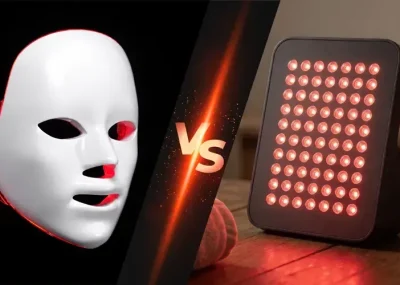
Can You Use an LED Mask or Red Light Panel After Sunburn?
A device you use as part of your normal skin care regimen might not be right for your skin right after sun damage. The strength, coverage, warmth and settings of the masks, panels, and handheld lights vary. Similar-looking products can provide varying levels of light.
Follow manufacturer directions, such as skin irritation/damage warnings. If the area is still red and swollen, consult a dermatologist to see if you should break your regimen. Use the device’s eye safety instructions and recommendations (including any eye protection required). Never assume that closing your eyes will give you the protection that the manufacturer claims.
The term “FDA-cleared” should also be understood. Clearance signifies a device’s intended use and does not indicate that the product is a sunburn remediator. Evidence for facial wrinkles does not necessarily extend to a fresh burn.
For general comparisons of device features, read our guides to LED face masks and red light therapy panels. These guides can help you compare formats and instructions, but they do not establish that any listed product treats sunburn. No particular model warrants a sunburn recommendation without direct evidence.
What Does the Research Still Need to Establish?
Useful research needs to answer practical questions about ordinary UV-induced sunburn, rather than relying mainly on findings from other wounds. The main questions include:
- Does it make a meaningful difference?
Studies need to measure whether treatment improves pain, redness, or recovery compared with standard sunburn care alone. A small change in a laboratory measure may not reflect a noticeable improvement for patients. - Which settings, if any, suit recently damaged skin?
Researchers need to test wavelengths and amounts of light rather than assume a cosmetic treatment plan also suits fresh sunburn. - Who might respond differently?
Studies should include different skin tones and burn severities, and examine whether the timing of treatment changes the response. - Do clinical findings apply at home?
Trials need to test consumer devices directly, since medical equipment and supervised care can differ substantially from home use. - Do possible benefits outweigh the risks?
Researchers should track irritation and pigmentation changes alongside any improvements. Without that comparison, a favorable result tells only part of the story.
Frequently Asked Questions
Does red light therapy help sunburn?
Can you use red light therapy on a sunburn?
Does red light therapy reduce sunburn redness?
A: Current evidence does not establish that home red light devices reliably reduce sunburn redness. Less redness also does not necessarily mean the underlying skin damage has healed.
Can red light therapy prevent peeling after sunburn?
A: No clear evidence shows that red light therapy prevents peeling. Moisturize gently, avoid scrubbing, and let peeling skin come away naturally.
Is near-infrared light better for sunburn than red light?
A: Researchers have not established that either option works better for sunburn. Near-infrared light reaches deeper into tissue, but that does not prove greater benefits for sunburned skin.
Can red light therapy reverse UV damage?
A: Red light therapy is not a proven way to reverse sunburn-related UV damage. Changes in redness or comfort do not show that a device has removed lasting damage or skin cancer risk.
How long does sunburn take to heal?
A: Healing depends on how severe the burn is and how much skin it affects. Mild sunburn generally improves sooner than blistering burns. Seek medical advice if symptoms worsen or you develop significant pain, swelling, or fever.
Conclusion: Is Red Light Therapy Worth Trying for Sunburn?
The study of photobiomodulation asks interesting questions about skin repair, but the results of clinical burns and other wounds do not constitute a home treatment for normal sunburns. After the burn, the skin should be gently cared for according to a well-defined set of guidelines: cooling, moisturizing, and water and sun protection.
Consider the use of a device, skin warnings and eye-safety instructions before you use a device. There is no proven At-Home Sunburn Session Plan available at this time. Do not use a device as a way of postponing treatment for serious symptoms. Before you use red light therapy, consult with your healthcare provider if you have sunburn.