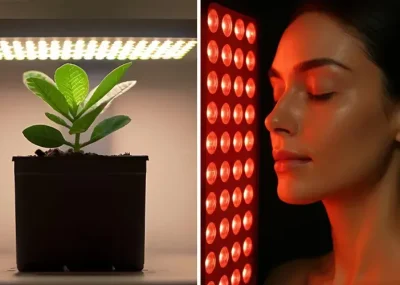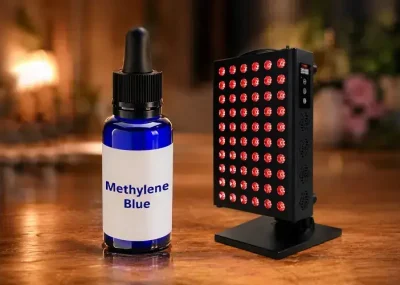



Walk into any high-end wellness clinic or biohacking space and you’ll find both PEMF mats and red light therapy panels. They’re often used in the same session, sometimes in the same device. The marketing around them tends to blend together into a general wellness blur – “cellular healing,” “deep recovery,” “energy optimization” – that doesn’t actually help you understand what you’re getting or why.
These are two genuinely different therapies. They work through distinct biological mechanisms, they have different evidence profiles, and they address different aspects of recovery and cellular function. Understanding that distinction matters – both for evaluating what a combined mat is actually doing, and for setting realistic expectations about what either therapy can and can’t do.
Here’s an honest breakdown of both, and the case for combining them.
What PEMF Therapy Is and How It Works
PEMF stands for pulsed electromagnetic field therapy. It delivers brief, low-frequency electromagnetic pulses to the body through a mat, pad, or coil device – typically in the range of 1 to 100 Hz, with field strengths measured in millitesla or gauss. The pulses pass through skin, fat, and bone without being absorbed the way heat or light is. That’s a key difference from red light therapy – PEMF reaches deep tissue not by penetrating through it optically, but by generating bioelectric currents within it electromagnetically.
The biological target is the cell membrane and the ions that flow across it. Cells maintain a precise electrochemical gradient – sodium, potassium, and calcium ions moving in controlled patterns that govern energy production, nutrient uptake, waste removal, and communication between cells. When cells are damaged, inflamed, or metabolically stressed, this ionic balance is disrupted. PEMF essentially delivers a magnetic nudge that helps restore normal ion flow – improving calcium signaling in particular, which plays a central role in tissue repair, inflammation regulation, and nerve function.
Beyond ion flow, PEMF stimulates nitric oxide production – the same vasodilatory signaling molecule that red light therapy also influences, though through a different pathway. Improved nitric oxide signaling means better microvascular circulation, which matters enormously for delivering oxygen and nutrients to damaged tissue and clearing inflammatory waste products.
The frequencies used aren’t arbitrary. Different Hz ranges appear to influence different biological processes:
1–4 Hz (delta range) – Associated with deep relaxation and sleep support. Mimics the Earth’s natural Schumann resonance in the lower range.
7–10 Hz (theta/alpha range) – The 7.83 Hz Schumann resonance is often cited as the Earth’s natural electromagnetic frequency. PEMF in this range is used for stress reduction and recovery.
10–25 Hz – Studied for musculoskeletal pain, inflammation reduction, and tissue repair.
25–50+ Hz – Higher frequencies used for focus, energy, and in some clinical protocols for bone stimulation.
This frequency-dependence is also why PEMF research is difficult to generalize. A 15 Hz signal at 1.5 millitesla does something biologically different from a 75 Hz signal at 3.0 millitesla. Results from one protocol don’t automatically transfer to devices running different parameters – which means device quality and settings matter more than most marketing acknowledges.
Advertisement
*All individuals are unique. Your results can and will vary.
Where PEMF Has Legitimate Clinical Evidence
PEMF’s clinical track record is longer than most people realize – and it comes with an important nuance about where the evidence is solid versus where it’s being extrapolated beyond the data.
Bone healing – the strongest application
The FDA first cleared a PEMF device in 1979, following foundational research by C. Andrew L. Bassett and colleagues at Columbia University published in Science in 1974. Their work demonstrated that pulsed electromagnetic fields could stimulate osteogenesis – new bone formation – in non-healing fractures that had failed to respond to conventional treatment.
That original clearance covers a narrow, specific application: adjunctive treatment for non-union fractures and spinal fusion in high-risk patients. Non-union fractures are those that fail to heal after several months – previously requiring additional surgery or bone grafting. With FDA-cleared PEMF devices, healing rates for non-union fractures improved from roughly 50 – 60% with standard care to 70 – 85% with PEMF added. PEMF is now used in approximately 72% of US hospitals for this indication. This is the most evidence-supported PEMF application and the foundation of its clinical legitimacy.
Pain and inflammation – meaningful but heterogeneous evidence
A 2025 prospective study in the Pain and Therapy journal, a multicenter randomized controlled trial enrolled 120 patients with joint or soft tissue pain and found that PEMF therapy led to significant reductions in pain and medication use compared to standard of care over 14 days. The mechanism identified was nitric oxide signaling modulation – PEMF activates the nitric oxide cascade in joint tissue, reducing inflammatory signaling and improving local circulation.
A 2020 review found that pulsed electromagnetic field (PEMF) therapy shows promise as a safe, non-invasive adjunctive treatment for pain, inflammation, edema, wound healing, arthritis, and bone fractures, while highlighting the need for further research. A 2026 systematic review in Frontiers in Sports and Active Living examined PEMF specifically for soft tissue injuries, confirming beneficial effects on pain and physical function across multiple musculoskeletal conditions.
The pain evidence is real – but it’s also heterogeneous. Study protocols vary widely in frequency, intensity, and duration, which makes definitive conclusions about optimal parameters difficult. The effect sizes are generally moderate, and PEMF works best as a complement to active rehabilitation rather than a standalone intervention.
FDA-cleared applications beyond bone healing
Beyond fractures, FDA clearance has been granted for PEMF as an adjunct to cervical fusion surgery, for reducing post-operative edema and pain, and – perhaps most significantly from a clinical standpoint – for treatment-resistant depression (via transcranial magnetic stimulation, which uses a higher-intensity variant of the same electromagnetic principle). PEMF is also cleared for certain brain cancer applications (glioblastoma) through tumor-treating field technology.
Where the evidence gets thin
Consumer PEMF marketing frequently extends well beyond what the evidence supports – claims about “cellular rejuvenation,” dramatic immune boosting, detoxification, and anti-aging effects on the scale of years of biological aging lack the clinical backing that bone healing and pain applications have. This doesn’t mean the wellness applications are worthless – the relaxation, sleep support, and stress reduction effects reported by consistent users are plausible given PEMF’s documented effects on the autonomic nervous system. But the evidence base for those applications is softer, and the effect sizes are smaller.
What Red Light Therapy Does Differently
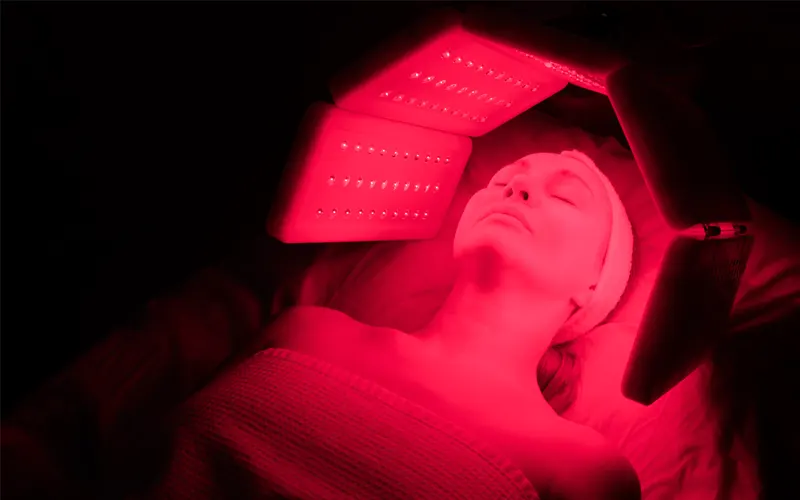
Red light therapy (photobiomodulation) works through an entirely different physical mechanism – photons rather than electromagnetic fields – and hits a different primary biological target.
Where PEMF works by generating ionic currents across cell membranes, red light therapy works by delivering photons at specific wavelengths (primarily 630–660 nm red and 800–850 nm near-infrared) that are absorbed by cytochrome c oxidase – an enzyme in the mitochondrial electron transport chain. This absorption stimulates mitochondria to produce more ATP, the energy currency that powers cellular repair, protein synthesis, and virtually every metabolic process.
The downstream effects are substantial: reduced oxidative stress, downregulation of pro-inflammatory cytokines, upregulation of growth factors including VEGF and TGF-β, increased collagen synthesis, enhanced fibroblast activity, and nitric oxide release from tissue.
Unlike PEMF, the effects of red light therapy are localized to where the light actually reaches. Red light at 660 nm penetrates approximately 3–5 mm – well suited for skin, surface wounds, and superficial tissue. Near-infrared at 850 nm reaches 3–6 cm, accessing muscle, joint tissue, and deeper structures. Neither wavelength reaches bone or visceral organs meaningfully – which is actually relevant when comparing the two therapies for deep-tissue applications.
The clinical evidence for red light therapy is mature across several applications: skin rejuvenation and collagen production, wound healing (particularly chronic wounds like diabetic foot ulcers), hair loss (androgenetic alopecia), musculoskeletal pain and tendinopathy, and oral health. The arthritis evidence specifically was strong enough to inform multiple systematic reviews, and the FDA has authorized a PBM device for dry age-related macular degeneration (Valeda, November 2024).
Advertisement

*All individuals are unique. Your results can and will vary.
PEMF vs Red Light Therapy: Where Each One Fits Better
These therapies address different aspects of the same underlying problem – cellular dysfunction, inflammation, and impaired repair. Understanding where each excels helps clarify when you’d want one, the other, or both.
PEMF is better suited for:
- Deep tissue – joints, bone, and structures that light can’t reach meaningfully
- Regional or widespread musculoskeletal pain affecting multiple areas simultaneously (a mat covers the whole body in one session)
- Post-fracture recovery or bone healing support
- Autonomic nervous system regulation – stress, sleep, and recovery from systemic fatigue
- Reducing post-operative swelling and edema
- Nerve signaling and neuropathic pain patterns
Red light therapy is better suited for:
- Skin health – collagen production, acne, wound healing, rejuvenation
- Surface-level tissue repair where photon penetration is sufficient
- Localized tendon and joint pain where precise targeting matters
- Hair loss treatment
- Conditions requiring cellular energy restoration in specific tissue (retinal health, oral mucositis)
- Scar tissue remodeling
Where they overlap:
- Anti-inflammatory effects (both reduce pro-inflammatory cytokines via different pathways)
- Nitric oxide production and microcirculation improvement
- Musculoskeletal pain relief
- Recovery from exercise-induced muscle damage
- General cellular energy support
The overlap is real – but the mechanisms are complementary rather than redundant. They’re affecting the same cells via different signals, which is why combining them makes biological sense.
MOST POPULAR IN HEALTH





Why the Combination Actually Works: The Cellular Rationale
The case for combining PEMF and red light therapy isn’t just marketing convenience. The two therapies address cellular dysfunction from complementary angles that don’t cancel each other out.
Red light therapy increases mitochondrial ATP production – it gives cells more energy to work with. PEMF improves ion transport across cell membranes – it helps cells use that energy more efficiently and maintain the electrochemical gradients needed for proper cellular function. Together: cells have more fuel, and the cellular machinery to use it is better tuned.
Both therapies stimulate nitric oxide production, but through different pathways – red light primarily through cytochrome c oxidase activity in tissue, PEMF through direct electromagnetic modulation of ion channels in vessel walls. The combined nitric oxide effect may improve microvascular perfusion more than either therapy alone, which is particularly valuable in tissue with limited blood supply (tendons, bone, scar tissue).
PEMF penetrates tissue that red light can’t reach – bone, deep joints, organs. Red light provides cellular stimulation at the tissue surface that PEMF’s magnetic fields don’t directly target in the same way. They’re not just doing the same thing at different depths. They’re doing genuinely different things that happen to be complementary.
“The combination of photobiomodulation and PEMF addresses cellular dysfunction through two distinct but synergistic pathways,” says Dr. Michael Hamblin of Harvard Medical School. “One charges the cellular battery; the other improves the electrical systems that distribute and use that charge.”
From a practical standpoint, this is why users of combined devices consistently report more pronounced relaxation and recovery effects than from either therapy used separately – the compound effect on cellular energy, circulation, and nervous system regulation is greater than the sum of its parts.
What a Combined PEMF and Red Light Mat Actually Contains
The combined mat market has matured considerably, and most premium devices now integrate several therapies into a single unit. Understanding what’s actually in these products helps you evaluate them honestly.
PEMF coils – The electromagnetic field generators embedded in the mat. Key specifications: frequency range (Hz), intensity (measured in milligauss or millitesla), and the number and placement of coils. Broader coil coverage means more even field distribution across the body. Frequency range matters – adjustable Hz settings allow you to target different goals (sleep vs. recovery vs. focus).
Red light LEDs – Embedded diode arrays delivering 660 nm red light. Note that many mats marketed as combining “red light therapy” actually use far-infrared heat rather than therapeutic red/NIR LEDs – these are not the same thing. Confirm that the mat includes actual 630–660 nm red diodes and ideally 850 nm near-infrared diodes for depth.
Far-infrared heat – A separate modality from red light therapy. Far-infrared (FIR) is invisible light in the 4–14 micron wavelength range that generates deep, penetrating warmth – different from surface heat pads, which warm only the surface. FIR penetrates 2–3 inches into tissue, relaxing muscles, dilating blood vessels, and improving circulation. It’s a legitimate complementary modality, but it’s not the same as photobiomodulation. Many mat manufacturers blur this distinction in their marketing.
Gemstones (amethyst, tourmaline, jade) – Common additions to premium mats. These function primarily as FIR emitters when heated – certain crystals are efficient infrared emitters, providing even heat distribution. The claims about crystal-specific healing properties beyond thermal emission are not clinically supported. The heat delivery function is real; the metaphysical claims are not.
Negative ions – Generated by heating certain gemstones. Negative ion exposure in natural environments (waterfalls, forests, ocean air) has some research support for mood and respiratory benefits. The concentrations generated by heated gemstones in a mat are likely much lower than natural environments, and the clinical evidence for mat-delivered negative ions specifically is thin. It’s a plausible-but-unproven addition.
The honest summary: combined PEMF and red light mats with actual therapeutic red/NIR LEDs, a well-designed PEMF coil system with adjustable frequencies, and FIR heat is a genuinely useful multi-therapy device. The gemstone and negative ion additions are largely harmless enhancements with limited independent clinical support.
What to Look for When Evaluating a Combined Mat
Most buyers make their decision based on brand name and price. Here’s what actually matters:
PEMF specifications that matter:
- Frequency range – wider is generally better (1–30 Hz minimum; higher ceiling useful for focus protocols)
- Intensity – listed in milligauss or millitesla. Most therapeutic consumer devices operate in the 0.5–5 millitesla range. Clinical bone-healing devices operate higher.
- Number and distribution of coils – affects how evenly the field is distributed across the mat
- EMF output – well-designed mats keep incidental EMF emissions low (below 2 milligauss at the mat surface for sleeping proximity)
Red light specifications that matter:
- Confirmed wavelengths in nm – 630–660 nm for red, 810–850 nm for near-infrared. Avoid devices that list only “red light” without wavelength data.
- LED density and coverage – sparse LEDs won’t deliver meaningful dose across the full body
- Differentiate red/NIR LEDs from far-infrared heating elements – these are separate systems
Practical considerations:
- Size – full-body mats (approximately 70″ x 24″) provide comprehensive coverage; smaller pads are more targeted and portable
- Weight – full mats with gemstone layers can weigh 30–50 lbs, which affects storage and portability
- Controller quality – adjustable PEMF frequency settings and separate heat controls increase versatility
- Warranty and return policy – given the price range ($400–$2,000+), a 30–60 day trial period and at least a one-year warranty are reasonable expectations
- Specific Hz frequencies tied to precise wellness outcomes (the “7.83 Hz for grounding” marketing is real in concept but oversimplified in execution)
- Gemstone healing claims beyond heat emission
- Dramatic detoxification or anti-aging promises not supported by clinical evidence
- “Most powerful” claims without published irradiance or PEMF intensity data
- People with chronic pain conditions – arthritis, fibromyalgia, lower back pain, joint conditions – who want a daily at-home recovery tool
- Athletes and active people managing ongoing muscle soreness and recovery
- People with sleep quality issues who want a non-pharmacological relaxation protocol
- Post-surgical recovery patients who want to support tissue healing alongside standard care
- People who already use either red light therapy or PEMF separately and want to consolidate into one session
- People with occasional or minor pain needs – simpler, less expensive devices may be sufficient
- People primarily focused on skin health – a dedicated red light panel or mask delivers better LED coverage for skin than most mat-embedded LEDs
- Anyone with a pacemaker or implanted electronic device – PEMF is contraindicated; consult a physician before any PEMF exposure
- Pregnant women – PEMF during pregnancy lacks adequate safety data; avoid
What to be appropriately skeptical about:
Who Benefits Most From a Combined Mat
A combined PEMF and red light mat is a meaningful investment – these devices typically run $500–$2,000 – and they make most sense for people who have consistent, ongoing needs rather than occasional use cases.
Most likely to benefit:
Less compelling for:
Frequently Asked Questions
What is the difference between PEMF and red light therapy?
A: PEMF uses pulsed electromagnetic fields that pass through tissue electromagnetically, primarily targeting ion flow across cell membranes and deep tissue including bone. Red light therapy uses photons at specific wavelengths absorbed by mitochondria in tissue, boosting ATP production and cellular repair. Both reduce inflammation and improve circulation, but through distinct mechanisms and at different tissue depths. PEMF reaches deeper; red light provides more targeted cellular energy stimulation in tissue it can reach.
Does PEMF therapy actually work?
A: For bone healing, yes – PEMF has FDA clearance since 1979 for non-union fractures and spinal fusion, with clinical data showing meaningfully improved healing rates. For pain and soft tissue conditions, the evidence is positive but more variable – a 2025 multicenter RCT showed significant pain reduction and medication use reduction in joint and soft tissue pain patients. For general wellness applications (sleep, stress, energy), user-reported benefits are plausible given the autonomic nervous system effects, but clinical evidence is softer.
Can you use PEMF and red light therapy at the same time?
A: Yes – they work through different mechanisms and don’t interfere with each other. Using both simultaneously is the premise of combined mats and is supported by the complementary nature of their cellular effects. Many wellness centers and clinics offer them together for this reason.
Is a PEMF mat with red light better than separate devices?
A: It depends on your goals. Combined mats offer convenience and simultaneous therapy in one session. However, dedicated red light panels generally deliver better LED coverage and higher irradiance for skin-focused applications than most mat-embedded LEDs. If skin health is the primary goal, a dedicated panel plus a PEMF mat may outperform a combined device. For full-body recovery and pain management, a well-designed combined mat is practical and effective.
What should I look for in a PEMF red light therapy mat?
A: Confirm actual red/NIR LED wavelengths (not just “red light”), adjustable PEMF frequency range, intensity specifications in milligauss or millitesla, EMF emissions data, and coverage area. Be skeptical of devices without published specifications. Far-infrared heat is a legitimate addition; gemstone healing claims beyond thermal emission are not clinically supported.
How long does it take to notice results from a combined mat?
A: Some effects – relaxation, reduced muscle tension, improved sleep quality after use – are often felt within the first few sessions. For pain reduction and recovery applications, meaningful changes typically emerge over 2–4 weeks of consistent use. Long-term structural benefits (tissue repair, bone health support) take longer to manifest and are harder to attribute to any single modality.
The Bottom Line
PEMF and red light therapy are genuinely distinct therapies that happen to complement each other well. PEMF reaches deep tissue electromagnetically, supports bone healing and nerve function, and has a longer FDA-cleared clinical track record than most people realize. Red light therapy works photonically through mitochondrial stimulation, with strong evidence for skin health, wound healing, and musculoskeletal pain at tissue depths it can reach.
Their combination makes biological sense – not as marketing synergy, but because they address different aspects of cellular dysfunction that frequently coexist in the same patient. Better cellular energy from PBM plus better ionic communication from PEMF, both reducing inflammation through complementary nitric oxide pathways – the compound effect is real.
What matters in a combined mat is confirmed specifications for both modalities, not brand prestige or the number of therapies listed on the box. Get those right, use it consistently, and the combination represents one of the more compelling multi-therapy tools available for at-home recovery and wellness.