

Can You Combine Methylene Blue With Red Light Therapy?
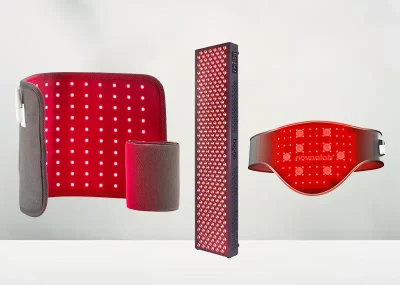
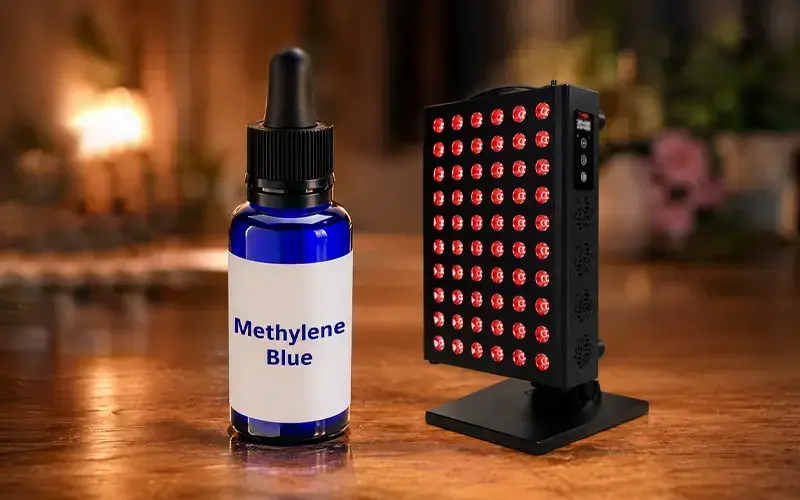
Methylene blue and red light therapy both interact with cellular energy pathways, but in different ways. This creates a plausible reason to study them together. Animal research suggests that the combination may influence memory, stress-related behavior, and oxidative balance. However, no controlled human study has shown that taking oral methylene blue with a standard home red light therapy session produces greater benefits than either approach alone.
People interested in mitochondrial health, cognitive wellness, recovery, or skin-focused devices may find the theory appealing. Still, evidence is not strong enough to support a precise combined protocol. Extra caution is needed for anyone taking antidepressants, opioids, dextromethorphan, or other serotonin-affecting medicines, as well as people with glucose-6-phosphate dehydrogenase deficiency, pregnant or nursing individuals, and anyone managing a medical condition.
What Is Methylene Blue?
Methylene blue is a synthetic, redox-active compound first developed as a dye and later adopted for medical and laboratory uses. Its established FDA-approved use is treating acquired methemoglobinemia, a condition in which hemoglobin cannot carry oxygen normally. It is also used under medical supervision in selected off-label settings.
Consumer products vary in form, concentration, purity, testing, and price. Oral liquids, prescription injections, topical preparations, aquarium products, and laboratory chemicals are not interchangeable. Industrial, aquarium, or staining-grade methylene blue should never be consumed.
There is no universally established wellness dose. Clinical dosing for medical conditions cannot be converted into a supplement recommendation, particularly when a product does not clearly state the amount in milligrams. Follow the product label and discuss use with a qualified healthcare professional.
Methylene Blue and Your Mitochondria
Mitochondria generate much of the energy used by cells. Electrons move through an electron transport chain containing Complexes I through IV, helping create a proton gradient that drives Complex V, or ATP synthase, to produce ATP.
Nutrients → NADH and FADH2 → Complexes I–IV → Proton Gradient → Complex V → ATP
Under stress or disease, electron flow can become less efficient around Complexes I and III. Escaping electrons may contribute to excess reactive oxygen species. Experimental research suggests that methylene blue can cycle between oxidized and reduced forms, acting as an alternative electron carrier. It may reroute electrons around dysfunctional portions of the chain and toward cytochrome c, which supplies Complex IV.
This does not mean methylene blue repairs every mitochondrial defect. Its effects may be more relevant when mitochondrial function is impaired. In healthy cells, pushing energy pathways harder may provide little additional benefit. Its effects are also dose-dependent, so more is not necessarily better.
Methylene Blue and Skin: What the Research Shows
Research indicates that methylene blue is safe for use in human skin. The majority of skin findings are the result of direct exposure of cells, reconstructed skin, wounds, or topical formulas. They don’t indicate that oral drops are equally effective.
In a laboratory study, researchers found that methylene blue was able to decrease oxidative stress and impact aging markers in normal human fibroblasts as well as those from individuals with Hutchinson-Gilford progeria syndrome. It was also found to enhance the viability of the tissue, hydration, dermal thickness and responses to wounding in a reconstructed three-dimensional skin model. These results were not obtained in human skin by taking the product orally.
But laboratory studies have also looked for ways to use methylene blue as a UV-protective antioxidant, and it should not be considered a substitute for a sunscreen. Other areas of research include wound care and antimicrobial PDT. Methylene blue is a photosensitizer used in PDT, which, upon activation with appropriate light, produces ROS. This is not the same as normal red light therapy, which is typically used to affect cell signaling instead of killing the cells.
Methylene Blue Research: 2019 to 2026
In 2019, researchers tested transcranial photobiomodulation, methylene blue, and their combination in mice exposed to chronic mild stress. Treatments improved several behavioral and biochemical measures, with the combination performing better on some oxidative stress and cortisol outcomes. However, methylene blue was injected, light was applied to the head, and the subjects were mice.
A 2020 review compared methylene blue with photobiomodulation as separate mitochondrial strategies. The authors found that both may support mitochondrial respiration through different mechanisms, but called for additional animal and human trials.
A 2021 anti-aging review summarized research involving mitochondria, oxidative stress, skin biology, wound healing, neuroprotection, and cellular aging. Much of the evidence came from cells and animals, showing potential rather than confirmed consumer benefits.
In 2022, a small human pilot combined oral methylene blue, photobiomodulation, and methylene-blue photodynamic inactivation in people with COVID-19. Because several interventions were used together, the study cannot isolate standard red light therapy plus oral methylene blue or establish that the two act synergistically.
Other clinical work shows why application matters. A randomized phase 2 trial found that a methylene blue oral rinse reduced severe oral mucositis pain in cancer patients. Trials and reviews have also examined intravenous methylene blue in septic shock. These findings involve local pain treatment or intensive medical care, not daily cognitive or skin supplementation.
Experts on Methylene Blue: Where They Agree and Disagree
Researchers agree that methylene blue is biologically active and not a harmless “wellness dye. Safety is significantly impacted by formulation, route, concentration, health status, and drug intake.
The conflict is over the extent to which the initial evidence can be extended. A compound that’s been used for a long time and has some interesting mitochondrial, cognitive, neurological, and dermatological properties is more permissive for researchers. Other more conservative experts point out that many of the positive results have been from animal studies, cultured cells, small trials, or medical uses that don’t directly apply to healthy adults.
The biggest warning is about serotonin. Methylene Blue is labeled by the FDA as an “injectable” agent with a boxed warning of the potential for severe or life-threatening serotonin syndrome when given with other serotonergic drugs or some opioids. Some products that affect serotonin can increase risk, such as SSRIs (including fluoxetine), SNRIs (such as duloxetine), MAOIs, opioids, dextromethorphan, and other products. Symptoms range from agitation, confusion, fever, sweats, rapid heart rate, tremor, rigidity, nausea, vomiting, or diarrhea.
Red Light Therapy and Methylene Blue: How They May Work Together
Methylene blue can redirect electron transfer, bypassing defective sites associated with Complexes I and III. The effects of red and near-infrared photobiomodulation may affect cytochrome c oxidase (Complex IV) and nitric oxide (NO) signaling while also elevating mitochondrial membrane potential by enhancing downstream ATP production.
Methylene blue can help provide electrons, and red light therapy can help affect the machinery that receives those electrons as well as the signaling that occurs after. However, a good mechanism does not equal clinical benefit. There is no controlled study that has demonstrated that the oral administration of methylene blue increases the effectiveness of the conventional red light panel.
OPDT shall not be relied upon as evidence. It is a combination of a photosensitizer and light to generate intentionally cytotoxic ROS. The standard red light therapy does not need any methylene blue and normally works to help cellular functions.
WOWMD Methylene Blue Drops: What to Know
WOWMD Methylene Blue Drops is a liquid supplement for daily focus, brain health, mental clarity and cellular health. They are not sold as a topical skin product and fibroblast, UV, and wound-healing research cannot be taken as a cue to market drops as anti-wrinkle or repair products for the skin.
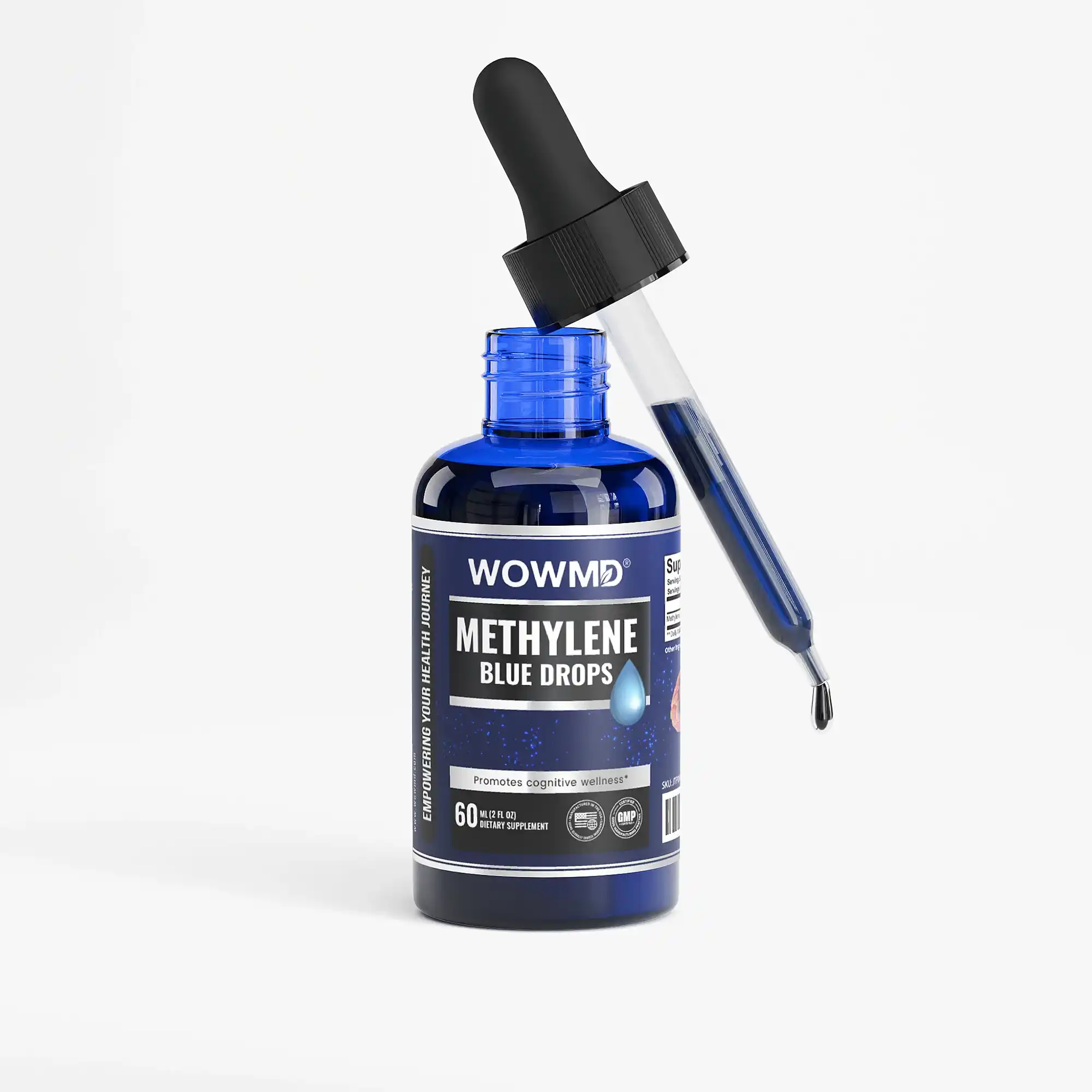
The website says adults should take 1 ml (which is about 20 drops) once a day, preferably in the morning, straight or in water or juice. It contains a warning not to exceed the serving, and that methylene blue may stain the tongue, teeth, clothing and surfaces, and recommends a consultation for those taking medication, managing health conditions, and pregnant and nursing women.
It also cautions against using the product with medications that affect serotonin, such as some antidepressants, unless directed to do so by a qualified health care professional. It is for adults only and should not be used by individuals under 18 years of age except as directed by a professional.
How to Safely Approach the Combination
Before using methylene blue, talk to a doctor or pharmacist, particularly if taking any medications. Don’t stop taking an antidepressant or other medicine without your doctor’s advice. Medical methylene blue may cause severe hemolysis in individuals with G6PD deficiency and should only be used under the care and guidance of a physician.
Follow the manufacturer’s recommendations for treatment distance, session length, and frequency, and use the appropriate red light therapy dosing guidelines for your device and treatment goals. Have one new intervention at a time; observe the reaction; do not increase light exposure and supplements all at once. Discontinue use and seek medical assistance if any worrying symptoms are seen.
The Bottom Line
Methylene blue and red light therapy target mitochondrial biology through distinct but potentially complementary pathways. Animal findings and mechanistic reviews make the combination scientifically interesting, but controlled human evidence for oral methylene blue plus standard red light therapy remains absent. Skin, wound, shock, and pain findings involve different formulations and medical contexts.
For now, the pairing is best described as promising but unproven. Product quality, concentration, medication interactions, G6PD status, health conditions, and light dosage all matter. Anyone considering the combination should follow the label, avoid assuming more is better, and seek professional guidance.