


Rosacea affects more than 415 million people worldwide — and for most of them, the search for genuine, lasting relief is exhausting. The persistent facial redness, unpredictable flare-ups, flushing, and skin sensitivity that define rosacea are not just cosmetic concerns. They affect confidence, daily routines, and quality of life in ways that topical creams, prescription medications, and avoidance strategies rarely fully address.
Red light therapy — clinically known as photobiomodulation (PBM) — has emerged as one of the most well-supported, non-invasive options for managing rosacea at home. By delivering specific wavelengths of red and near-infrared light directly to the skin, these devices reduce facial inflammation, support collagen production in damaged capillaries, and help calm the chronic immune-driven processes that cause rosacea’s characteristic redness and flushing.
According to dermatologist and facial reconstructive specialist Brandon T. Beal, MD, FAAD, FACMS, “Red light therapy helps your skin do what it’s naturally designed to do, heal and repair itself. It can calm inflammation, reduce redness, and support collagen production over time.”
This guide covers the 8 best red light therapy devices for rosacea in 2026 — including full-face LED masks, multi-wavelength systems, and a targeted handheld wand — each reviewed for wavelength accuracy, rosacea-relevant modes, safety credentials, and verified user outcomes.
⭐ Our Top Pick
After reviewing every device on this list for rosacea-specific credentials, wavelength accuracy, multi-mode versatility, and ease of daily use, the Novaa Glow Therapy Mask by NovaaLab is our top pick for 2026. Its 180 medical-grade LEDs across 6 clinical modes — including yellow light at 580nm specifically for redness reduction and improved circulation — combined with FDA clearance, a 60-day risk-free trial, and a warranty extendable to 3 years, make it the most complete and accessible at-home rosacea mask on the market.
Does Red Light Therapy Actually Help Rosacea? The Science Explained
Rosacea is primarily an inflammatory skin condition — characterised by chronic activation of innate immune pathways, vascular dysregulation, and in many cases an overpopulation of Demodex mites and associated bacterial responses. Red light therapy addresses rosacea through three well-documented mechanisms.
First, photobiomodulation reduces pro-inflammatory cytokine expression. Research published in AIMS Biophysics (Hamblin, 2017) confirmed PBM’s anti-inflammatory effects through reduced TNF-α, IL-1β, and IL-6 — the same cytokine pathways involved in rosacea’s chronic inflammatory cycle.
Reducing these markers calms the facial redness and flushing response at the cellular level rather than merely masking surface symptoms.
Second, red light at 630–660nm has been demonstrated in peer-reviewed studies to reduce the population of Demodex mites — microscopic organisms found in excess on rosacea-prone skin and directly linked to papulopustular rosacea flare-ups. Research published in the Journal of the European Academy of Dermatology and Venereology confirmed that 633nm red light significantly reduces Demodex populations, addressing a root trigger of rosacea rather than its symptoms alone.
Third, near-infrared light (830–850nm) penetrates into the deeper dermal layers to stimulate collagen and elastin synthesis in the skin’s vascular structures. Research published in the Annals of Biomedical Engineering confirmed that photobiomodulation promotes collagen remodelling in broken capillaries and damaged connective tissue — directly supporting the healing of the spider veins and persistent redness that define chronic rosacea.
A systematic review published in Dermatology and Therapy found that LED phototherapy using red wavelengths produced statistically significant reductions in erythema (redness) scores, decreased flushing frequency, and improved skin barrier function in rosacea patients — with results appearing within 2–4 weeks of consistent treatment.
For rosacea specifically, the most clinically relevant wavelengths are 630–633nm red light (surface anti-inflammatory, Demodex reduction), 580–590nm yellow/amber light (lymphatic drainage, redness reduction, improved circulation), and 830–850nm near-infrared (deep collagen remodelling, vascular repair). Dr. Beal also emphasizes the importance of wavelength transparency when selecting a device:
“When choosing a device, look for one that lists specific wavelengths. The best wavelengths are 660 and 630 nm. The 630 wavelength works closer to the skin’s surface. It’s great soothing irritation. The 660 wavelength goes a bit deeper, helping to support skin repair. Together, they help reduce inflammation and build collagen to address pain and wear and tear.”
Which Wavelengths Work Best for Rosacea Skin?
Understanding the wavelength profile of any LED device is essential for rosacea — not every light colour helps, and some can worsen sensitive skin if used incorrectly.
- Red (630–660nm): The primary anti-inflammatory wavelength for rosacea. Stimulates collagen production, reduces pro-inflammatory cytokines, and at 633nm specifically has been shown to reduce Demodex mite populations. This is the most important wavelength in any rosacea-specific device. Supporting the benefits of red wavelengths, skincare expert Eden Gilliam, Founder & CEO at Eve Milan New York and Allure Best In Beauty, notes: “Red LED is a stimulant ant but it’s also crest at calming inflammation while promoting the production of collagen and elastin.”
- Yellow/Amber (580–590nm): Particularly relevant for rosacea — reduces visible redness and swelling, promotes lymphatic drainage, and improves oxygen delivery to skin cells. Devices with yellow light modes (Novaa Glow Therapy Mask, Foreo FAQ 202, RosaLight, Qure) offer a distinct advantage for rosacea users over red-only devices. Gilliam also highlights the calming nature of yellow wavelengths: “Yellow light can be calming and used after laser treatments.”
- Near-Infrared (830–850nm): Penetrates deeper into the dermis to support collagen remodelling, vascular repair, and tissue regeneration. Less directly anti-inflammatory at the surface but critical for long-term structural skin repair.
- Blue (410–463nm): Targets acne-causing bacteria and Demodex mites. Useful for papulopustular rosacea where pustules are present. Use with caution in sensitive rosacea skin — start with short sessions as blue light can occasionally trigger temporary irritation in highly reactive skin. Discussing blue light applications, Gilliam explains “Blue is amazing for acne and killing acne causing bacteria.”
- Green (519–527nm): Calms sensitive skin, reduces hyperpigmentation, and creates an overall soothing effect on redness-prone complexions. A valuable secondary mode for rosacea. On the benefits of green wavelengths, Gilliam notes: “Green has been known to be effective with hyperpigmentation. Hyperpigmentation is a huge skincare concern for millions of people yet a green LED light is hard to find.”
Best Red Light Therapy Devices for Rosacea – At Glance
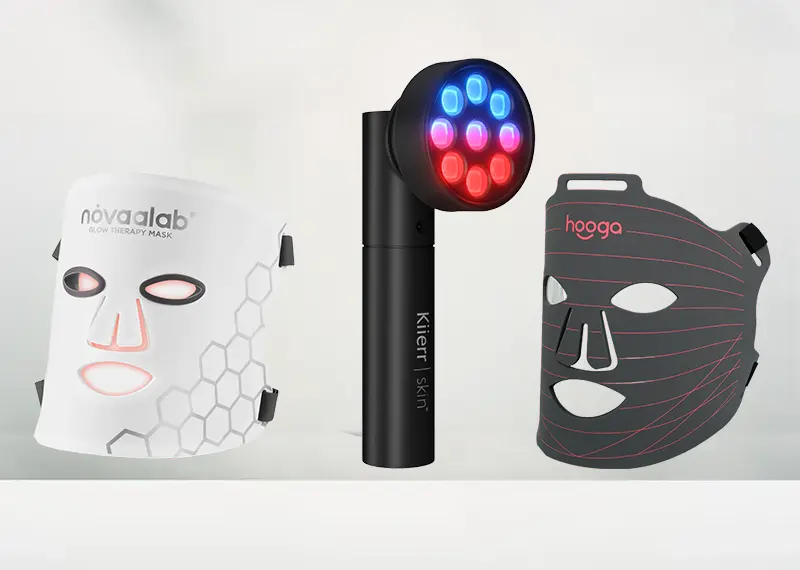
![Novaa Glow Therapy Mask]() Best All-Round Multi-Mode LED Mask Novaa Glow Therapy Mask — NovaaLabGo to Review
Best All-Round Multi-Mode LED Mask Novaa Glow Therapy Mask — NovaaLabGo to Review- At Official Website
![CurrentBody Skin LED Face Mask]() Best Clinical Flexible Mask CurrentBody Skin LED Face MaskGo to Review
Best Clinical Flexible Mask CurrentBody Skin LED Face MaskGo to Review- At Official Website
![Hooga Red Light Mask]() Best Rechargeable Cordless Mask Hooga Red Light MaskGo to Review
Best Rechargeable Cordless Mask Hooga Red Light MaskGo to Review- At Official Website
![Kiierr Radiate Red Blue Light Beauty Wand]() Best Handheld Targeted Wand Kiierr Radiate Red/Blue Light Beauty WandGo to Review
Best Handheld Targeted Wand Kiierr Radiate Red/Blue Light Beauty WandGo to Review- At Official Website
![Qure Q-Rejuvalight PRO]() Best App-Controlled Wireless Mask Qure Q-Rejuvalight PROGo to Review
Best App-Controlled Wireless Mask Qure Q-Rejuvalight PROGo to Review- At Official Website
![Foreo FAQ 202]() Best Multi-Wavelength Lifestyle Mask Foreo FAQ 202Go to Review
Best Multi-Wavelength Lifestyle Mask Foreo FAQ 202Go to Review- At Official Website
![RosaLight™]() Best Rosacea-Dedicated Device RosaLight™Go to Review
Best Rosacea-Dedicated Device RosaLight™Go to Review- At Amazon
![Omnilux Contour Face]() Best Clinician-Grade Flexible Mask Omnilux Contour FaceGo to Review
Best Clinician-Grade Flexible Mask Omnilux Contour FaceGo to Review- At Amazon



8 Best Red Light Therapy Devices for Rosacea in 2026
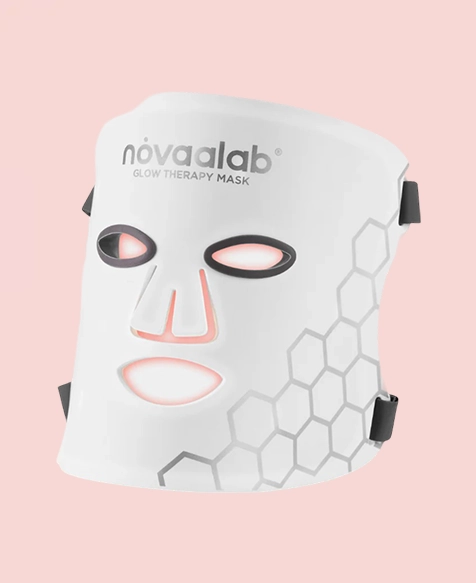
1. Novaa Glow Therapy Mask
Best For: All-Round Multi-Mode Rosacea Mask — Yellow Light Redness Reduction, FDA-Cleared
Features: 180 medical-grade LEDs, 6 clinical light modes — red (630nm), blue (450nm), yellow (580nm), infrared (830nm), purple (red + blue combined), red + infrared combined, silicone mask body, remote control, adjustable head strap, 60-day risk-free trial, warranty extendable to 3 years, HSA/FSA eligible
Price: ~$249.90

The 180 medical-grade LEDs distribute light evenly across the full face, and the remote control allows easy mode-switching during sessions without disturbing the mask’s fit. FDA clearance provides meaningful clinical assurance for users who want regulatory-validated technology rather than unverified consumer devices. NovaaLab’s 60-day risk-free trial is one of the longest in this category, and the warranty extendable to 3 years provides strong long-term protection.
Pros & Cons
Pros
- 6 clinical modes including yellow (580nm) — the most rosacea-relevant mode selection on this list
- FDA-cleared — regulatory-validated for safety and performance
- 180 LEDs with even full-face distribution — no coverage gaps
- 60-day risk-free trial and warranty extendable to 3 years
- Remote control — mode switching without removing mask
Cons
- Corded during sessions — not a wireless wear-and-go design
- Irradiance data per mode not independently published
More to Know
User Jennifer M. explains:
“I’ve had rosacea for 12 years and tried everything. I’ve been using the Novaa Glow Mask for 6 weeks now — the yellow light mode has made a visible difference to the baseline redness on my cheeks and nose. I use the red and yellow modes on alternating days and the results have been genuinely impressive. My skin looks calmer than it has in years.”
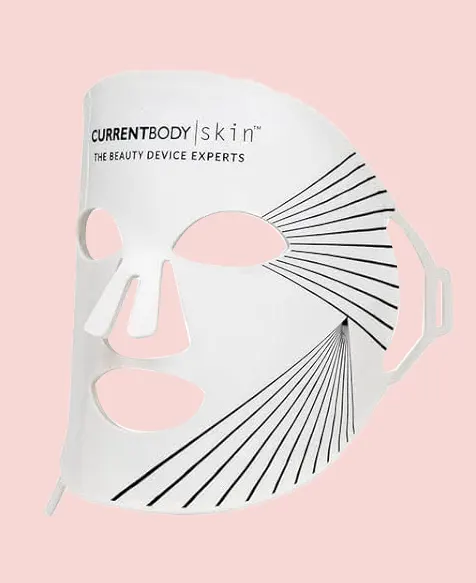
2. CurrentBody Skin LED Face Mask
Best For: Clinical Flexible Mask — Triple Wavelength Including 1072nm Deep NIR, Veritace® Quality Verified
Features: 236 LEDs across 3 wavelengths (633nm red + 830nm near-infrared + 1072nm deep near-infrared), FDA-cleared, Veritace® quality assurance (NFC-verified individual LED testing), flexible silicone with full face + chin + jaw coverage, one adjustable strap, UV-free
Price: ~$380
Second, its 1072nm deep near-infrared wavelength — not found in any other mask on this list — penetrates the deepest of the three wavelengths into the dermis and supporting tissue, reaching the vascular structures and connective tissue layers where much of rosacea’s underlying pathology originates. For rosacea users with persistent visible capillaries, chronic flushing, or structural skin changes from long-standing disease, this depth of penetration is clinically meaningful. The flexible silicone covers the full face, chin, and jaw simultaneously.
Pros & Cons
Pros
- Veritace® NFC-verified wavelength accuracy — only mask on this list with individually verified LED output
- 1072nm deep NIR — deepest dermal penetration on this list
- FDA-cleared, 236 LEDs, full face and chin coverage
- Trusted by dermatologists and consistently top-ranked in independent reviews
Cons
- Only 3 wavelengths — no yellow, blue, or green modes for broader rosacea management
- Single strap — some users find the fit less snug than double-strap designs
- Slightly stiffer silicone than the Omnilux — less flexible around the forehead
More to Know
User Rachel T. explains::
I’ve been using the CurrentBody mask for 3 months for my rosacea. The redness on my nose and cheeks has visibly reduced and my skin feels calmer overall. What convinced me was the Veritace certificate — knowing my specific mask was individually tested gave me real confidence I was getting what was advertised. Definitely worth the investment.
3. Hooga Red Light Mask
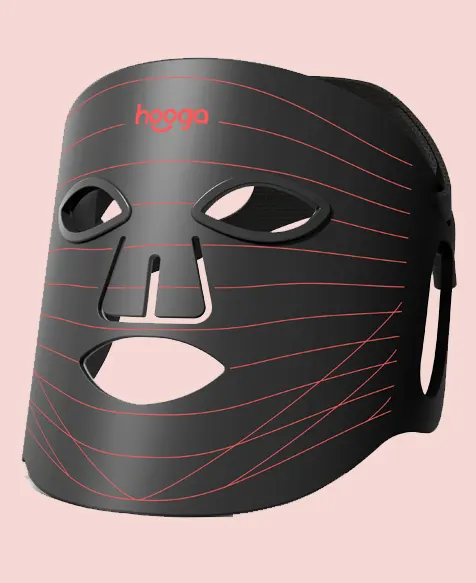
Best For: Best Rechargeable Cordless LED Mask — Tri-Chip Technology, Nogier Frequency Pulsing
Features: 66 tri-chip LEDs (630nm + 660nm + 850nm simultaneously per chip), rechargeable cordless (3,000mAh USB-C controller), 3 Nogier frequency pulsing modes (73Hz, 146Hz, 292Hz), adjustable brightness, flexible silicone, adjustable back strap, 3-year warranty, 60-day trial
Price: ~$249.00
The Hooga Red Light Mask offers a distinctive technical advantage over most competing masks through its tri-chip LED configuration — each of the 66 LEDs contains three independent chips simultaneously emitting 630nm, 660nm, and 850nm light. For rosacea users, this means every point of contact on the face receives surface-level anti-inflammatory 630nm light, deep-penetrating 660nm, and NIR vascular repair support from 850nm in a single LED — a more comprehensive photon delivery than dual-chip or single-chip designs at this price point.
The three Nogier frequency pulsing modes (73Hz, 146Hz, 292Hz) are a unique addition — named after French neurologist Dr. Paul Nogier, these specific frequencies are associated with enhanced cellular response and tissue-specific stimulation, going beyond simple continuous or generic pulse output. The fully rechargeable cordless design means no cables during sessions, and the optional neck piece provides an additional 48 LEDs to treat rosacea that extends to the neck and décolleté — a common presentation that most face-only masks cannot address. The 3-year warranty is the joint-longest on this list.
Pros & Cons
Pros
- Tri-chip LEDs — 3 wavelengths per LED point, more comprehensive coverage
- Nogier frequency pulsing — 3 tissue-specific pulsing modes
- Fully rechargeable and cordless — total freedom during sessions
- Optional neck piece — treats rosacea extending below the jaw
- 3-year warranty — joint-longest on this list
Cons
- 66 LEDs — lower LED count than most masks on this list
- No yellow or green modes — less rosacea-specific mode variety than Novaa Glow or RosaLight
- No independent irradiance data published for the mask specifically
More to Know
User Amanda K. explains::
I’ve been using the Hooga mask for my rosacea for 8 weeks. The cordless design is what sold me — I wear it while watching TV or reading without any cable management. My baseline redness has visibly reduced and my skin feels less reactive. The tri-chip technology makes sense to me — every spot on my face is getting all three wavelengths at once.
3. Kiierr Radiate Red/Blue Light Beauty Wand
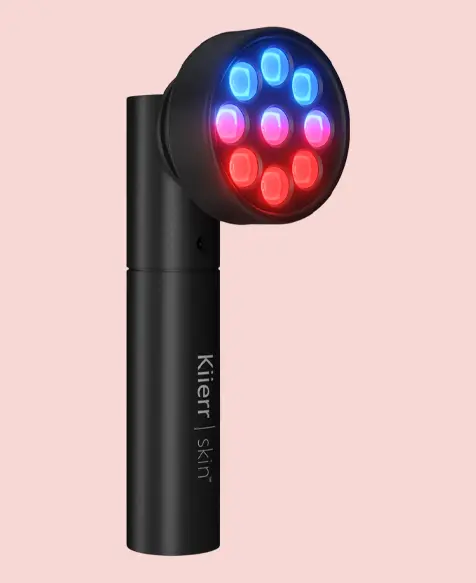
Best For: Handheld Targeted Wand — Precise Spot Treatment for Localised Rosacea and Sensitive Areas
Features: Handheld wand format, 3 light modes — red + blue combined (850nm), red infrared (630nm), blue (410nm), rechargeable battery, portable and travel-friendly, targeted spot-treatment design, lightweight ergonomic wand
Price: ~$99.99
Its three modes cover the core rosacea wavelengths: the 630nm red infrared mode delivers the primary anti-inflammatory photobiomodulation; the 410nm blue mode targets bacteria including those associated with papulopustular rosacea; and the combined red + blue mode at 850nm provides simultaneous surface and deeper anti-bacterial coverage. At ~$99.99 with rechargeable battery and travel-friendly design, the Kiierr Radiate is by far the most accessible entry point on this list — and a practical complement to a full-face mask for localised flare-up management between full-face sessions.
Pros & Cons
Pros
- Targeted spot treatment — precise application for uneven rosacea distribution
- Most affordable device on this list at ~$99.99
- 3 light modes including blue (410nm) for bacteria and Demodex targeting
- Rechargeable and travel-friendly — most portable device on this list
- Useful complement to a full-face mask for localised flare management
=
Cons
- Handheld — requires active holding during sessions, not hands-free
- No full-face coverage — treats one area at a time
- Wand format requires more patience for comprehensive rosacea management vs a mask
- No certifications published
More to Know
User Sarah W. explains::
I have rosacea mostly on my nose and inner cheeks — the wand format is perfect because I don’t need to treat my whole face every time. I use the red infrared mode on my nose for 5 minutes each morning and the redness is noticeably calmer on days I use it vs days I skip. It’s also my go-to for travel since it fits in any bag.
5. Qure Q-Rejuvalight PRO
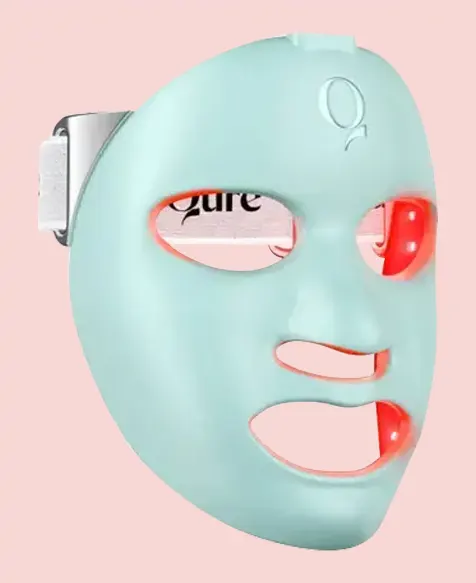
Best For: App-Controlled Multi-Wavelength Wireless Mask — 5 Wavelengths, Ultra-Short 3-Minute Sessions, FDA-cleared
Features: 160 dual-core LEDs, 5 clinically proven wavelengths (deep red + NIR 880nm, red, amber, blue), wireless and cordless, app-controlled via companion app, 3-minute daily sessions, lightweight slim profile, two treatment modes (skin rejuvenation + skin clearing), USB-C rechargeable
Price: ~$379
The amber wavelength (included in the skin rejuvenation mode) is particularly relevant for rosacea — sitting in the 580–590nm range that research associates with lymphatic drainage, redness reduction, and improved microcirculation. The wireless design with no external cords means it can be worn during any 3-minute window in the day. FDA clearance from a recognised regulatory process provides the clinical verification that matters for a face-applied device.
Pros & Cons
Pros
- 3-minute sessions — highest compliance rate of any mask on this list
- App-controlled — tailored rosacea protocol distinct from anti-acne mode
- Amber wavelength included — lymphatic drainage and redness reduction
- FDA-cleared, wireless, lightweight and portable
- 5 wavelengths — broader therapeutic spectrum than most masks
Cons
- 3-minute sessions may be insufficient for severe or longstanding rosacea
- Premium price (~$379) for a shorter-session device
- Irradiance data not independently published
More to Know
User Lisa M. explains::
3 minutes a day sounds too short to work but my rosacea genuinely looks better after 6 weeks. The app is really helpful — I run the skin rejuvenation mode in the morning and it picks the right wavelengths for redness without me needing to know the science. It fits perfectly into a busy routine and the wireless design means I wear it while making coffee.
6. Foreo FAQ 202
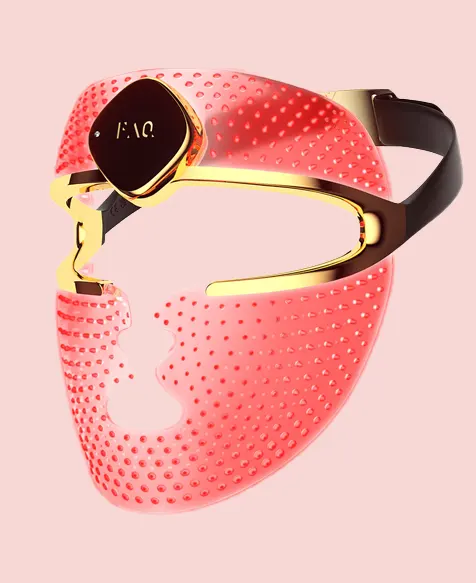
Best For: Premium Lifestyle Multi-Wavelength Mask — 8 LED Colours, 600 Light Points, Wear-and-Go Freedom
Features: 600 light points across 8 wavelengths — NIR (850nm), red (650nm), blue (420nm), green (519nm), orange (590nm), purple (450nm), cyan (463nm), yellow (570nm); flexi-fit silicone scanning 10,000+ face shapes, wireless, app-controlled via FAQ Swiss app, 3,000x per second pulsing, gentle skin warming for enhanced penetration, 100-minute battery per charge, USB rechargeable, 2-year warranty, open eye and mouth design for full mobility
Price: ~$799
The flexi-fit design — developed by scanning over 10,000 faces — moulds to individual facial contours for even light distribution across every millimetre, including the nose, cheek hollows, and chin where rosacea most commonly presents. The pulsing at 3,000x per second is designed to enhance dermal penetration and increase cellular uptake efficiency. The open-eye, open-mouth design and wireless 100-minute battery allow users to go about their routine during sessions — reading, working at a desk, or doing light activities — making daily compliance easier for busy schedules.
Pros & Cons
Pros
- 8 wavelengths including yellow, cyan, and orange — broadest colour range for rosacea management
- 600 light points across full face — even coverage including nose and cheek hollows
- Flexi-fit silicone moulded to 10,000+ face shapes — consistent contact coverage
- Fully wireless, 100-min battery — genuine wear-and-go freedom
- App-controlled pre-programmed rosacea-relevant routines
Cons
- Premium price (~$799) — highest on this list
- Some independent testers have questioned whether the light points are true LEDs or light guides from edge-mounted LEDs — actual therapeutic output disputed in some reviews
- 14-day return window only if unopened — limited trial period
- 2-year warranty shorter than RosaLight (5 years) or Hooga/Novaa (3 years)
More to Know
User Victoria H. explains::
The Foreo mask fits my face unlike any other LED mask I’ve tried — it actually contours to my nose and cheeks which is where my rosacea is worst. I use the orange and yellow modes mainly for my redness and after 5 weeks I’m seeing a real calming of my baseline redness. The fact I can wear it while working at my laptop makes daily use genuinely realistic.
7. RosaLight™
Best For: Only LED Mask Engineered Exclusively for Rosacea — 7 Rosacea-Specific Colours, 5-Year Warranty
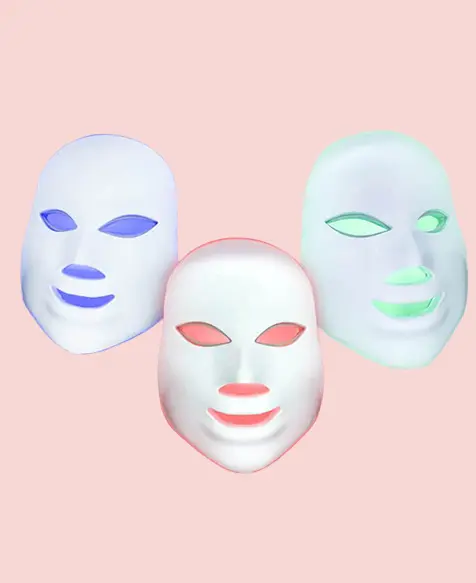
Features: 150 high-intensity LEDs, 7 rosacea-specific colours — red (633nm), yellow (590nm), blue (463nm), green (527nm), purple (600nm), light blue (510nm), white; wavelength mix specifically formulated for rosacea based on published clinical research, built-in silicone eye protectors, 90-day money-back guarantee, 5-year warranty — longest on this list, 500+ five-star reviews
Price: ~$224.95
Clinical evidence supporting the RosaLight protocol is specific: 633nm red light has been demonstrated to significantly reduce Demodex mite populations — a documented driver of papulopustular rosacea — while simultaneously stimulating collagen and elastin production in damaged facial capillaries. Yellow (590nm) supports lymphatic drainage and swelling reduction. Blue (463nm) targets Cutibacterium acnes and Demodex. The brand’s recommended rosacea protocol — starting at 3x weekly for 5 minutes, rotating between red, blue, and yellow — reflects the evidence for graduated introduction in sensitive rosacea skin. Over 500 five-star reviews from verified rosacea patients are the strongest real-world evidence base on this list. The 5-year warranty is the longest by a significant margin.
Pros & Cons
Pros
- Only mask on this list built specifically for rosacea — wavelength selection rosacea-targeted
- 633nm red — most specifically studied wavelength for Demodex reduction in rosacea
- 5-year warranty — by far the longest on this list
- 90-day money-back guarantee — meaningful trial for rosacea outcomes assessment
- 500+ five-star reviews specifically from rosacea patients
Cons
- No independent certification (FDA, CE) disclosed — less regulatory transparency
- Irradiance data and independent LED testing not published
- Brand is a specialist rosacea company — less broad brand recognition than Omnilux or CurrentBody
More to Know
User Maria K. explains:
I love my RosaLight mask. I use the red light for my rosacea and I am seeing very positive results after just a few weeks. The baseline redness is visibly better and the flushing has almost disappeared completely. My friends noticed the change too. I still can’t believe it after so many years of struggling. I’m sure it will keep getting better.
8. Omnilux Contour Face
Best For: Clinician-Grade Flexible Mask — 20+ Years Clinical Heritage, Dermatologist-Recommended, Simple Proven Protocol
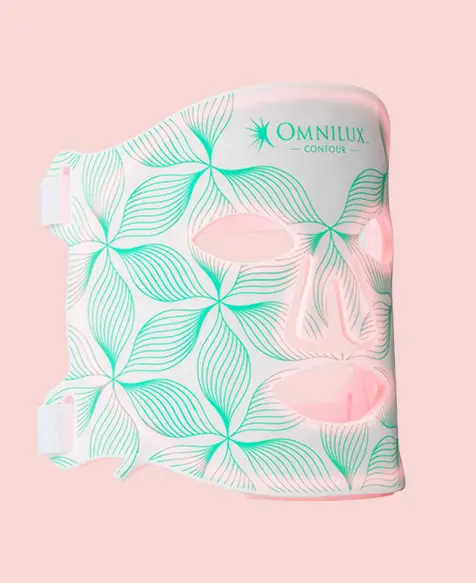
Features: 132 dual-chip LEDs (66 × 633nm red + 66 × 830nm near-infrared), FDA-cleared, ISO certified, medically CE marked, flexible double-strap silicone, close-contact LED delivery (LEDs directly against skin), 10-minute sessions 3–5x per week, no eye protection required, 40+ peer-reviewed studies on specific wavelengths, used in dermatology clinics globally, backed by 20+ years of professional LED heritage
Price: ~$396
For rosacea specifically, 633nm is the wavelength most precisely associated with anti-inflammatory photobiomodulation and Demodex mite reduction in published research. The 830nm NIR supports collagen remodelling and vascular repair in the deeper dermis. The double-strap flexible silicone fits securely without pressure, and the 10-minute session protocol requires no configuration, no app, and no mode selection — making daily compliance genuinely achievable for rosacea patients who may also have skin sensitivity to excessive stimulation.
Pros & Cons
Pros
- 40+ peer-reviewed studies on its specific 633nm + 830nm wavelengths — strongest evidence base on this list
- FDA-cleared, ISO certified, medically CE marked — strongest combined regulatory credentials
- Used in dermatology clinics globally — 20+ years of professional clinical heritage
- Close-contact LED delivery — maximum photon delivery at 0-distance
- Simple 10-minute protocol — no configuration, no app required
Cons
- Only 2 wavelengths — no yellow, blue, or green for broader rosacea mode variety
- 132 LEDs — lower LED count than several competing masks
- Corded battery pack — slightly bulkier than fully wireless designs
- Premium price (~$396)
More to Know
User Caroline B. explains::
My dermatologist specifically recommended the Omnilux Contour for my rosacea and I’m so glad I followed the advice. After 8 weeks of consistent use the redness on my nose and cheeks has reduced noticeably and my skin feels far less reactive. I love that I don’t have to think about settings — just put it on for 10 minutes and it does exactly what it needs to do.
Buying Guide — Choosing the Right Red Light Therapy Device for Your Rosacea
Rosacea type matters: Erythematotelangiectatic rosacea (persistent redness and flushing) benefits most from red (630–633nm) and yellow (580–590nm) wavelengths targeting surface inflammation and vascular repair. Papulopustular rosacea (redness with pustules or breakouts) additionally benefits from blue light (410–463nm) targeting bacteria and Demodex. Devices with multi-mode systems (Novaa Glow Therapy Mask, RosaLight, Foreo FAQ 202, Qure) offer the most protocol flexibility across both types.
Full-face mask vs. targeted wand: Full-face masks treat the entire face simultaneously in passive hands-free sessions — best for generalised rosacea and daily maintenance. The Kiierr Radiate wand is better suited for concentrated rosacea in specific areas (nose, cheeks), as a lower-cost starting point, or as a complement to a face mask for localised flare-up management.
Yellow light — the underrated rosacea wavelength: Yellow and amber light at 580–590nm is specifically associated with redness reduction, lymphatic drainage, and microcirculation improvement — the three mechanisms most directly relevant to rosacea’s visible redness. Prioritise masks that include yellow or amber modes: Novaa Glow Therapy Mask (580nm), Foreo FAQ 202 (570nm), RosaLight (590nm), and Qure (amber mode).
Starting gently for sensitive rosacea skin: Begin with shorter sessions (5 minutes) at lower intensity. Rosacea skin can be reactive, and overexposure in the first few sessions may temporarily worsen redness. Increase session length gradually over 2–4 weeks. Apply devices to clean, moisturiser-free skin — no retinoids, acids, or Vitamin C immediately before sessions as these can cause photosensitivity reactions.
Budget guide:
- ~$99.99: Kiierr Radiate Wand — targeted entry point
- ~$224.95: RosaLight — rosacea-dedicated specialist device
- ~$249.90: Novaa Glow Therapy Mask — best overall value for multi-mode rosacea
- ~$249.00: Hooga Red Light Mask — best rechargeable cord-free mid-range
- ~$379: Qure Q-Rejuvalight PRO — best wireless app-controlled
- ~$380: CurrentBody Skin LED Mask — Veritace®-verified clinical quality
- ~$396: Omnilux Contour Face — clinical gold standard
- ~$799: Foreo FAQ 202 — premium lifestyle 8-wavelength device
How to Use Red Light Therapy for Rosacea — Safe Protocol for Sensitive Skin
- Before each session: Cleanse your face gently with a rosacea-safe, fragrance-free cleanser. Do not apply any active skincare products — retinoids, AHAs, BHAs, Vitamin C, or benzoyl peroxide — immediately before a session. These can increase photosensitivity and may cause irritation on rosacea-prone skin.
- Session duration: Start with 5 minutes per session for the first two weeks. This is particularly important for highly reactive rosacea skin, where too much initial stimulation can trigger a temporary flare. Increase to 10 minutes in weeks 3–4, and to your device’s recommended maximum (typically 15–20 minutes) from week 5 onward.
- Frequency: 3–5 sessions per week is the evidence-supported protocol for rosacea. Daily use is safe once your skin has adjusted in the first 2–4 weeks. Most clinical studies showing significant rosacea improvement used 3 sessions per week over 8–12 weeks.
- Post-session care: Follow with a gentle, rosacea-safe moisturiser or barrier cream (niacinamide, ceramides, or centella asiatica formulas work well). Avoid direct sun exposure for at least 30 minutes post-session and apply broad-spectrum SPF during the day — red light therapy increases skin cell activity and transient photosensitivity.
- Timeline: Most rosacea users notice initial calming of acute redness within 1–2 weeks. Meaningful reduction in baseline redness and flushing typically requires 4–8 weeks of consistent 3–5x weekly use. Structural improvements — visible capillary reduction, skin texture improvement — often emerge after 8-12 weeks of continued use. As Dr. Beal explains, “Red light is like strength training for your skin, benefits accumulate over time with usage.”
Mode rotation for multi-mode masks: For devices with multiple wavelength modes (Novaa Glow, RosaLight, Foreo FAQ 202), a recommended rosacea rotation is: Session 1 — red (633nm) for primary anti-inflammatory action; Session 2 — yellow (580–590nm) for redness and lymphatic drainage; Session 3 — blue (410–463nm) for bacteria and Demodex. Rotate across sessions rather than using all modes simultaneously to allow skin response assessment.
Frequently Asked Questions
Does red light therapy help rosacea?
Can red light therapy make rosacea worse?
A: When used correctly at appropriate wavelengths and session times, red light therapy does not worsen rosacea. Starting too aggressively — overly long first sessions, too-high intensity, or using inappropriate wavelengths — may cause temporary increased redness in very reactive rosacea skin. Always begin with 5-minute sessions and build gradually. Devices with heat generation or broad-spectrum visible light (not 630nm-specific) should be avoided.
What wavelength is best for rosacea?
A: 633–660nm red light is the primary evidence-based wavelength for rosacea — it reduces inflammatory cytokines, stimulates collagen in broken capillaries, and at 633nm specifically has been shown to reduce Demodex populations. Yellow/amber at 580–590nm is the second most relevant for visible redness reduction and lymphatic drainage. Near-infrared at 830–850nm supports deeper structural repair.
How long does red light therapy take to work for rosacea?
A: Most users notice initial calming within 1–2 weeks of consistent use. Meaningful reduction in baseline redness and flushing frequency typically emerges after 4–8 weeks. Structural improvements in capillary visibility and skin texture develop over 8–12 weeks. Rosacea is a chronic condition — results accumulate with continued use rather than resolving in a single course.
Is the Novaa Glow Therapy Mask safe for sensitive rosacea skin?
A: Yes — the Novaa Glow Therapy Mask is FDA-cleared, UV-free, and uses wavelengths established as safe for sensitive skin. The remote control allows starting at lower intensities, and the 60-day risk-free trial provides ample time to assess skin tolerance without financial risk. As with all LED devices, begin with shorter sessions and build gradually.
Can I use LED light therapy alongside my rosacea topical treatments?
A: Generally yes — red light therapy is compatible with most rosacea topical treatments including metronidazole, azelaic acid, ivermectin, and niacinamide. However, avoid applying prescription topicals immediately before a session as these can interact with light exposure. Apply them after your LED session. Always consult your dermatologist before adding light therapy if you are on systemic rosacea treatments or photosensitising medications.
Is red light therapy or blue light therapy better for rosacea?
A: For rosacea, red light is the primary and most evidence-supported therapeutic wavelength. Blue light (410–463nm) is a useful secondary mode for papulopustular rosacea specifically — it targets bacteria and Demodex mites. Devices combining both red and blue modes (Novaa Glow Therapy Mask, RosaLight, Kiierr Radiate Wand, Hooga Mask) offer the most comprehensive rosacea management.
How is a red light therapy mask different from IPL or laser for rosacea?
A: IPL (Intense Pulsed Light) and pulsed-dye laser target haemoglobin in visible blood vessels, causing thermal destruction to selectively eliminate capillaries — they are more aggressive clinical procedures requiring professional administration with associated downtime. LED red light therapy is non-thermal, non-ablative, and works through photobiomodulation rather than vascular destruction — it reduces inflammation and supports repair without damaging tissue. LED therapy is appropriate for daily home use; IPL and laser require clinic sessions and recovery periods.
Conclusion
For anyone managing rosacea at home in 2026 — whether it’s the persistent baseline redness of erythematotelangiectatic rosacea or the flare-up cycle of the papulopustular subtype — the Novaa Glow Therapy Mask by NovaaLab delivers the most complete and clinically relevant solution. Its six modes including yellow light at 580nm for redness reduction, FDA clearance, 180 medical-grade LEDs, and 60-day risk-free trial make it the strongest starting point for rosacea LED therapy at home. For users who want the most rosacea-specific device on the market with the longest warranty, the RosaLight™ stands alone as the only mask built exclusively for rosacea skin. And for those who prioritise clinical heritage and dermatologist validation above all else, the Omnilux Contour Face offers 20+ years of professional photomedicine backed by over 40 peer-reviewed studies. Whatever device you choose, the evidence is consistent — calmer, less reactive rosacea skin is achievable with consistent red light therapy at the right wavelengths, used patiently over 8–12 weeks.

**This is a subjective assessment based on the strength of the available information and our estimation of efficacy.
*Result may vary. The information contained in this website is provided for general informational purposes only. No medical claims are implied in this content, and the information herein is not intended be used for self diagnosis or self treatment of any condition.
Disclosure of Material connection: Some of the links in the post above are "associate sales links." This means if you click on the link and purchase an item, we will receive commission. Regardless, we only recommend products or services which we use personally and/or believe will add value to our readers. We are disclosing this in accordance with the Federal Trade Commission's 16 CFR, Part 255: "Guides Concerning the Use of Endorsements and Testimonials."
Related Articles
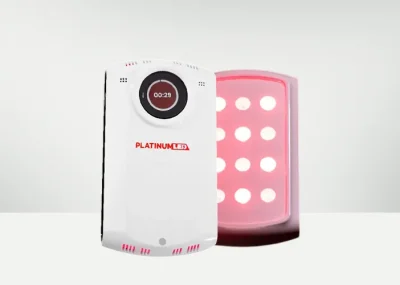
PlatinumLED BioMax Go Review: Is This Portable Red Light Worth It?
PlatinumLED BioMax Go is a cordless red light therapy device with 660 nm red light, 850 nm near-infrared light, adjustable intensity, and voice controls. Learn about its features, portability, pricing, and limitations to decide whether it fits your needs.
READ REVIEW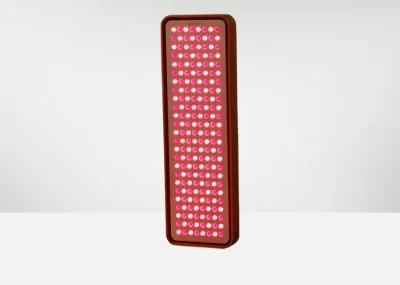
Sunlighten Red Light Therapy Panel Review: Is It Worth the Price?
An in-depth look at the Sunlighten Red Light Therapy Panel’s wavelengths, output, guided programs, design, controls, coverage, pricing, and overall value.
READ REVIEW
Block Blue Light BioLight SAD Lamp Review: Is This Bright Light Therapy Lamp Worth It?
A closer look at the BioLight SAD Lamp’s brightness, full-spectrum output, features, daily usability, and value for bright light therapy.
READ REVIEW