

 Fact Checked

Introduction
Red light therapy has moved from dermatology clinics into everyday skincare cabinets, and LED face masks are the format most people reach for first. Instead of booking a professional session, you strap on a wearable device and let it do its work for ten or twenty minutes at home.
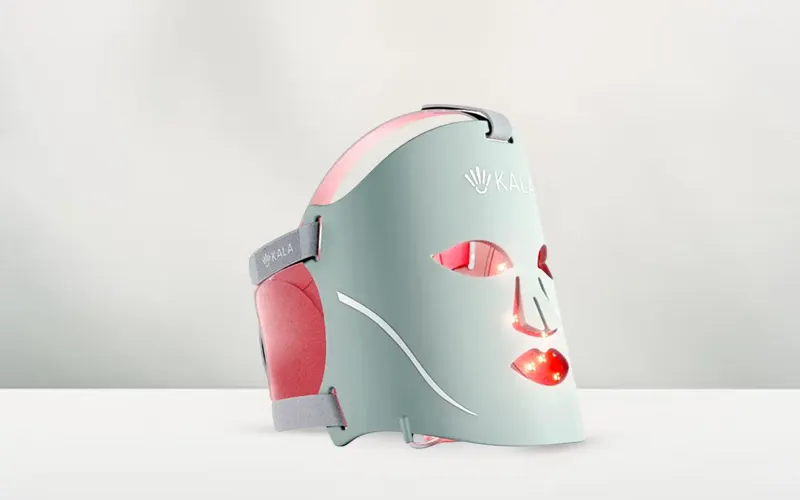
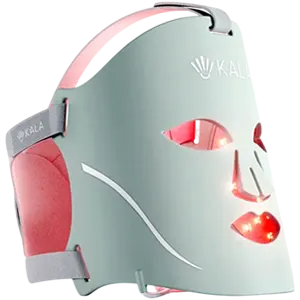
The Kala Red Light Face Mask sits in the premium end of that category. It combines three wavelengths of light, red, near-infrared, and blue, through a 198-LED array built into a flexible, rechargeable silicone shell. On paper, that’s a fairly complete package: multiple wavelengths, a compact charging setup, and short session times that fit into an existing routine.
But specs on a product page only tell part of the story. What actually matters is whether the mask is comfortable enough to wear regularly, whether its light output holds up against independent measurement, how much of the face it actually reaches, and whether the asking price is reasonable given all of that.
This review pulls together the manufacturer’s stated specifications, the general science behind red and near-infrared light, independent testing data where it exists, and real user feedback to give a grounded answer to a simple question: does the Kala mask deliver enough to be worth buying?
How Does It Rate?
Kala Red Light Mask
 3.5/5Quality
 3.7/5User Friendly
 3.8/5Value
 3.9/5Customer Satisfaction
Pros
- Three usable wavelengths (red, near-infrared, blue) in one mask
- Lightweight at 348 g, easy to wear for a full session
- Rechargeable lithium-ion battery with USB-C charging
- Two-year warranty
Cons
- Facial coverage isn’t as complete as some larger masks, particularly around the jaw and under the eyes
- The controller is wired, which limits movement during a session
- Fewer customization options than some higher-end competitors
- Like all LED therapy, results depend on weeks of consistent use, not a single session
- Priced above many entry-level LED masks
How Does the Kala Red Light Mask Work?
How Red Light Therapy Works
Red light therapy, more formally known as photobiomodulation, exposes skin to specific wavelengths of visible and near-visible light. Unlike UV light, which damages skin over time, the red and near-infrared wavelengths used in devices like this are non-UV and are studied for how they interact with cells rather than for how they damage tissue.
The 2020 study review says that certain wavelengths can influence cellular activity, including processes tied to energy production within cells and downstream effects on skin appearance. That said, owning an LED device doesn’t automatically translate into visible change. Wavelength accuracy, how strong the light actually is at skin level, how long you use it, how consistent you are, and how evenly the light reaches the treatment area all shape the real-world outcome.
Kala’s mask uses three wavelengths with different intended jobs: red light aimed at surface-level skin concerns, near-infrared for deeper penetration, and blue light for blemish-related use.
What 630nm Red Light Does
Red light around 630 nm is the most common wavelength found in skincare-focused LED devices, and it’s the one most closely associated with collagen-related activity and general skin rejuvenation in the existing research.
For everyday users, this is the wavelength linked to concerns like uneven texture, fine lines, and a dull-looking complexion. It’s worth being realistic about the timeline, though; red light therapy isn’t designed to produce overnight change. Most of the research and anecdotal reporting around it points to gradual improvement over several weeks of regular sessions, not a single dramatic result.
What 830nm Near-Infrared Light Adds
Near-infrared sits just outside the range of visible light and penetrates further into the skin than red light alone. That’s why it’s almost always paired with red light in serious LED devices rather than offered on its own; the two wavelengths are considered complementary, with red addressing surface-level concerns and near-infrared reaching a bit deeper. Kala’s 830 nm near-infrared light is positioned this way: as a companion to the red light rather than a replacement for it.
What Blue Light Adds
Blue light does a different job entirely. Rather than being associated with anti-aging use, it’s more commonly linked to acne– and blemish-focused skincare. Its inclusion gives the Kala mask some added versatility , someone mainly focused on skin appearance and fine lines will likely lean on the red and near-infrared modes, while someone dealing with occasional breakouts may reach for the blue-light setting instead.
What Independent Testing Found
Independent measurement of the Kala mask using a spectrometer found an output of roughly 26 mW/cm² directly over the red and near-infrared LEDs , a notably stronger reading than the manufacturer’s own listed figure for red light (20 mW/cm²), and strong compared with many masks in a similar price bracket.
That number matters because the total light dose a session delivers depends on both how strong the light is and how long you’re exposed to it. A higher measured output isn’t automatically better on its own, though , it still needs to reach the skin evenly across the treatment area, which is a separate question from raw intensity and one where the mask has more mixed results .
What the Evidence Does , and Doesn’t , Show
The broader research base on red and near-infrared light therapy is genuinely promising, but it’s important to separate that general research from anything conducted specifically on the Kala device. Kala uses wavelengths that are well represented in the wider photobiomodulation literature, but individual results still vary by skin type, how consistently the mask is used, and realistic expectations going in.
A well-built mask is a convenient way to bring LED therapy into a home routine, but it’s best understood as one part of a broader skincare approach rather than a stand-in for professional treatment or medical care.
Kala Red Light Mask at a Glance
| Feature | Kala Red Light Mask |
|---|---|
| Device Type | LED facial mask |
| Wavelengths | 630 nm red, 830 nm near-infrared, 465 nm blue |
| LEDs | 198 |
| Manufacturer Output | Red: 20 mW/cm² · NIR: 10 mW/cm² · Blue: 10 mW/cm² |
| Independently Measured Output | ~26 mW/cm² over red/NIR LEDs |
| Treatment Time | 10–20 minutes |
| Battery | Rechargeable lithium-ion |
| Charging Port | USB-C |
| Charging Time | ~4 hours |
| Weight | 348 g |
| Warranty | 2 years |
| Best For | Users wanting red, near-infrared, and blue LED therapy in one wearable mask |
Key Features of the Kala Red Light Mask
Three-Wavelength LED Configuration
The headline feature is the combination of red, near-infrared, and blue light in a single device. That’s broader functionality than a red-light-only mask, and it means the same device can be used for two fairly different goals , general skin appearance on one hand, blemish support on the other , without needing two separate products.
198 LED Light System
Kala packs 198 LEDs into the mask, which sounds like a lot on paper. But LED count by itself isn’t the full picture , a mask with more LEDs isn’t automatically superior if those LEDs are unevenly distributed. How the lights are positioned, and how much of the face actually sits under them, matters just as much as the total count.
Rechargeable, Portable Design
The lithium-ion battery and USB-C charging make this a genuinely low-maintenance device , no dedicated wall connection needed for each session. At 348 g, it’s also lighter than a number of bulkier LED panels and masks, which makes it easier to fold into an existing routine rather than treating it as a separate ritual.
Simple Treatment Controls
Kala keeps the controls straightforward: pick a mode, start the timer, done. That’s a plus for anyone who doesn’t want to fuss with settings, though it does mean less granular control than some premium competitors offer, since there isn’t extensive session customization built in.
Wired Controller
The one real trade-off in the design is that the mask isn’t fully cordless , a cable still runs to the controller during use. For most people that’s a minor inconvenience rather than a dealbreaker, but anyone expecting complete wireless freedom during a session should know this going in.
First-Hand Testing Experience
Fit, Comfort & Breathability
Worn over multiple sessions, the mask stays in place reasonably well thanks to the adjustable strap system, and the flexible silicone doesn’t dig in anywhere obvious. Talking and breathing normally through a session isn’t a problem, which matters more than it sounds , a mask that’s annoying to wear for even ten minutes is one that gets skipped. Heat buildup is mild rather than uncomfortable over a standard 10–20 minute session.
Fit isn’t perfectly even, though. Contact against the skin is closer and more consistent across the cheeks and forehead than it is around the jaw and the sides of the face, where the mask tends to sit slightly off the skin rather than flush against it.
Facial Coverage
Coverage is the area where the Kala mask is most inconsistent. Cheek and forehead coverage is solid. The nose area gets a modest amount of direct light. Coverage thins out noticeably around the jawline, the under-eye area, and the outer edges of the face near the temples , zones that some larger, panel-style masks handle more completely. This isn’t unique to Kala; uneven coverage is a common trade-off in wearable masks generally, but it’s worth factoring in if those specific areas are a priority.
Ease of Use
Day-to-day operation is simple: charge it, select a mode on the controller, and start the session. The learning curve is short , most people will need the manual once, if at all, to figure out mode-switching. Cleaning is straightforward since the silicone shell wipes down easily, and the included carry bag makes it reasonable to store or travel with.
Brightness & Light Experience
The light output is noticeably bright at close range, which is part of why the included protective goggles are worth actually using rather than skipping. The blue-light mode reads as visibly different in tone from red and near-infrared, which makes it easy to tell which mode is active without checking the controller.
Real-World Session Experience
Across repeated sessions, the mask remains comfortable enough at the 10-minute mark that going the full 20 minutes doesn’t feel like a stretch. The cord is noticeable but not distracting once you’re sitting or lying down for a session; it becomes more of an issue if you’re trying to walk around while wearing the mask. Overall, the experience is consistent enough that sticking to a regular schedule feels realistic rather than like a hassle.
Potential Benefits of the Kala Red Light Mask
May Support Skin Rejuvenation
The red and near-infrared combination is the pairing most associated in the research with fine-line appearance and general skin rejuvenation according to the Journal of cosmetic and laser therapy, tied to collagen-related cellular processes.
May Improve the Appearance of Skin Texture
With consistent use over weeks rather than days, some users report smoother-looking, more even texture. This is a gradual effect rather than an immediate one, and it depends heavily on how regularly the mask is actually used.
May Help With Acne-Prone Skin
The blue-light mode is the relevant setting here, and it works on a different mechanism than the anti-aging wavelengths; it’s associated with blemish and breakout support rather than collagen or fine lines.
May Support a More Even-Looking Complexion
Some users report a more even skin tone with regular use. It’s worth framing this as an appearance-level benefit rather than a treatment for any specific skin condition or pigmentation disorder.
Convenient At-Home Skincare
Short sessions, a portable rechargeable design, and simple controls all make this the kind of device that’s realistic to actually stick with , arguably the most underrated “benefit” of any at-home LED mask, since consistency drives results more than any single spec.
Who Is the Kala Red Light Mask Best For?
Best suited for:
- People mainly focused on general facial skincare rather than targeted treatment
- Buyers who want both anti-aging (red/NIR) and blemish-support (blue) options in one device
- Anyone who values portability and short sessions over a bulkier setup
- Users who prefer simple, low-fuss controls over deep customization
- Buyers looking for a mid-range alternative to the priciest professional-grade masks
May not be ideal for:
- Users who specifically want strong jawline or under-eye coverage
- Anyone who wants a fully cordless, cable-free experience
- People who want granular control over session length, intensity, or pulsing
- Buyers who want additional wavelengths beyond red, near-infrared, and blue
- Anyone prioritizing maximum facial coverage above portability and price
Kala Red Light Mask Alternatives
| Feature | Kala Red Light Mask | Novaa Glow Therapy Mask | Hooga Red Light Mask |
|---|---|---|---|
| Wavelengths | 630 nm red / 830 nm NIR / 465 nm blue | 630 nm red / 450 nm blue / 580 nm yellow / 830 nm infrared | 630/660 nm red / 850 nm NIR |
| LED count | 198 LEDs | ~108–180 LEDs depending on listing | 66 tri-chip LEDs |
| Modes | Red, NIR, blue | Six modes (red, blue, yellow, infrared, and combinations) | Red/NIR, adjustable brightness and pulse frequency |
| Facial coverage | Strong on cheeks/forehead, thinner around jaw and under-eye | Broad mode selection, but LED spacing varies by report | Even coverage reported, face-only unless the neck attachment is added |
| Controller | Wired | Cordless | Cordless |
| Treatment time | 10–20 minutes | ~10 minutes per session | Up to 20 minutes, adjustable |
| Customization | Limited (mode + timer only) | Six selectable light modes | Adjustable brightness, timer, and pulse frequency |
| Warranty / returns | 2-year warranty | 1-year warranty, 60-day return window | 2-year warranty, 60-day trial |
| Price positioning | Mid-to-premium | Comparable to Kala, varies by retailer | Generally the most budget-friendly of the three |
Kala Red Light Mask Reviews: What Users Like and Dislike
Positive feedback tends to center on comfort during sessions, straightforward operation, the flexibility of having red, near-infrared, and blue light in one mask, and the overall build quality of the silicone and straps. Several users specifically mention noticing a difference in skin appearance after weeks of consistent use, and portability is a recurring plus for people fitting sessions around a busy schedule.
Negative feedback clusters around the same weak points independent testing identified: coverage gaps around the jaw and under-eye area, occasional cosmetic issues on individual units (like small chips on the shell), and the wired controller limiting movement during a session. A smaller number of reviews mention the case’s packaging having an odd smell out of the box, which appears to be an occasional manufacturing issue rather than a widespread pattern.
Neutral or mixed feedback often comes from users who like the concept and find the mask comfortable, but who want broader facial coverage, or who appreciate the blue-light mode without using it as often as the red/NIR settings. A few reviewers note the price feels reasonable rather than exceptional relative to competitors.
User reviews are useful for understanding real-world experience, but individual testimonials shouldn’t be read as proof of clinical efficacy , they reflect subjective impressions, not controlled outcomes.
How to Use the Kala Red Light Mask
- Fully charge the mask before your first session.
- Cleanse and dry your skin so the light isn’t blocked by product residue.
- Secure the mask with the adjustable straps for a comfortable, even fit.
- Select the light mode , red/NIR, blue, or a combination , on the controller.
- Run the session for the recommended 10–20 minutes.
- Remove the mask, then follow with your usual moisturizer or serum.
- Stick to a consistent weekly schedule rather than occasional, spaced-out use.
Always confirm the exact recommended frequency and session length against Kala’s current official instructions rather than assuming settings from another mask apply here.
Is the Kala Red Light Mask Safe?
LED-based red and near-infrared light is generally considered low-risk for topical use, since it doesn’t rely on UV wavelengths. That said, a few general precautions apply to any LED mask, not just this one: follow the manufacturer’s instructions on session length and frequency, wear the included protective goggles rather than looking directly at the LEDs, and be aware that certain medications and skin conditions can increase photosensitivity.
Anyone on photosensitizing medication, managing an active skin condition, or generally uncertain about whether LED therapy is appropriate for them should check with a dermatologist or doctor before starting regular use. This mask, like any at-home LED device, is intended as a skincare tool rather than a treatment for a diagnosed medical condition.
Kala Red Light Mask Price, Warranty & Return Policy
Kala’s official listing prices the mask at $399.99, with a current sale price of $339.99, and financing available through four interest-free installments. The mask ships with a two-year warranty, and Kala advertises a 30-day money-back guarantee alongside free express shipping. The included kit covers the mask itself, controller, power supply with country-specific adapters, USB-C to USB-A cable, adjustable straps, protective goggles, carry bag, and a user manual.
These figures reflect the mask’s current official page and should be reconfirmed at the time of publication, since pricing, bundled accessories, and promotional terms can change.
Kala Red Light Mask FAQs
Does the Kala Red Light Mask really work?
A: It uses wavelengths that are well studied in the broader red and near-infrared light therapy research, and independent measurement confirmed the light output is strong for its category. As with any LED mask, results depend on consistent use over several weeks rather than a handful of sessions.
What wavelengths does the Kala Red Light Mask use?
A: It combines 630 nm red light, 830 nm near-infrared light, and 465 nm blue light through 198 LEDs, giving it both anti-aging and blemish-support capability in one device.
Does the Kala mask have near-infrared light?
A: Yes. Its 830 nm near-infrared wavelength is designed to penetrate deeper than the red light alone and is intended to work alongside it rather than replace it.
Can the Kala Red Light Mask help with acne?
A: The blue-light mode is the relevant setting for blemish-prone skin, working through a different mechanism than the red and near-infrared modes used for general skin appearance.
How long should you use the Kala Red Light Mask?
A: Sessions typically run 10 to 20 minutes. Meaningful changes in tone, texture, or firmness are generally reported after 4 to 6 weeks of consistent use rather than after isolated sessions.
Does the Kala mask cover the jawline?
A: Coverage here is one of the mask’s weaker points , the jawline and under-eye area receive noticeably less direct light than the cheeks and forehead.
Is the Kala Red Light Mask cordless?
A: Not entirely. The mask itself is untethered, but it connects to a wired controller during sessions, which limits movement compared with fully cordless alternatives.
Can you use skincare products with the Kala LED face mask?
A: It’s generally recommended to use the mask on clean, dry skin and apply serums or moisturizers afterward, since product residue can interfere with how evenly the light reaches the skin.
Is Kala better than other LED face masks?
A: It compares well on warranty length and measured red-light output, but trails cordless competitors like Novaa and Hooga on mobility during sessions, and offers less mode variety than some multi-wavelength alternatives.
Is the Kala Red Light Mask worth the money?
A: For buyers who want a comfortable, well-built red/NIR/blue mask backed by a longer warranty, yes. For buyers prioritizing full facial coverage, a cordless design, or maximum customization, it’s worth weighing against the alternatives first.
Final Verdict: Is the Kala Red Light Mask Worth It?
Kala does the fundamentals well. The wavelength combination is sound, the measured light output beats its own listed spec, the mask is genuinely comfortable to wear for a full session, and the two-year warranty plus 30-day return window offer more reassurance than some competitors provide. It’s also easy enough to use that sticking with a regular routine feels realistic rather than aspirational.
Where it comes up short is coverage , the jawline and under-eye area don’t get the same attention as the cheeks and forehead , and the wired controller, which puts it a step behind fully cordless competitors like Novaa and Hooga in terms of freedom of movement. Customization is also more limited than some premium alternatives.
For someone who wants a straightforward, comfortable red/NIR/blue mask and values a longer warranty over the widest possible feature set, Kala is a reasonable pick. Buyers who specifically want complete facial coverage, a cordless design, or deeper session customization may be better served by one of the alternatives above.




September 14, 2026
Very comfortable to wear, although facial coverage could be better
The lightweight design is probably my favorite thing about the Kala mask. I can actually finish a session without feeling like something heavy is pressing against my face. My main complaint is the coverage around my jaw. I feel like some areas are missed, especially compared with larger masks. Still, I’d recommend it if comfort is a priority.
September 10, 2026
Comfortable mask with THREE light options, but results take patience
I’ve been using it for several weeks and overall I’m pleased with it. The mask is light enough that I don’t mind wearing it for the full session, and having red, near-infrared, and blue light in one device is convenient. I’ve noticed a small improvement in my skin texture, but nothing dramatic yet. I think consistency matters more than anything with this type of mask.