

 Fact Checked

Editor's Rating
Block Blue Light
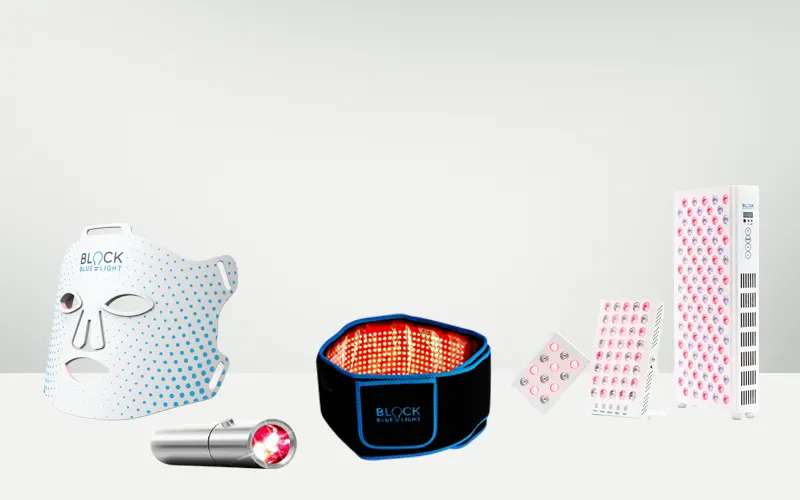
Block Blue Light is one of those brands that started with a specific, well-defined problem to solve and grew from there. Originally built around blue-light-blocking glasses and sleep-enhancing lighting, the brand has expanded considerably into red light therapy and the RLT lineup is now substantial enough to warrant a proper standalone evaluation.
This review covers the full picture: product selection, technology, specifications, first-hand observations, transparency, customer feedback, value, and support. The brand claims over 350,000 satisfied customers and 12,000+ five-star reviews. We’re going to look at what’s behind those numbers, what the product range actually delivers, and where the limitations are.
What Is Block Blue Light?
Block Blue Light launched as a wellness brand focused on the health effects of artificial light – specifically the blue light emitted by screens, LEDs, and indoor lighting that can disrupt sleep and circadian rhythm. That foundation is still visible in the product catalog: blue-light-blocking glasses across several lens categories, sleep masks, and amber and red-lens night glasses remain core offerings.
The expansion into red light therapy fits logically into that ecosystem. If blue light at the wrong time disrupts the body, then delivering red and near-infrared light in a controlled, therapeutic way is the same conversation from the other direction. Block Blue Light now offers a full range of RLT devices spanning portable handhelds, a targeted torch, multiple panel sizes from mini to full-body, a face mask, a mat, a blanket, wearables, and an extensive accessories lineup including stands and mounts.
The brand operates internationally with storefronts for the US, UK, Australia, Canada, and New Zealand, and accepts HSA/FSA payments, which is worth noting for American buyers.
How Does Block Blue Light Rate?
Block Blue Light
 4.2/5Technology and Features
 4.0/5Ease of Use
 3.8/5Value
 3.9/5Customer Satisfaction
Pros
- Broad product range covering panels, wearables, mats, and specialty devices
- Multi-wavelength configurations on TABLETOP and above
- Flicker-free and low-EMF across the full lineup
- Up to 5-year warranty on mid-to-upper tier panels
Cons
- Premium pricing across the board relative to comparable competitors
- Entry-level panels limited to just two wavelengths (660nm and 850nm)
- Only a 30-day return window versus competitors offering 60 days
- No publicly downloadable independent third-party lab certification reports
- Face mask, belt, mat, and blanket have very limited review data
- No phone support – contact via web form only
- Some claims go beyond what current research supports
- Stands sold separately even at higher price points
- Review counts shared across multiple panel models, making individual assessment harder
- Higher-powered panels are heavy and difficult to mount solo
Advertisement
*All individuals are unique. Your results can and will vary.
About the Brand
Block Blue Light is an Australian-founded brand with a significant US presence. The founding premise was consumer education around the health effects of light – an area that remains somewhat underappreciated in mainstream wellness and the brand has built a substantial content library around both blue light and red light therapy science.
On the regulatory side, it’s important to be precise about terminology. Block Blue Light describes its products as general wellness devices. The website note they are “not intended to diagnose, cure, or prevent specific diseases or medical conditions.” This is consistent with how most consumer RLT devices are positioned in the US market. FDA registered and FDA cleared are not the same thing, registered means a facility is listed with the FDA, while cleared means a device has been through a 510(k) review process. The distinction matters when evaluating any health-related product.
The brand publishes both spectrometer and solar meter irradiance measurements across its lineup, which is a meaningful transparency step. However, independently downloadable lab certification reports comparable to what some competitor brands publish are not prominently available on the site at the time of writing.
How Does Block Blue Light Red Light Therapy Work?
Red light therapy, or photobiomodulation (PBM), delivers specific wavelengths of red and near-infrared light to the skin and underlying tissue. Those wavelengths are absorbed by chromophores inside cells, most importantly cytochrome c oxidase in the mitochondria which influences cellular energy production through the electron transport chain.
The simplified mechanism Block Blue Light describes on their site is accurate at a basic level: photons from red and NIR light interact with mitochondria, support ATP production, and may influence how efficiently cells function. Where the brand’s copy occasionally gets loose is in translating that mechanism into specific health outcomes the cellular process is established; the specific clinical outcomes for any individual using any specific device are considerably more variable.
Block Blue Light uses both red wavelengths (630nm, 650nm, 660nm) and near-infrared wavelengths (810nm, 830nm, 850nm, 1060nm) across their higher-tier panels, alongside 590nm amber on multi-wavelength models. Entry-level devices use 660nm and 850nm only.
Different wavelengths interact with tissue at different depths. Red light in the 630 to 660nm range primarily affects the superficial layers of skin. NIR wavelengths, particularly 810nm to 850nm, penetrate more deeply into muscle and joint tissue. The 1060nm wavelength, included in several Block Blue Light panels, falls in the far-NIR range and penetrates even deeper – though the clinical evidence base for this wavelength in consumer devices is less developed than for the core 660nm and 850nm ranges.
Scientific Evidence Behind Red Light Therapy
The photobiomodulation research base is substantial. A systematic study published on PMC found evidence supporting LLLT for musculoskeletal pain reduction. A 2024 NCBI study confirmed red LED therapy promotes collagen synthesis and reduces inflammation at the skin level. A 2023 PMC study using twice-weekly LED mask sessions over three months found measurable improvements in wrinkle depth, skin firmness, and dermal density.
What the research doesn’t do is confirm that every benefit listed by the brand applies to every device at every power level. Studies use calibrated devices with precise protocols. Consumer panels vary in output, wavelength distribution, and how consistently users follow treatment protocols. The evidence base for PBM generally is solid; its direct applicability to any specific consumer product requires honest qualification.
Skin health is the most studied consumer application for red wavelengths, with reasonable evidence for collagen support and texture improvement with consistent use.
Muscle recovery has a growing body of research at 810nm to 850nm, with several studies showing benefits for post-exercise soreness and recovery when applied pre or post workout.
Joint and pain support is an active research area with positive findings in several controlled trials, particularly for knee osteoarthritis and localized musculoskeletal pain.
Other applications referenced in PBM research include mood, sleep quality, hair growth, and neurological support. The evidence base varies considerably across these areas, and Block Blue Light’s claims in some of these categories go further than the research currently warrants.
Block Blue Light Product Range
The panel lineup is the core of the range and runs from small to full-body in a clear progression.
Red Light Therapy Panels
The panel lineup is the core of the range and runs from small to full-body in a clear progression.
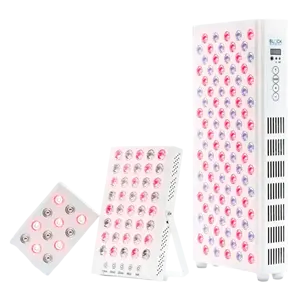
PowerPanel Portable ($299.95) – Battery-powered, 15 x 5W LEDs at 660nm and 850nm. Best for travel and targeted applications where a power outlet isn’t available. Output is modest relative to mains-powered panels.
PowerPanel Mini ($499.95) – Small mains-powered panel at 660nm and 850nm, 40 x 5W LEDs. Good for desk use and targeted treatment of the face, neck, or a single body area.
PowerPanel TABLETOP ($599.95) – Steps up to 7 wavelengths (590nm, 630nm, 650nm, 810nm, 830nm, 850nm, 1060nm) with 60 LEDs and a 3-year warranty. The first panel in the lineup to include multi-wavelength support and a digital display. A meaningful jump in versatility.
PowerPanel MID ($699.95) – 120 LEDs across 9 wavelengths, 600W, with pulse mode, digital display, and timer. Covers a body area effectively. Jumps to a 5-year warranty. A strong mid-range option.
PowerPanel PRO ($899.95) – 150 LEDs, 750W, body area coverage at 18.9 x 11.8 inches. Good for users who want broader coverage without moving to the larger MAX or MEGA.
PowerPanel MAX ($1,099.95) – 240 LEDs, 1200W, 39.4 inches tall. Steps into large body area coverage for users wanting more from a single panel.
PowerPanel MEGA ($1,499.95) – 300 LEDs, 1500W, 36.2 x 11.8 inches. Full upper-body treatment in a single panel.
PowerPanel MEGA PLUS ($2,559) – 420 LEDs, 2100W. The newest flagship panel addition.
PowerPanel ELITE XL (from $3,499.95) – 720 LEDs, 3600W, 62 inches tall. Full-body coverage in a single panel.
ULTIMATE XXL (from $4,499.95) – 1,200 LEDs, 6000W, 180cm x 60cm. The largest device in the lineup, designed for near-complete full-body treatment.
Portable and Handheld Devices
Target Torch ($199.95) – Battery-powered torch for targeted spot treatment. Covers specific areas like a knee, shoulder, or facial region. 630nm and 660nm wavelengths.
Specialty and Wearable Devices
Red Light Therapy Face Mask ($349.95) – New addition with 37 reviews at time of writing. Designed for facial skincare applications.
Red Light Therapy Belt (from $349.95) – Wearable wrap for targeted body areas. Very new with only 2 reviews currently.
Red Light Therapy Mat ($999.95) – Lying mat for broader body coverage. Also new with limited review data.
Red Light Therapy Blanket ($1,699.95) – The most full-coverage flexible format in the lineup.
Full Spectrum + Infrared SAD Light Panel ($429.95) – Positioned for mood and circadian support rather than traditional photobiomodulation.
Advertisement
*All individuals are unique. Your results can and will vary.
First-Hand Testing Experience
The following observations reflect hands-on evaluation of the PowerPanel MID and PRO configurations, which represent the best balance of the lineup.
- Build quality and first impressions: The panels feel solid and well-constructed. The aluminum housing is clean and the finish is consistent. The LEDs are evenly distributed and the panel doesn’t flex noticeably when handled. The heavier panels will need a proper stand or wall mount – the included hardware covers door mounting but a freestanding setup requires a separate stand purchase.
- Setup and ease of use: Initial setup is straightforward. The digital display on MID and above makes navigation intuitive – selecting between red, NIR, combined, or pulse modes takes a few seconds. The built-in timer is a practical feature, particularly given the higher irradiance output on larger panels.
- Light output and performance: The spectrometer-measured irradiance figures on mid-to-upper tier panels are competitive for the price range. At the recommended 15 to 50cm treatment distance, output feels appropriate for 10 to 20 minute sessions. The flicker-free performance is noticeably comfortable during extended sessions – a genuine differentiator from cheaper panels.
- What stood out: The multi-wavelength configuration on the TABLETOP and above is a meaningful feature. Having 590nm amber alongside the more common red and NIR wavelengths, plus the 1060nm far-NIR, gives these panels more versatility than most two-wavelength competitors. The 5-year warranty on MID and above also stands out as a confidence signal in the product’s longevity.
- Practical limitations: The fan noise on larger panels is present and noticeable, not disruptive, but audible during quiet sessions. The weight of larger panels means solo mounting is awkward and a second person or proper mounting solution helps.
Testing, Specifications, and Certifications
Block Blue Light publishes two irradiance figures for each panel: a spectrometer measurement and a solar meter measurement. The site clearly explains the difference – spectrometer readings are for dosing reference; solar meter readings are for competitor comparisons only. This is more transparent than many brands that publish a single figure without specifying the measurement method.
All panels are described as flicker-free and low-EMF, with the site stating these properties are “rigorously tested and verified.” What’s less clear is whether independent third-party certification reports are publicly downloadable for each device. The site references testing but doesn’t appear to provide downloadable lab documentation comparable to what some other brands make available. This is a gap worth noting for buyers who want full transparency before purchasing.
Key Benefits and Uses
Red light and near-infrared light panels are designed for different wellness needs, depending on their wavelengths and device features. Here are some potential benefits and uses to consider when comparing Block Blue Light panels.
- Skin Health and Collagen Support
Red-light wavelengths may support skin health and collagen production with consistent use. - Muscle Recovery
Near-infrared (NIR) wavelengths reach deeper tissues and have been studied for their potential role in post-exercise muscle recovery. - Everyday Joint Comfort
Red and near-infrared light therapy have been studied for potential benefits related to joint discomfort in areas such as the knees, shoulders, and lower back. - Targeted and Full-Body Use
Smaller portable devices allow users to focus on specific areas, while larger panels provide broader coverage for full-body sessions.
How to Use Block Blue Light Devices
Position yourself 15 to 50 cm from the panel depending on the coverage area and session intensity you want. Closer distances deliver higher irradiance and require shorter sessions; more distance covers a broader area at lower intensity.
The brand recommends 10 to 20 minutes per area per session. Use the built-in timer on mid-to-upper tier panels to keep sessions consistent.
Select your mode: red for skin-focused sessions, NIR for deeper tissue, combined for general wellness. Wear the included eye protection, particularly when facing the panel directly. Maintain consistency across sessions rather than extending individual session lengths. Follow the manufacturer’s guidance for your specific panel rather than improvising your own protocol.
Safety, Side Effects, and Precautions
Red light therapy is generally well-tolerated at recommended distances and session lengths. Mild temporary skin redness or warmth may occur after sessions, particularly at close range or with higher-output panels, and typically resolves quickly. Eye protection should be worn as directed – all Block Blue Light panels are bright enough to cause eye strain with direct unprotected exposure.
Anyone taking photosensitizing medications should consult a healthcare provider before use. Pregnancy, active cancer, implanted electronic devices, and compromised skin integrity over the treatment area are all situations requiring professional guidance before using any light therapy device. Do not extend sessions significantly beyond manufacturer recommendations, as photobiomodulation follows a biphasic dose response – more is not always better and excessive exposure can reduce efficacy.
Shipping, Warranty, and Returns
Free shipping is available within the US. International shipping is available to multiple regions with dedicated storefronts for Australia, the UK, Canada, and New Zealand.
Warranty:
- PowerPanel Portable and Mini: 1 year
- PowerPanel TABLETOP: 3 years
- PowerPanel MID and above: 5 years
- Wearables and specialty devices: verify at time of purchase
Returns: 30-day return policy. Return shipping and restocking conditions should be verified on the official returns page before purchase, as these policies can change.
HSA/FSA: Accepted on eligible products.
Always verify current shipping, warranty, and return policies on the live website before purchasing, as these can change.
Customer Reviews
Block Blue Light’s own website displays aggregate ratings that run high, with 12,000+ five-star reviews cited sitewide. Individual product review counts vary considerably – the PowerPanel MID, PRO, MAX, and MEGA share a combined review pool of 372 reviews between them, while newer products like the Belt and Blanket have 2 and 1 reviews respectively. The face mask has 37 reviews and the TABLETOP 66, giving a more meaningful sample size for those specific products.
What Customers Like
Consistent themes in positive reviews center on the quality of light output, the solid build quality of the panels, and the user-friendly digital controls on mid-to-upper tier models. Recovery and sleep improvements are the most commonly cited outcomes. Multiple reviewers note the multi-wavelength panels as a standout feature compared to competitors. Customer service response speed is generally rated positively in reviews that mention it.
Common Complaints
Price is the most frequently cited concern, several reviewers note the panels are more expensive than comparable options. A smaller number of reviews mention disappointment that stands are sold separately at this price point. A few buyers on newer products note limited setup guidance in the documentation.
Our Take on Customer Feedback
The review volume on the panel lineup is substantial enough to draw reasonable conclusions. The newer specialty products like belt, mat, blanket have too few reviews to evaluate meaningfully at this stage.
The difference in scale between the brand’s first-party displayed ratings and third-party platforms is worth accounting for, as brand-hosted reviews are not independently verified. That said, the volume and consistency of positive feedback on the core panel range suggests a product that delivers on its primary function for most buyers.
Quick Comparison: Block Blue Light vs. Novaalab vs. Hooga
| Feature | Block Blue Light | Novaalab | Hooga |
|---|---|---|---|
| Best For | Broad device selection and multi-wavelength panels | Targeted, wearable, and oral-focused devices | Broad range of panel options at competitive prices |
| Product Formats | Panels, torch, mask, mat, blanket, belt, wearables | Targeted pads, oral devices, wearables | Panels, masks, pods, and wellness devices |
| Coverage Options | Targeted to full-body depending on panel | Primarily targeted and specialized | Targeted to full-body panel setups |
| Multi-Wavelength | Yes, on TABLETOP and above | Varies by device | Primarily red and NIR combinations |
| Ease of Use | Straightforward on mid-to-upper tier; more basic on entry-level | Strong focus on convenient targeted use | Straightforward panel-based treatment |
| Price Range | $199 to $4,499+ | Varies by device | Entry-level to premium |
| Warranty | 1 to 5 years depending on model | Varies by device | 3 years on PRO Series |
| Best Alternative For | – | Convenience and targeted treatment | Buyers wanting panel value at a lower price point |
Who Should Consider Block Blue Light?
The brand is likely a good fit for buyers who want multiple device formats to compare and choose from within a single ecosystem, users specifically interested in multi-wavelength panels that go beyond the standard 660nm and 850nm combination, people who value detailed technical specifications and dual-measurement transparency, and existing buyers looking to scale from a smaller panel to a larger system from the same brand.
It’s less likely to suit buyers who want a simple single product recommendation without navigating a large lineup, people who prioritize portable wearable designs as their primary format, users who require publicly downloadable independent lab documentation before purchasing, or buyers on a tighter budget looking for the most output per dollar.
Frequently Asked Questions
Is Block Blue Light a legitimate brand?
Does Block Blue Light sell red light therapy devices?
What types of red light therapy products does Block Blue Light offer?
Are Block Blue Light devices good for full-body red light therapy?
How does Block Blue Light compare with Novaalab?
How does Block Blue Light compare with Hooga?
Does Block Blue Light publish irradiance information?
Are Block Blue Light products FDA approved?
What warranty does Block Blue Light offer?
Which Block Blue Light device is best for beginners?
Final Verdict: Is Block Blue Light Worth Considering?
Block Blue Light has built a genuinely broad and well-specified red light therapy lineup. The multi-wavelength configurations on the TABLETOP and above are a meaningful differentiator. The dual-measurement transparency on irradiance is more honest than many competing brands.
The limitations are real too. The pricing on mid-to-upper tier panels is toward the higher end of the market, which means buyers are paying a premium partly for the multi-wavelength capability and partly for the brand. The entry-level devices are more basic and don’t justify the brand premium as clearly.
Publicly downloadable independent certification documentation would strengthen the transparency case considerably. And the 30-day return window is shorter than some competitors who offer 60 days.
For buyers who want multi-wavelength panel options, value detailed specs, and are willing to pay more for a broader product ecosystem, Block Blue Light is a reasonable choice in the mid-to-premium panel category. For buyers focused primarily on value per watt, Hooga’s panel range offers strong competition at lower price points. For targeted and wearable applications specifically, Novaalab’s lineup is more focused on that use case.
The right choice depends on what you’re actually trying to treat, how much coverage you need, and whether the multi-wavelength advantage justifies the price difference for your specific goals.

**This is a subjective assessment based on the strength of the available information and our estimation of efficacy.
*Result may vary. The information contained in this website is provided for general informational purposes only. No medical claims are implied in this content, and the information herein is not intended be used for self diagnosis or self treatment of any condition.
Disclosure of Material connection: Some of the links in the post above are "associate sales links." This means if you click on the link and purchase an item, we will receive commission. Regardless, we only recommend products or services which we use personally and/or believe will add value to our readers. We are disclosing this in accordance with the Federal Trade Commission's 16 CFR, Part 255: "Guides Concerning the Use of Endorsements and Testimonials."
Related Product
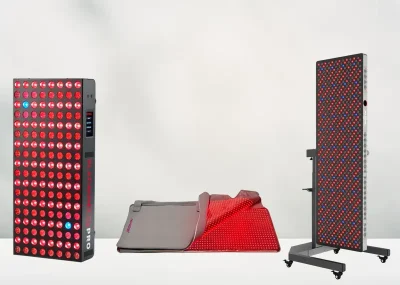
Low-EMF Red Light Therapy Devices
Nine panels, pods and wraps, evaluated by the design choices that actually move the needle on EMF - wireless features, wiring, shielding, and build quality - not just marketing claims.
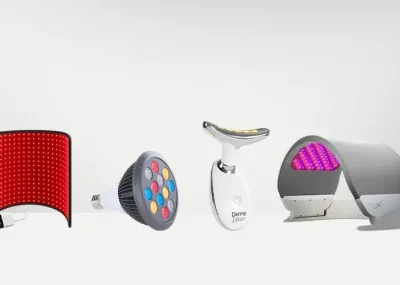
Best Red Light Therapy Travel Devices
Whether you're chasing pain relief, skin goals, hair regrowth, or gum health, these are the red light therapy devices built to survive a suitcase - plus what TSA actually says about flying with them.
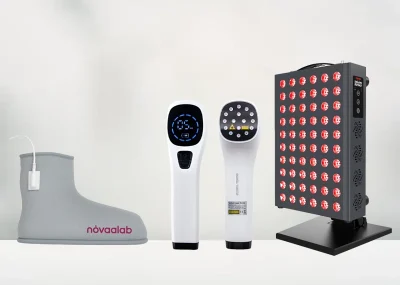
Best Red Light Therapy Devices for Plantar Fasciitis
Looking for relief from heel pain? Compare the top red light therapy devices designed for plantar fascia support and recovery.



Rating Snapshot:
Review this product & share your experiences with other customers. Don't see your question? Ask away!
Add a YouTube video