
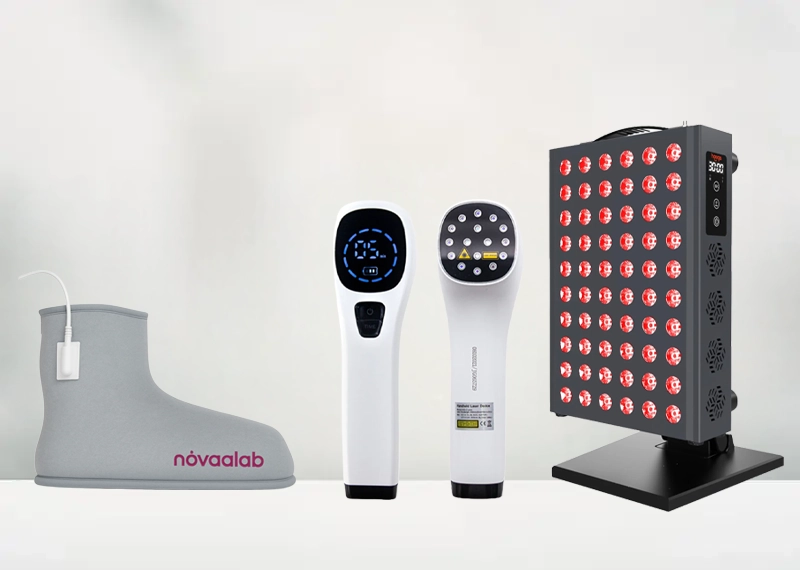


Plantar fasciitis is the most common cause of heel pain in adults, affecting more than 2 million Americans each year. The condition involves chronic inflammation and microtearing of the plantar fascia – the thick fibrous band connecting the heel bone to the toes – producing sharp, stabbing morning pain that makes even the first steps of the day a challenge.
Conventional treatments including stretching, orthotics, corticosteroid injections, and rest often provide only temporary relief without addressing the cellular-level inflammation and impaired tissue repair that drive the condition. Red light therapy – formally known as photobiomodulation (PBM) – works differently. By delivering specific wavelengths of red and near-infrared light directly to the plantar fascia, it reduces pro-inflammatory cytokines, stimulates cellular ATP production, and accelerates connective tissue repair at the source.
This guide reviews the 7 best red light therapy devices for plantar fasciitis in 2026, spanning purpose-built foot boots, compact targeted panels, handheld laser devices, wearable foot slippers, and foot-specific belt wraps – each assessed for wavelength depth, foot coverage, clinical credentials, and real-world heel pain results.
⭐ Our Top Pick
The Novaa Light Boot by NovaaLab is our top pick for 2026 – its patented TotalFoot360® design wraps 170 clinical-grade LEDs around the entire foot simultaneously at 132 mW/cm², delivering four wavelengths directly to the heel, arch, and sole where plantar fasciitis originates. No other device on this list is purpose-built for the foot in this way.
How Red Light Therapy Relieves Plantar Fasciitis – The Evidence
Plantar fasciitis is now understood as much a degenerative condition (fasciosis) as an inflammatory one – involving collagen disorganisation, microtearing, and impaired tissue remodelling in the plantar fascia alongside the acute inflammatory response. Red light therapy addresses both components simultaneously, making it clinically more complete than anti-inflammatory-only approaches.
Research published in NLM Catalog Cells (2026) confirmed that photobiomodulation at 630–850nm activates mitochondrial cytochrome c oxidase, reducing pro-inflammatory cytokines via NF-κB modulation and directly stimulating the cellular repair processes needed for fascia tissue recovery.
A 2023 systematic review and meta-analysis by Ferlito et al. published in Lasers in Medical Science – across 19 RCTs involving 1,089 participants – confirmed that PBMT alone significantly improved pain intensity in plantar fasciitis (MD = −22.02), with optimal parameters identified as 630–850nm at 4–10 J/cm² energy density.
A randomised controlled trial by Ketz et al. published in the International Journal of Sports Physical Therapy (2024) confirmed that PBMT plus usual care produced clinically significant pain reduction compared to usual care alone – establishing PBM as an evidence-based adjunct for chronic plantar fasciitis.
Near-infrared wavelengths (810–850nm) are the priority for plantar fasciitis – they penetrate through the multiple tissue layers overlying the plantar fascia to reach the connective tissue directly, where the inflammatory and degenerative process is centred. Devices lacking NIR deliver surface-level benefits only.
Best Wavelengths for Plantar Fascia Tissue Repair
Near-Infrared (810–850nm): The priority wavelength for plantar fasciitis. Penetrates deep enough to reach the plantar fascia beneath overlying skin, fat, and intrinsic foot musculature. Non-negotiable for effective fascia treatment – every device on this list includes NIR.
Red (630–660nm): Addresses surface-level and perilesional inflammation in the heel and sole tissue surrounding the fascia. Reduces cytokine expression, supports collagen synthesis in damaged connective tissue, and improves microcirculation. Best combined with NIR.
Laser (808nm): Laser diodes at 808nm deliver collimated, coherent NIR with superior deep tissue penetration compared to LED NIR – reaching the fascia more directly and with greater intensity at the treatment site.
Deep Infrared (1064nm): The deepest-penetrating wavelength in home devices – reaches the deepest connective tissue layers, particularly relevant for chronic plantar fasciitis where structural repair at depth is needed.
Which Device Format Is Right for Your Plantar Fasciitis?
Foot boot (Novaa Light Boot): The most clinically rational format – wraps around the entire foot for 360° simultaneous heel, arch, sole, and ankle coverage. Hands-free, no repositioning.
Compact standing panel (RLT Home Total Spectrum MINI, Hooga PRO300): Point the panel downward toward the foot at close range. High irradiance delivery at a fixed position – best for users who already own a panel or want multi-purpose use beyond plantar fasciitis.
Handheld LLLT laser (Novaa Extra-Strength Healing Laser): Precisely targeted laser delivery directly to the heel and arch fascia insertion point. Best for spot treatment of acute pain points rather than broad foot coverage.
Wearable foot slippers (dpl Slippers): Slip-on format covering the full plantar surface hands-free. FDA-cleared, approachable format for everyday use during rest.
Foot and calf belt (Megelin Foot Belt): Wraps around the foot and extends to the calf – useful for plantar fasciitis with associated Achilles or calf tightness.
Wearable laser modules (Kineon MOVE+ Pro): Targeted laser pod placement at the heel and arch. Best for deep chronic plantar fasciitis resistant to LED-based devices.
Best Red Light Therapy Devices for Plantar Fasciitis
![Novaa Light Boot - NovaaLab]() Best OverallNovaa Light Boot – NovaaLabGo to Review
Best OverallNovaa Light Boot – NovaaLabGo to Review- At Official Website
![Hooga PRO300]() Best Budget PanelHooga PRO300Go to Review
Best Budget PanelHooga PRO300Go to Review- At Official Website
![RLT Home Total Spectrum MINI]() Best 7-Wavelength PanelRLT Home Total Spectrum MINIGo to Review
Best 7-Wavelength PanelRLT Home Total Spectrum MINIGo to Review- At Official Website
![Novaa Extra-Strength Healing Laser]() Best Targeted LaserNovaa Extra-Strength Healing LaserGo to Review
Best Targeted LaserNovaa Extra-Strength Healing LaserGo to Review- At Official Website
![dpl Slippers for Foot Pain Relief]() Best Wearable Foot Slippersdpl Slippers for Foot Pain ReliefGo to Review
Best Wearable Foot Slippersdpl Slippers for Foot Pain ReliefGo to Review- Amazon
![Megelin Red Light Therapy Foot Belt]() Best Foot + Calf BeltMegelin Red Light Therapy Foot BeltGo to Review
Best Foot + Calf BeltMegelin Red Light Therapy Foot BeltGo to Review- Amazon
![Kineon MOVE+ Pro]() Best for Deep Chronic Heel PainKineon MOVE+ ProGo to Review
Best for Deep Chronic Heel PainKineon MOVE+ ProGo to Review- Amazon
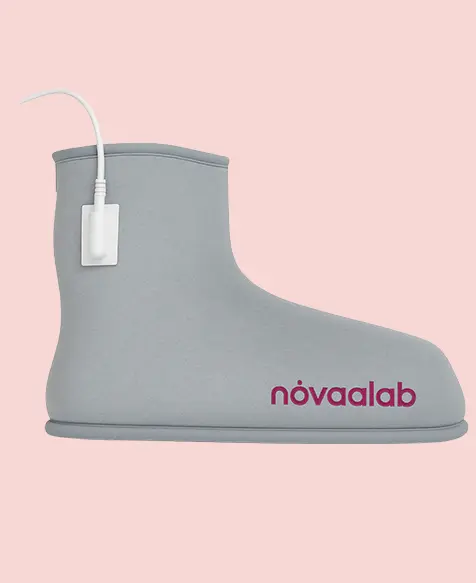
1. Novaa Light Boot – NovaaLab
Best For: Complete 360° Plantar Fasciitis Relief – Purpose-Built Foot Boot, 4 Wavelengths, Full Heel + Arch + Ankle Coverage
Features: TotalFoot360® Patented Design, 4 Clinical Wavelengths, 132 mW/cm² Contact Irradiance, Remote Control, 60-Day Trial
Price: $369.00

Pros & Cons
Pros
- Only purpose-built foot boot on this list – full 360° plantar fascia coverage
- 4 wavelengths – most complete wavelength set of any foot device here
- 132 mW/cm² at contact – highest irradiance of any foot-specific device
- 60-day trial + up to 3-year warranty – strongest buyer protection on this list
Cons
- AC-powered – not cordless during sessions
- Single foot per session – two boots needed for bilateral plantar fasciitis
More to Know
User Kathy M. explains:
I bought this for my husband’s ongoing plantar fasciitis and ankle gout. He uses it every night before bed on Red & NIR for 20 minutes. It appears to be helping – as a retired nurse, I was well aware it needed to be FDA Type II medical device grade to be effective.
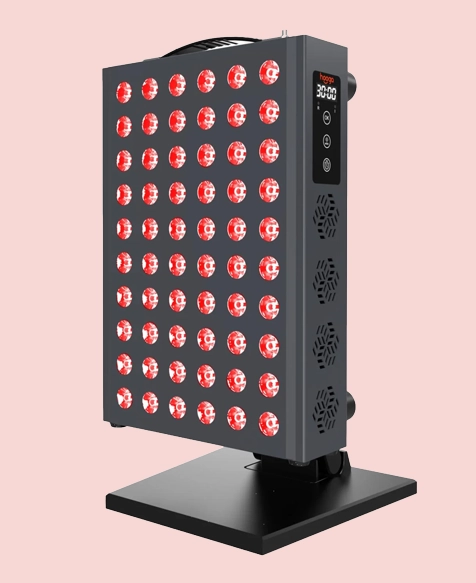
2. Hooga PRO300
Best For: Budget-Accessible Targeted Panel for Plantar Fasciitis – 109 mW/cm², Digital Timer, Independent Channel Control
Features: 60 Dual-Chip LEDs, 660nm + 850nm, 109 mW/cm² at 6″, Digital Timer, Independent Red/NIR Control, Built-In Stand
Price: $299
Pros & Cons
Pros
- 109 mW/cm² – highest irradiance of any panel on this list at 6″
- Dual-chip LEDs – 660nm + 850nm simultaneously per LED
- Independent red/NIR control – protocol flexibility for plantar fasciitis stages
- 3-year warranty + 60-day trial – strong buyer protection
Cons
- Panel format – requires stationary foot positioning during sessions
- 2 wavelengths only – no multi-band NIR or deep infrared
More to Know
User Chris L. explains:
I point the PRO300 down at my foot every morning for 12 minutes. After 5 weeks the morning heel pain is noticeably better – I’m not dreading the first steps anymore. Great value for a panel that does so much more than just foot pain.
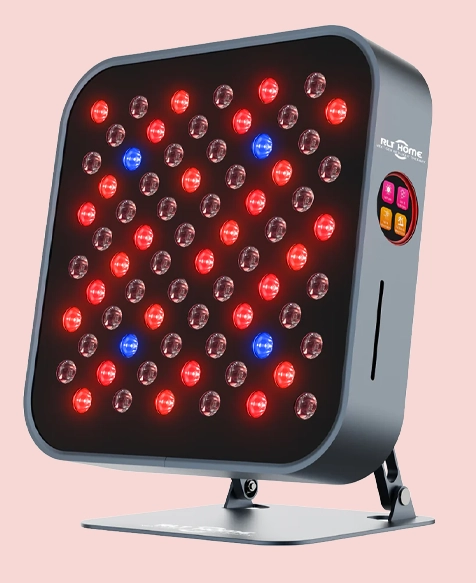
3. RLT Home Total Spectrum MINI
Best For: 7-Wavelength Compact Panel for Plantar Fasciitis – 1064nm Deep Infrared, 170 mW/cm², 9 Preset Modes Including Pain
Features: 7 Wavelengths Including 1064nm Deep Infrared, 170 mW/cm² at 8″, 9 Prebuilt Modes, 0–5,000Hz Pulse, Voice + Touch Control, 3-Year Warranty
Price: $495
Pros & Cons
Pros
- 1064nm deep infrared – deepest fascia penetration of any panel on this list
- Triple NIR band (810 + 830 + 850nm) – broadest NIR depth coverage here
- 170 mW/cm² at 8″ – highest irradiance at working distance of any panel here
- 9 preset modes including pain – dedicated plantar fasciitis protocol
Cons
- Panel format – requires foot positioning at panel
- Heavier than wearable formats at 11 lbs – not portable
More to Know
User Sandra L. explains:
I’ve had plantar fasciitis for 18 months. The Total Spectrum MINI pointed at my foot for 15 minutes daily has been the first thing to make a real difference. The 1064nm penetration feels categorically deeper than the belt devices I tried before.
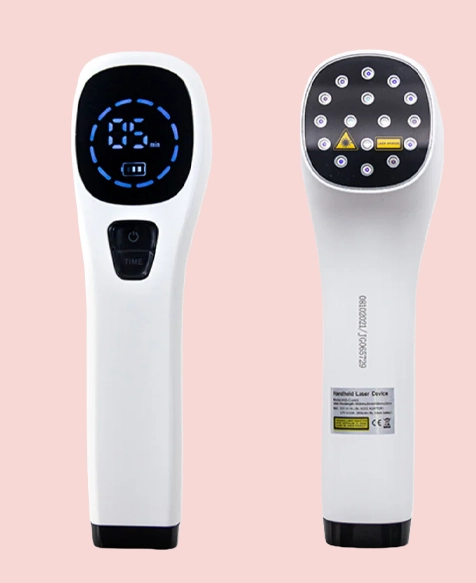
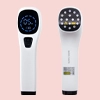
4. Novaa Extra-Strength Healing Laser – NovaaLab
Best For: Precision Laser Targeting for Plantar Fasciitis Pain Points – 808nm + 650nm, 800 mW/cm² at Contact, 5-Minute Sessions
Features: 16 Medical-Grade Laser Diodes, 650nm Red Laser + 808nm NIR Laser, 800 mW/cm² at 0″, Class 3B LLLT, 5-Minute Sessions, HSA/FSA Eligible
Price: $339.90
Pros & Cons
Pros
- 800 mW/cm² at contact – highest irradiance of any device on this list
- 16 laser diodes – true LLLT, not LED; superior deep tissue penetration
- 5-minute sessions – fastest treatment protocol on this list
- HSA/FSA eligible + 60-day trial
Cons
- Handheld – requires manual holding and repositioning across the foot
- Small treatment spot – not suitable for broad foot coverage
More to Know
User Robert K. explains:
I’ve had stubborn heel pain for over a year. The Novaa Healing Laser on my heel insertion point for 5 minutes every morning has been the most targeted relief I’ve found. Within 3 weeks the sharp morning pain has reduced significantly. The laser reaches somewhere LEDs didn’t.
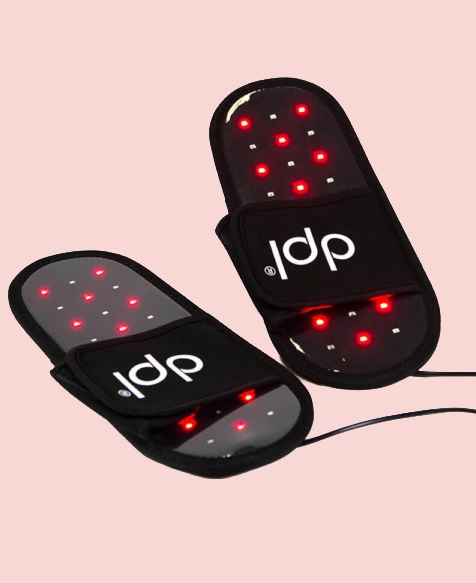
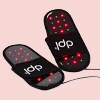
5. dpl Slippers for Foot Pain Relief
Best For: Hands-Free Wearable Slippers for Plantar Fasciitis – FDA Class II Cleared, 660nm + 880nm, Sit-and-Treat Format
Features: FDA-Cleared OTC Class II Medical Device, Red + Infrared LEDs (660nm + 880nm), One-Size-Fits-All Adjustable, 15–20 Minute Sessions, USB-Powered, HSA/FSA Eligible
Price: $169
Pros & Cons
Pros
- FDA-cleared OTC Class II – strongest regulatory credential of any wearable here
- Treats both feet simultaneously – only device on this list with bilateral coverage
- True hands-free sit-and-treat format – highest daily compliance format
- HSA/FSA eligible – pre-tax purchase discount
Cons
- Not for walking or standing – stationary use only
- LED count not publicly disclosed by brand
- 880nm NIR – single NIR wavelength only; no multi-band depth coverage
More to Know
User Patricia W. explains:
These are the easiest thing I’ve ever used for my plantar fasciitis. I put them on every morning while I have coffee before I get up and walk. After 6 weeks the morning pain has noticeably reduced and I’m actually looking forward to standing up now.
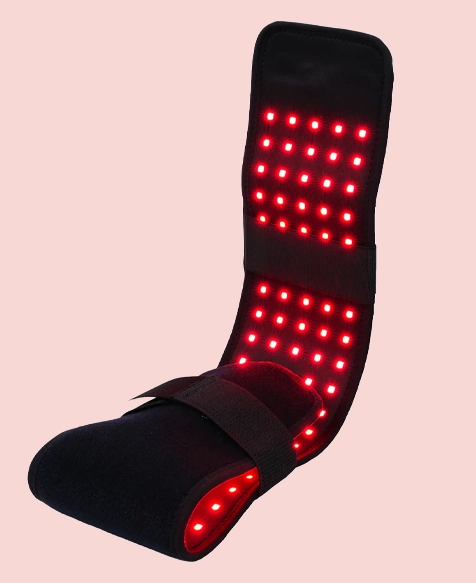
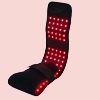
6. Megelin Red Light Therapy Foot Belt
Best For: Foot and Calf Wrap for Plantar Fasciitis with Heat – 450 LEDs, 3 Wavelengths, Adjustable Warmth + Light Combined
Features: 450 LEDs Tri-Chip Design, 640nm + 660nm + 880nm, Adjustable Heating Function, Foot + Calf Coverage, Portable, HSA/FSA Eligible
Price: ~$199
Pros & Cons
Pros
- Adjustable heat + light combined – only device on this list with integrated warming
- 450 LEDs – highest chip count of any wearable foot device here
- Covers foot and calf – addresses the full posterior chain in one session
- HSA/FSA eligible
Cons
- No published irradiance figure at treatment distance
- AC-powered – not cordless
More to Know
User Lisa M. explains:
My plantar fasciitis always comes with tight calves. The Megelin foot belt covers both at the same time – 20 minutes every evening wrapping from my foot up to my calf. After 5 weeks the whole posterior chain feels noticeably looser and my heel pain is significantly reduced.
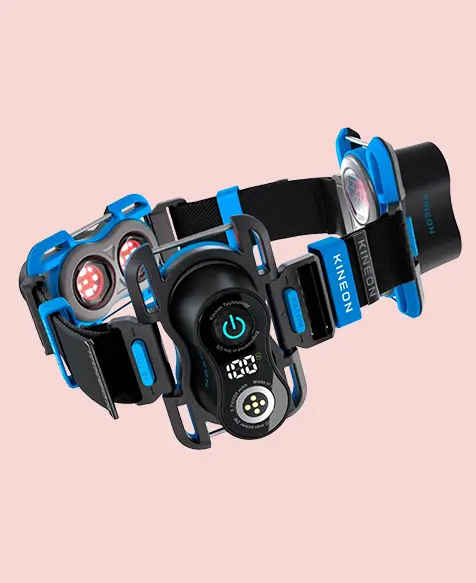
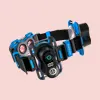
7. Kineon MOVE+ Pro
Best For: Deep Chronic Heel Pain Resistant to LED Devices – 808nm Laser Diodes, Direct Contact, Wearable Modular Pods
Features: 808nm NIR Laser Diodes + 630nm Red LEDs, Class 1 Safe for Home Use, Direct Skin Contact, Wearable Modular Pods, Rechargeable, 30-Day Trial
Price: ~$499
Pros & Cons
Pros
- Direct skin contact – zero irradiance loss at distance
- Fully rechargeable and cordless
- Combines 660nm red LEDs and 808nm infrared lasers for deeper tissue penetration
- HSA/FSA eligible
Cons
- More expensive than many LED-only devices
- The treatment area is relatively focused, making it less suitable for users seeking full-foot coverage
- Designed with modular pods, so positioning may require some adjustment for optimal coverage
More to Know
User David C. explains:
I’ve had stubborn plantar fasciitis for 18 months that didn’t respond to anything. The Kineon MOVE+ Pro at my heel and arch – 15 minutes daily for 6 weeks – and the improvement is real. The laser penetration reaches somewhere LED devices didn’t.
Buying Guide – Choosing the Right Device for Your Plantar Fasciitis
Match format to your condition and lifestyle. Widespread heel and arch pain needing full-foot coverage → Novaa Light Boot. Both feet needing simultaneous treatment during rest → dpl Slippers. Chronic deep pain at a specific fascia insertion point → Novaa Healing Laser or Kineon MOVE+ Pro. Plantar fasciitis with associated Achilles or calf tightness → Megelin Foot Belt. Multi-purpose home panel with maximum wavelength depth → RLT Home Total Spectrum MINI. Budget-accessible high-irradiance panel → Hooga PRO300.
NIR is non-negotiable. Every device on this list includes NIR in some form. Devices with only surface-level red light will not reach the plantar fascia through overlying tissue. Multi-band NIR (810 + 830 + 850nm) and 1064nm deep infrared (RLT Home MINI) provide the greatest depth coverage for the fascia.
Bilateral plantar fasciitis – affecting both feet – is common. The dpl Slippers are the only device on this list that treats both feet simultaneously. All other devices treat one foot per session.
Budget at a glance:
- $169.00 → dpl Slippers (FDA-cleared, bilateral, HSA/FSA)
- $199.00 → Megelin Foot Belt (heat + light, foot + calf)
- $299.00 → Hooga PRO300 (budget panel, 109 mW/cm², 3-yr warranty)
- $339.90 → Novaa Healing Laser (LLLT, 800 mW/cm², 5 min)
- $369.00 → Novaa Light Boot (360° boot, 4 wavelengths)
- $495.00 → RLT Home Total Spectrum MINI (7 wavelengths, 1064nm)
- $499.00 → Kineon MOVE+ Pro (laser, deep chronic pain)
How to Use Red Light Therapy for Plantar Fasciitis
Position for direct contact. For boots, slippers, and belts – wear directly against bare skin, not over socks. For panels (PRO300, RLT Home MINI) – position 6–8 inches from the plantar surface with the foot rested on the floor below the panel. For laser devices – press directly against the heel or arch fascia insertion point.
Pre-activity timing. Apply 15–30 minutes before your first steps of the day – the most painful window for plantar fasciitis. Pre-loading with PBM reduces the inflammatory state before the foot bears weight, making the initial loading steps significantly less painful over time.
Frequency. 3–5 sessions per week to start, building to daily use from week 3 onward. The Ketz et al. (2024) RCT (PubMed: 38179590) confirmed PBMT plus usual care outperformed standard care alone – consistency across weeks is what drives the cumulative benefit.
Combine with stretching. Perform plantar fascia stretches and calf stretches immediately after each session to take advantage of the improved tissue pliability PBM produces. This combination is consistently more effective than either intervention alone.
Timeline. Initial morning pain reduction typically appears within 1–3 weeks. Meaningful stiffness improvement at 4–8 weeks. Structural fascia repair in chronic cases develops over 8–12 weeks of consistent daily use.
Frequently Asked Questions
Does red light therapy work for plantar fasciitis?
Which wavelength is best for plantar fasciitis?
A: NIR (810–850nm) is the priority for reaching the fascia beneath overlying tissue. Red (630–660nm) addresses perilesional inflammation. Dual-wavelength devices consistently outperform single-wavelength devices in clinical research.
How long until I see results?
A: Initial pain reduction within 1–3 weeks of consistent use. Meaningful improvement at 4–8 weeks. Structural changes in chronic cases at 8–12 weeks.
Can I use red light therapy during an active flare?
A: Yes – at lower intensity and shorter sessions during acute pain periods. PBM does not typically aggravate active plantar fasciitis at therapeutic doses.
Which device is best for both feet?
A: The dpl Slippers – the only device on this list that treats both feet simultaneously in every session.
Is daily use safe for plantar fasciitis?
A: Yes – daily use at recommended session durations is safe for all devices on this list. Consistency drives outcomes.
Can I combine red light therapy with orthotics?
A: Yes – and research supports this combination. Red light therapy is most effective as an adjunct within a comprehensive plantar fasciitis management plan including stretching, orthotics, and appropriate footwear.
Conclusion
For plantar fasciitis sufferers in 2026, the Novaa Light Boot is the clearest starting point – its TotalFoot360® design, four-wavelength output, and 132 mW/cm² contact irradiance address the full plantar fascia anatomy in every hands-free session, with a 60-day trial removing all financial risk. For users who need to treat both feet simultaneously during daily rest, the dpl Slippers’ FDA-cleared, slip-on format offers the most effortless bilateral compliance on this list. And for deep, chronic heel pain that LED devices have not resolved, the Kineon MOVE+ Pro’s 808nm laser diodes deliver the most penetrating targeted therapy available for home use.
**This is a subjective assessment based on the strength of the available information and our estimation of efficacy.
*Result may vary. The information contained in this website is provided for general informational purposes only. No medical claims are implied in this content, and the information herein is not intended be used for self diagnosis or self treatment of any condition.
Disclosure of Material connection: Some of the links in the post above are "associate sales links." This means if you click on the link and purchase an item, we will receive commission. Regardless, we only recommend products or services which we use personally and/or believe will add value to our readers. We are disclosing this in accordance with the Federal Trade Commission's 16 CFR, Part 255: "Guides Concerning the Use of Endorsements and Testimonials."
Related Articles
Low-EMF Red Light Therapy Devices: 9 We’d Actually Recommend
Nine panels, pods and wraps, evaluated by the design choices that actually move the needle on EMF - wireless features, wiring, shielding, and build quality - not just marketing claims.
READ REVIEW
Best Red Light Therapy Travel Devices (2026): Pain, Skin, Hair & More
Whether you're chasing pain relief, skin goals, hair regrowth, or gum health, these are the red light therapy devices built to survive a suitcase - plus what TSA actually says about flying with them.
READ REVIEW
Best Red Light Therapy Devices for Wrinkles & Anti-Aging – Masks, Wands & Panels for Younger-Looking Skin
From LED face masks and anti-aging wands to full-body panels, these red light therapy devices use clinically studied wavelengths to support collagen production, reduce fine lines, and improve skin firmness.
READ REVIEW