
The Hooga PRO300 is the stronger panel. It lists 109 mW/cm² at 6 inches against 73 mW/cm² for the HG300, adds flicker-free LEDs, a digital countdown timer, an adjustable stand and a hanging kit, and can be linked to other PRO panels. The HG300 is the better pick if you want the lowest price and don’t need those extras. Both use the same 660 nm and 850 nm wavelengths, 60 LEDs and a three-year warranty, so you aren’t giving up the basics by going cheaper.
Overview
Hooga and Hooga Pro are light therapy device panels designed to help you live a quality life by relieving pain, supporting muscle recovery, improving performance, enhancing skin health, and fighting aging symptoms.
However, there is relatively a close race between the two tabletop panels and you are probably in dilemma wondering which of the two stands out and is worth betting your money on.
The purpose of this review is to compare various features of these two light therapy devices and help increase your understanding of the two products and be in a better position to select the best device for your needs.
Hooga HG300 vs Pro300 at a glance
| Hooga HG300 | Hooga PRO300 | |
|---|---|---|
| Price | $199 | $299 |
| LEDs | 60 × 5W, single-chip | 60 × 5W, dual-chip |
| Wavelengths | 660 nm red, 850 nm NIR | 660 nm red, 850 nm NIR |
| Irradiance | 73 mW/cm² at 6″ | 131 at 3″, 109 at 6″, 74 at 12″, 48 at 18″ (mW/cm²) |
| Coverage at 6″ | 16.5″ × 13″ | 21″ × 18″ |
| Coverage at 18″ | 30.3″ × 26.7″ | 33″ × 29″ |
| Beam angle | 60° | 60° |
| Flicker-free driver | Not listed | Yes |
| Stand and timer | Foldable kickstand, session timer (5/10/15 min) | Adjustable tabletop stand, digital countdown timer |
| Hanging kit | Sold separately | Included |
| Linking multiple panels | Not listed | Designed to interconnect (linking cord sold separately) |
| Size | 12.2″ × 8.2″ × 2.5″ | 12.7″ × 8.6″ × 3.1″ |
| Weight | 6 lbs | 8 lbs 1 oz |
| Power use | 80W | 112W |
| EMF | Zero at 6″ | Zero at 6″ |
| Lifespan / warranty / returns | 50,000+ hrs / 3 years / 60 days | 50,000+ hrs / 3 years / 60 days |
| Where to Buy |
What’s the same?
Neither panel is a different class of device. Both give you 660 nm red and 850 nm near-infrared light from 60 LEDs, with a 60° beam angle, separate red and near-infrared power switches, zero measured EMF at 6 inches, a 50,000+ hour LED lifespan and a three-year warranty. Both come with protective goggles and a user manual. Hooga also gives both a 60-day return window from delivery, though return shipping comes out of your refund.
 HG Series Panel
 Hooga HG PRO Series
What’s different
Dual-chip LEDs and power.
On the HG300, red and near-infrared LEDs alternate across the panel. On the Pro300, each of the 60 LEDs holds two chips, one red and one near-infrared, so both wavelengths come from every LED. Hooga says this gives a more even light output across the panel face. Some of the research on LED panels points the same way, noting that LED size or number can increase efficacy. Note that we are not refuting the HG300’s ability to deliver the claimed results. The Pro300 stands out because of better light coverage and higher output.
At 6 inches, 109 mW/cm² is about 49% more than 73 mW/cm². The Pro also lists its output at other distances, which helps if you plan to treat from farther away.
What that means for session time.
Dose is irradiance multiplied by time. At 6 inches, a 10-minute session delivers roughly 44 J/cm² on the HG300 and roughly 65 J/cm² on the Pro300. To reach that same 44 J/cm², the Pro needs about 6 minutes 40 seconds, which is about a third less time. Hooga’s own guidelines line up with this. For deeper areas like joints and muscles at 6 to 12 inches, it suggests about 10 to 15 minutes on the HG300 and 6 to 10 minutes on the Pro300. These are manufacturer figures, not our own measurements.
Wavelengths
Both panels are identical here, but it’s worth understanding why it matters. According to Dr. Cameron Gholampour, an International Certified Sports Chiropractor based in Tampa Florida, wavelength is a critical aspect because it determines how well light penetrates the tissue. Deep tissue healing requires a certain wavelength, he adds. Research on photobiomodulation also notes that irradiation with certain red or near-infrared wavelengths has demonstrated the ability to produce a number of physiological effects in both human and animal tissues and cells.
Flicker.
Hooga lists a flicker-free driver for the Pro300. It doesn’t list one for the HG300. You can check any panel yourself by filming it with your phone in slow motion. This won’t matter to everyone, but if you’re sensitive to flickering light, it’s a reason to lean toward the Pro.
Stand, timer and design.
Both panels sit on a desk without extra hardware. The HG300 has a foldable kickstand and a session timer. The Pro300 has an adjustable tabletop stand, a digital countdown timer and a built-in carrying handle. The difference is in the finish. The Pro’s face is metallic with the LEDs built in, which gives it a sleek look even when it’s off. The HG300 has a white, more exposed face where you can see some of the circuitry. It’s an older-style look that some people won’t mind, and you hardly notice it once the panel is running. The Pro also has rubber feet, so it’s safer on hard surfaces if you take it off the stand.
Hanging and linking.
The Pro300 ships with a hanging kit, and the HG300’s hanging kit and door mount are sold separately. If you plan to hang your panel, that’s a cost to add to the HG300. The Pro line is also designed to link with other PRO panels, using a series-linking cord sold separately, so you can build a larger treatment area later. Hooga doesn’t list this for the HG300.
Is the Pro worth $100 more?
Per unit of listed output, the two panels cost almost exactly the same: about $2.73 per mW/cm² for the HG300 and $2.74 for the Pro300. So the extra $100 isn’t only buying power. You’re paying for even coverage, shorter sessions, flicker-free output, an adjustable stand with a digital timer, a hanging kit in the box, and room to expand. Both panels are eligible for HSA/FSA use, and free US shipping applies over $100, so both qualify.
Which should you buy?
- Get the PRO300 if you want shorter sessions, you plan to hang it or link panels later, you’re sensitive to flicker, or you use it daily and want the better build.
- Get the HG300 if budget is the main limit, you’ll mostly use it on a desk, and you just want 660 nm and 850 nm light to try red light therapy.
- If you’re undecided, think about how much you’ll use it. For occasional sessions, the HG300 is hard to beat on price. If it’ll be part of a daily routine, the PRO300’s extras add up quickly.
What about bigger Hooga panels?
The same split applies across sizes. Hooga sells HG panels from the HG200 up to the HG1500, and PRO panels from the PRO300 up to the PRO4500. The PRO line carries the dual-chip LEDs and the linking design, and the PRO750 and larger list much higher irradiance than the PRO300. See our full Hooga Red Light Therapy review for the whole range.
Advertisement
*All individuals are unique. Your results can and will vary.
How to use them safely
Both panels come with usage guidelines, and the point of them is your safety. Hooga’s starting suggestion is 3 to 5 sessions a week, no more than 2 a day, at 18 inches for surface areas such as the face and 6 to 12 inches for joints and muscles. Hooga says goggles aren’t required but are included for longer or close-range sessions, and it recommends red-only if you have melasma. Check with a clinician first if you’re pregnant, take medication, have a medical condition or are sensitive to light. A product may be safe but if misused, it can pose a risk, so stick to the recommended minutes and sessions per week. LED panel design also affects treatment efficacy, which is another reason to follow the manual rather than improvise.
What buyers say
Hooga Pro300 has an average start rating of 4.7 out 5 stars on Amazon based on 418 customer reviews with positive and negative reviews.
One of the top positive reviews was from a verified purchaser called Maya who said that the device worked great for her.
The HG300 has a 4.9 average on Hooga’s own site from more than 130 reviews. Hooga HG300 had an average star rating of 4.5 out 5 stars on Amazon based on 867 customer reviews. The device too had both negative and positive reviews.
One top review was from a verified purchaser called Kiki who said that the device works and was easy to use.
FAQs
Q: Can I link two Hooga panels together?
Q: How much shorter are Pro sessions?
Q: Are Hooga panels FDA-approved?
Conclusion
The HG300 and Pro300 share the same wavelengths, LED count and warranty, so you get value either way. If you want shorter sessions, a better build and room to grow, the Pro300 is worth the extra $100. If you’d rather spend the least and just start, the HG300 is the real deal.

**This is a subjective assessment based on the strength of the available information and our estimation of efficacy.
*Result may vary. The information contained in this website is provided for general informational purposes only. No medical claims are implied in this content, and the information herein is not intended be used for self diagnosis or self treatment of any condition.
Disclosure of Material connection: Some of the links in the post above are "associate sales links." This means if you click on the link and purchase an item, we will receive commission. Regardless, we only recommend products or services which we use personally and/or believe will add value to our readers. We are disclosing this in accordance with the Federal Trade Commission's 16 CFR, Part 255: "Guides Concerning the Use of Endorsements and Testimonials."
Related Articles
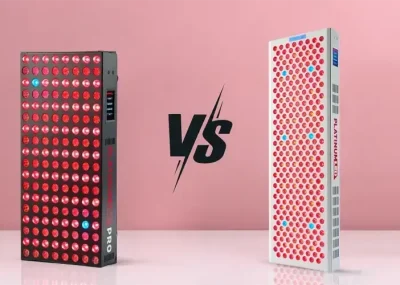
BioMax Pro Ultra vs BioMax 900: Which PlatinumLED Panel Is Worth It?
Compare the PlatinumLED BioMax Pro Ultra and BioMax 900 side by side, including light output, seven wavelengths, controls, multi-panel features, pricing, and customer feedback to decide which panel best fits your needs.
READ REVIEW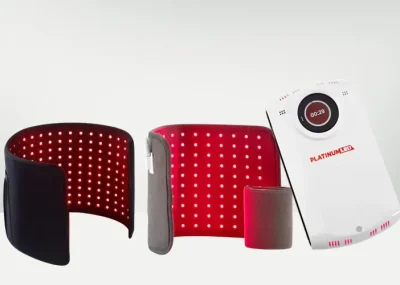
Best Red Light Therapy for Shoulder Pain
Compare red light therapy devices for shoulder pain by wavelength, irradiance, coverage, fit, price, and warranty, with research insights and safety tips to help choose the right option.
READ REVIEW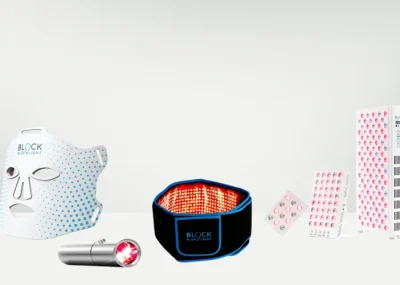
Block Blue Light Review: Are Its Red Light Therapy Devices Worth It?
Block Blue Light offers red light therapy panels, handheld devices, masks, belts, mats, and blankets. Learn how its PowerPanel lineup compares on wavelengths, coverage, features, pricing, and warranty, plus the key limitations to consider before buying.
READ REVIEW