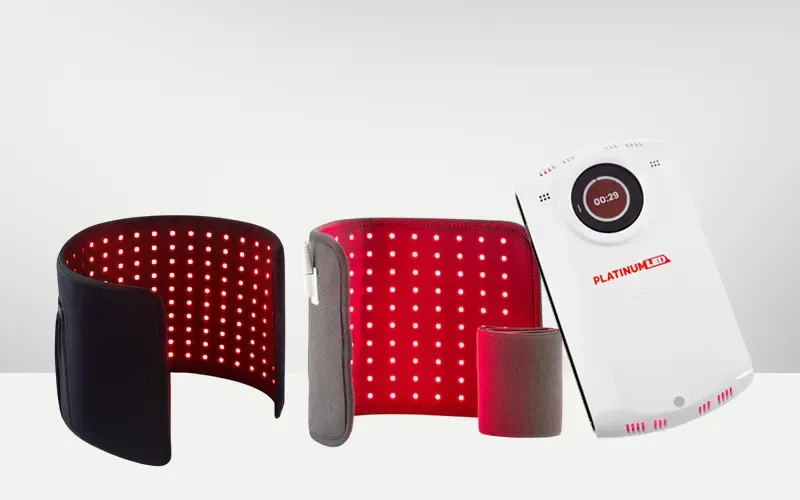


There is often more than one cause of shoulder pain. There is overlap in symptoms, and different approaches are effective for each type of rotator cuff pain, including tendinopathy, subacromial impingement, bursitis, adhesive capsulitis, arthritis, muscle strain, and neck pain referred to the shoulder. This is significant when readers take into account what is known as red and near-infrared photobiomodulation, which has been examined in a variety of musculoskeletal pain conditions, with mixed but notable findings.
Photobiomodulation can be used to alleviate shoulder pain in some individuals. The outcomes are based on treatment protocol, the underlying cause, and the device. It is not a substitute for diagnosis or physiotherapy or the care of a health care professional that they might recommend.
This is a comparison of the formats with which a reader actually comes into contact: wearable devices designed for joints, flexible pads, belts, and larger panels. Specifications are provided in manufacturers’ documentation and retailer listings, not by actual measurement.
Best Red Light Therapy for Shoulder Pain – At Glance
![Novaa Light Pad]() Best Flexible Pad for Shoulder PainNovaa Light PadGo to Review
- At Official Website
![Recharge Health FlexBeam]() Best Portable WearableRecharge Health FlexBeamGo to Review
- At Official Website
![Glokore Red Light Therapy Wrap]() Best Budget Red Light Therapy DeviceGlokore Red Light Therapy WrapGo to Review
- At Official Website
![PlatinumLED BIOMAX GO]() Best for Portable Targeted Red Light TherapyPlatinumLED BIOMAX GOGo to Review
- At Official Website
![RLT Home Total Spectrum COMPACT]() Best Red Light Therapy Panel for Shoulder PainRLT Home Total Spectrum COMPACTGo to Review
- At Official Website

1. Novaa Light Pad
Best For: Wrapping a single area with contact-level light.
Device type: Flexible pad with a stretch strap.
Wavelengths: NovaaLab states 660 nm red paired with 850 nm near-infrared, delivered through 150 tri-chip LEDs holding 450 chips.
Price and warranty: Around $297 on promotion against a $349.90 list price, with a 60-day money-back guarantee and warranty coverage of up to 3 years. An XL version is listed near $510.

Coverage and fit: At 16.3 by 7.9 inches and 0.6 lbs, the pad curves over the shoulder cap and upper arm. Reviewers on the brand’s own page note the elastic strap length suits torso areas better than limbs and joints, which affects shoulder fastening.
Output specifications: NovaaLab does not publish an irradiance figure or measurement distance, which limits comparison against devices that do.
Controls and power: Remote control, mains power through an adapter and connecting wire.
Pros & Cons
Pros
- Clearly stated wavelengths and LED construction
- Lightweight and genuinely flexible
- Remote operation
- CE and RoHS certification stated
Cons
- No published irradiance or measurement distance
- Strap design reported as awkward on joints
- Requires mains power, so no cordless use
Verdict
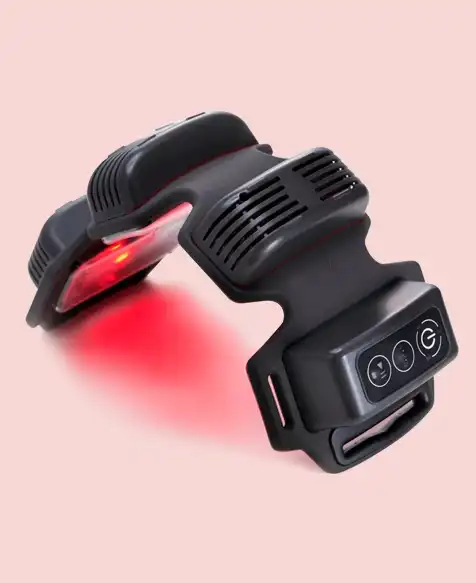
2. Recharge Health FlexBeam
Best For: Targeted shoulder treatment where the device must stay in position without holding.
Device type: Wearable, three-pod curved design with adjustable straps.
Wavelengths: Recharge Health lists 6 LEDs at 800 to 850 nm and 3 LEDs at 610 to 650 nm.
Price and warranty: Listed between roughly $479 and $569 depending on region and retailer, with a 60-day return window and a 5-year warranty. Confirm current figures on the official store before publishing.
Coverage and fit: The hinged pods bend across the deltoid and trapezius, so the device reaches the front, side, or posterior shoulder depending on strap placement. Recharge Health states the shape allows contact with joint contours that flat panels cannot follow.
Output specifications: Maximum optical power output of 110 mW/cm², documented in the brand’s technical information page.
Controls and power: Three preset programs, 10 minutes per program, three-button interface, rechargeable lithium-ion battery in a separate pod, active fan cooling, and automatic shutoff for over-temperature and over-current.
Pros & Cons
Pros
- Published wavelength ranges and irradiance figures
- Hands-free use with battery operation
- Active cooling and automatic safety shutoff
- Longest warranty among the devices compared
Cons
- Highest cost per treatment area in this group
- Small coverage area per session
- Fan noise during use
Verdict

3. Glokore Red Light Therapy Wrap
Best For: Readers testing a wearable format at low cost.
Device type: Wearable wrap with adjustable straps.
Wavelengths: Glokore describes red and near-infrared light but publishes no nanometer values, no LED count, and no irradiance figure.
Price and warranty: $109.99 against a $219.98 list price, dropping to $89.99 per unit on a three-pack. A 30-day money-back guarantee applies. No warranty term appears on the listing.
Coverage and fit: The brand states the wrap contours to any area, including the shoulder, hips, knees, and lower back.
Output specifications: None published.
Controls and power: Glokore gives a 10-minute daily session guideline and describes strap or hook-and-loop fastening for hands-free use.
Pros & Cons
Pros
- Lowest entry price in this comparison
- Flexible wrap format with adjustable fastening
- Short session guidance stated by the brand
- Multi-unit pricing available
Cons
- No wavelengths, LED count, irradiance, EMF data, or certification published
- Shortest return window and no stated warranty
- Review totals on the brand page disagree with each other
Verdict
A second belt-format option, the Hooga Red Light Therapy Belt, appears across retailers near $299 with 660 nm and 850 nm wavelengths and 10 Hz pulse functionality. Listed LED counts and irradiance figures differ substantially between sellers, so readers should confirm specifications directly with Hooga before comparing it against anything here.
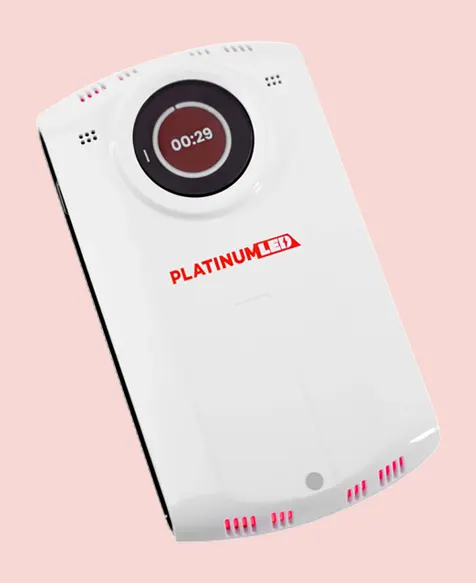
4. PlatinumLED BIOMAX GO
Best For: Moving one device between the shoulder, neck, knee, and other areas.
Device type: Portable handheld panel.
Wavelengths: PlatinumLED states 660 nm and 850 nm, described as the primary zones of its wider spectral design.
Price and warranty: Listed at €289 after a promotional discount. A 60-day return window applies, with return shipping and a restocking fee charged to the buyer, alongside a 3-year warranty reviewed case by case.
Coverage and fit: The brand recommends 6 to 12 inches for deeper tissue application and 18 inches or more for superficial skin treatment, so shoulder coverage depends entirely on how the user positions the panel. Holding or propping the device makes consistent placement across the posterior shoulder harder than a strapped wrap.
Output specifications: PlatinumLED publishes no irradiance figure or LED count for this model, though it states IEC60601 medical-grade certification and a zero-EMF claim.
Controls and power: On-device touchscreen, voice commands, 15- and 30-minute presets with adjustable timing from 1 to 30 minutes, intensity control from 0 to 100 percent, pulse mode, and up to roughly 3 hours of cordless battery operation. Protective goggles are included.
Pros & Cons
Pros
- Broadest control set in this comparison
- Fully cordless with extended battery life
- Adjustable intensity and session length
- Eye protection supplied
Cons
- No published irradiance or LED count
- Only three customer reviews listed
- Restocking fee and return shipping reduce the value of the trial period
Verdict
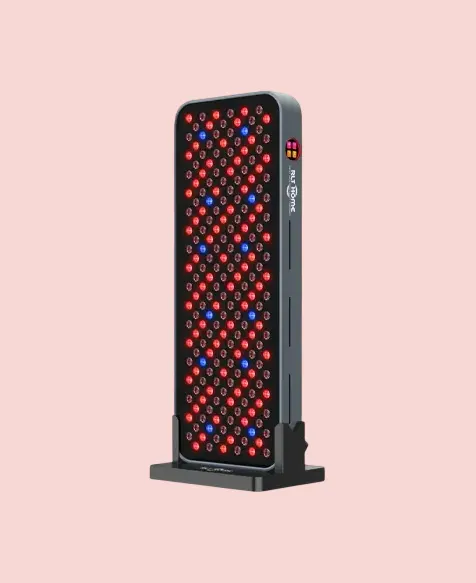
5. RLT Home Total Spectrum COMPACT
Best For: Readers who want documented output and coverage beyond the shoulder itself.
Device type: Standing panel, 216 LEDs at 5 W each.
Wavelengths: Seven wavelengths with stated density percentages: 480, 630, 660, 810, 830, 850, and 1064 nm.
Price and warranty: $895 on promotion against a $1,295 list price, with a 60-day trial, no restocking fee, and a 3-year warranty. FDA-registered Class II, CE, and RoHS certification stated.
Coverage and fit: At 30.3 by 11.8 inches, the panel covers the shoulder, upper back, and neck together. RLT Home advises 2 to 4 feet of distance for full-power sessions, which requires floor space and a maintained posture rather than contact placement.
Output specifications: 172 mW/cm² at 8 inches by solar power meter and 99.0 mW/cm² at 6 inches by spectrometer, with both measurement methods named. EMF of approximately 0.0 μT at 6 inches or greater.
Controls and power: Touch interface and remote, nine preset modes including a pain and inflammation setting, adjustable pulsing from 0 to 5,000 Hz, and a custom channel mode.
Pros & Cons
Pros
- Most complete published specifications in this comparison
- Two separate irradiance measurement methods disclosed
- Nine preset modes and individual channel control
- Return policy carries no restocking fee
Cons
- Highest price by a wide margin
- 22 lbs with a stand, so not portable
- Distance-based use suits larger areas more than one joint
Verdict
Comparison Table: Best Red Light Therapy for Shoulder Pain
| Device | Format | Wavelengths | Shoulder coverage | Session guidance | Price |
|---|---|---|---|---|---|
| Novaa Light Pad | Flexible pad | 660 nm, 850 nm | Targeted | Per brand instructions | ~$297 (list $349.90) |
| Recharge Health FlexBeam | Wearable | 610–650 nm, 800–850 nm | Conforming, strapped | 10 min per program | ~479–569 |
| Glokore Red Light Therapy Wrap | Wearable | Not published | Conforming | 10 min daily, per brand | $109.99 (list $219.98) |
| Hooga Red Light Therapy Belt | Belt | 660 nm, 850 nm | Targeted | Per brand instructions | ~$299 |
| PlatinumLED BIOMAX GO | Multipurpose device | 660 nm, 850 nm | Depends on placement | 1–30 min, adjustable | ~€289 |
| RLT Home Total Spectrum COMPACT | Panel | 480–1064 nm, seven waves | Broader area | 20 min, 5 days weekly | $895 (list $1,295) |
Can Red Light Therapy Help Shoulder Pain?
How Does Red Light Therapy Work?
Photobiomodulation applies red or near-infrared light to tissue at levels that do not heat it. The leading proposed mechanism involves light absorption by mitochondrial chromophores, which may influence cellular energy production and downstream signaling tied to inflammation and pain perception.
These mechanisms describe a plausible pathway. They do not confirm that any given consumer device delivers enough light, at the right wavelength and dose, to reproduce a clinical effect.
What Does Research Say About Shoulder Pain?
Clinical evidence comes mainly from low-level laser therapy rather than consumer LED hardware. A 2025 systematic review with meta-analysis in Photochemistry and Photobiology pooled ten randomized trials of photobiomodulation combined with physical exercise in shoulder impingement syndrome. The authors reported reduced pain intensity compared with control and improved range of motion, while pain measured separately at rest, during activity, and at night showed no statistically significant difference.
An earlier meta-analysis in Physiotherapy Research International found clinically relevant pain relief for shoulder tendinopathy both as a standalone treatment and alongside exercise, and reported that trials using inadequate laser doses produced no effect across any outcome.
Two limits carry weight. The trials used calibrated laser equipment with defined dose parameters, not consumer pads or panels. Study sizes are small, and treatment parameters vary widely, so evidence quality across this field remains uneven.
Which Shoulder Conditions Have Been Studied?
- Rotator cuff tendinopathy: The strongest signal in this field, with meta-analysis support for pain relief and weaker, less consistent findings for function.
- Shoulder impingement: Studied most often, and most favorably when paired with a structured exercise program rather than used alone.
- Bursitis: Evidence addressing shoulder bursitis specifically remains limited.
- Frozen shoulder: Tendinopathy results should not transfer to adhesive capsulitis, which involves a different pathological process.
- Arthritis and general joint pain: Much of the available research examines the knee. Shoulder-specific data is thinner.
- Muscle strain and exercise soreness: General recovery research does not establish benefit for a diagnosed shoulder injury.
What to Look for When Choosing a Red Light Therapy Device for Shoulder Pain
Red and Near-Infrared Wavelengths
Consumer devices concentrate on 630 to 660 nm in the red range and 810 to 850 nm in near-infrared, with red light acting closer to the surface and near-infrared reaching deeper tissue. Published trials used varied wavelengths and protocols, so no single wavelength holds established superiority for every shoulder condition.
Irradiance and Light Dose
Irradiance measures light power per unit area in mW/cm², and the figure changes with distance. Total energy delivered depends on irradiance multiplied by session length, which makes a high irradiance number meaningless without the measurement distance and session duration beside it. Brands also measure with different instruments, as RLT Home demonstrates by publishing two separate figures for the same device. A higher advertised number does not identify the better device.
Shoulder Coverage and Device Fit
Wraps and wearables hold against the joint, which keeps distance constant and frees both hands. Pads conform but may need awkward strapping on a sloped shoulder. Panels cover more area at a set distance but require a stable posture for the whole session. Decide which surface needs treatment first, since reaching the posterior shoulder differs from reaching the anterior joint line.
Treatment Settings and Ease of Use
Check whether intensity and session duration adjust, and whether a timer shuts the device off automatically. Battery operation allows movement during sessions. Charging time, cable placement, and fan noise all affect whether someone keeps using a device daily. Follow manufacturer instructions rather than extending sessions independently.
Price, Warranty, and Return Policy
Compare the purchase price against warranty length, trial duration, restocking fees, and return shipping costs, which can reshape the real value of a 60-day guarantee. Warranty length reflects commercial confidence in the hardware, not clinical effectiveness. Verify every figure on the official website before buying.
How to Use Red Light Therapy for Shoulder Pain
- Read the instruction manual for the specific device.
- Position the device over the intended area exactly as directed, with attention to the stated distance for panels.
- Follow the recommended session duration and weekly frequency.
- Do not extend sessions or raise intensity to accelerate results.
- Track pain levels, range of motion, sleep quality, and daily activity to judge whether anything changes.
- Combine device use with exercise or rehabilitation a health care provider recommends.
Important: no single session protocol applies across every shoulder condition and every consumer red light device.
Safety, Limitations, and When to Seek Medical Care
Reported effects stay mild for most users and include temporary skin redness, warmth, or discomfort during contact use. Avoid direct eye exposure and use supplied eye protection with panels.
Speak with a health care provider before starting, particularly with a condition or medication that increases light sensitivity, including certain antibiotics, retinoids, and photosensitizing drugs.
Red light therapy should never delay diagnosis or rehabilitation. Seek urgent assessment for sudden severe shoulder pain, visible deformity, significant swelling, or inability to move the arm after an injury. Shoulder pain accompanied by chest pain, breathlessness, sweating, or jaw discomfort requires emergency care. Persistent pain, weakness, numbness, or limited movement warrants medical evaluation rather than continued home treatment.
Frequently Asked Questions
How often should you use it on your shoulder?
Can you use red light therapy over clothing?
A: Fabric can reduce the amount of light reaching the skin, depending on its thickness and material. Since red light penetration depends on how light travels through different materials and skin layers, contact devices generally work best on bare skin. Check your device manual, since a few wraps include a thin liner designed for skin contact.
Is red or near-infrared better for a shoulder?
A: Neither holds a clear edge. Red works near the surface, near-infrared reaches deeper tissue, which is why most shoulder devices combine both wavelengths.
Wrap or panel for shoulder pain?
A: A wrap holds position and frees your hands. A panel covers more area but needs a held posture. Pick whichever you will actually keep using.
Can it replace physical therapy?
A: No. The trials with the best outcomes added light therapy on top of exercise. Treat it as one part of an agreed rehabilitation plan.
Is it safe to use every day?
A: Most people tolerate daily sessions fine. Ask your health care provider first if you take anything that raises light sensitivity, and protect your eyes during panel use.
Conclusion: Which Red Light Therapy Device Is Right for Shoulder Pain?
Wearables hold position over the joint and free both hands. Flexible pads conform well and cover more surface. Belts suit the torso more naturally than the shoulder cap. Panels cover the shoulder, neck, and upper back together but require distance and a held posture.
The buying factors worth weighing stay consistent: fit against the specific part of the shoulder that hurts, published wavelengths and irradiance with a stated measurement distance, adjustable timing and intensity, and total cost including return terms.
Clinical evidence supports further consideration of photobiomodulation for some shoulder conditions, particularly impingement and tendinopathy when combined with exercise. Outcomes are not guaranteed, and consumer LED devices differ from the laser equipment used in trials. Identify what is causing the shoulder pain first, follow the rehabilitation advice a health care provider gives, and treat any device as an addition to that plan.
**This is a subjective assessment based on the strength of the available information and our estimation of efficacy.
*Result may vary. The information contained in this website is provided for general informational purposes only. No medical claims are implied in this content, and the information herein is not intended be used for self diagnosis or self treatment of any condition.
Disclosure of Material connection: Some of the links in the post above are "associate sales links." This means if you click on the link and purchase an item, we will receive commission. Regardless, we only recommend products or services which we use personally and/or believe will add value to our readers. We are disclosing this in accordance with the Federal Trade Commission's 16 CFR, Part 255: "Guides Concerning the Use of Endorsements and Testimonials."
Related Articles
Block Blue Light Review: Are Its Red Light Therapy Devices Worth It?
Block Blue Light offers red light therapy panels, handheld devices, masks, belts, mats, and blankets. Learn how its PowerPanel lineup compares on wavelengths, coverage, features, pricing, and warranty, plus the key limitations to consider before buying.
READ REVIEW
Low-EMF Red Light Therapy Devices: 9 We’d Actually Recommend
Nine panels, pods and wraps, evaluated by the design choices that actually move the needle on EMF - wireless features, wiring, shielding, and build quality - not just marketing claims.
READ REVIEW
Best Red Light Therapy Travel Devices (2026): Pain, Skin, Hair & More
Whether you're chasing pain relief, skin goals, hair regrowth, or gum health, these are the red light therapy devices built to survive a suitcase - plus what TSA actually says about flying with them.
READ REVIEW