 Fact Checked

Editor's Rating
ZJZK Cold Laser Therapy Device
Overview
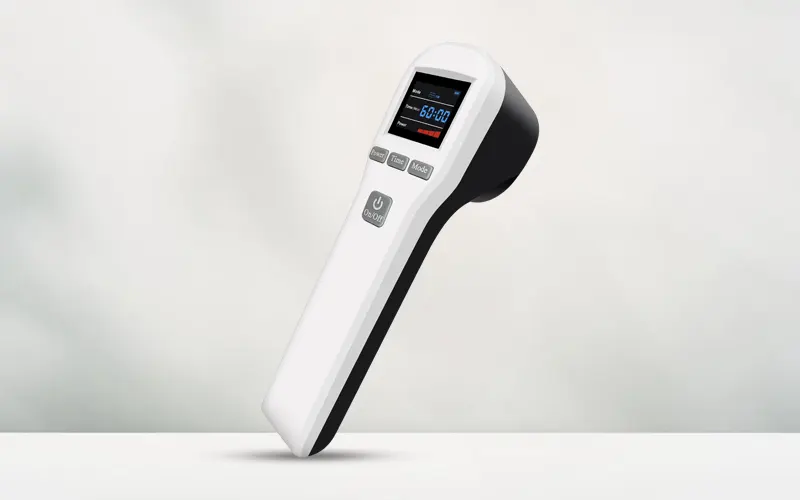
The ZJZK Cold Laser Therapy Device sits in a different category from the handheld LED wands and red light panels that dominate the at-home photobiomodulation market. It’s a genuine laser device not an LED product — and that distinction shapes everything about how it performs, how it should be used, and whether it’s the right fit for a given buyer.
You may have seen it referred to online as an “Alibaba laser,” a nickname that emerged because the device is sourced through Alibaba as a B2B channel from the Chinese manufacturer, Wuhan Zjzk Technology Co., Ltd.
The product’s actual name is the ZJZK Cold Laser Therapy Device, and it’s available through ZJZK’s own retail storefront and on Amazon in addition to the Alibaba wholesale channel.
This review focuses on the 880mW configuration to provide a well-rounded perspective, we’ve also drawn on Amazon customer reviews and independent irradiance testing data.
What Is the ZJZK Cold Laser Therapy Device?
ZJZK is a Chinese manufacturer, Wuhan Zjzk Technology Co., Ltd., that produces a range of laser and light therapy equipment. The 880mW model under review uses 20 laser diodes — 16 at 650nm (red light) and 4 at 808nm (near-infrared) in a compact, battery-powered form factor small enough to hold in one hand.
This is not an LED device, and that’s not a trivial distinction. LED panels and handhelds distribute light broadly across a surface area at relatively low intensity. A laser concentrates photons into a narrow, coherent beam at a precise wavelength, delivering considerably higher energy density to a small targeted zone. For localized treatment of a specific joint, tendon, or muscle region, that precision has real practical value. The tradeoff is that tighter energy concentration makes accurate dosing and consistent safety habits substantially more important than with any LED device.
The device is marketed for pain relief, joint discomfort, muscle recovery, wound healing, and post-surgical rehabilitation. It’s listed for both human and pet use, which customer reviews reflect fairly consistently. Wavelength configurations can be customized through the manufacturer for buyers with specific protocol requirements.
How Does It Rate?
ZJZK Cold Laser Therapy
 3.7/5Quality
 3.6/5User Friendly
 3.5/5Value
 3.6/5Customer Satisfaction
Pros
- Dual wavelengths covering surface and deep tissue
- Four adjustable power levels with both CW and pulsed modes
- Built-in timer and LED display for session control
- Battery-powered and portable
- Protective eyewear included
Cons
- No visible indicator when NIR laser is active — a meaningful safety gap
- Not beginner-friendly; requires understanding of laser dosing and safety
- Device generates noticeable heat during extended sessions
- Must be held manually throughout treatment — no hands-free option
- Holding the device for 20-minute sessions causes arm fatigue
- Broad clinical claims go beyond what peer-reviewed evidence currently supports
- Limited brand transparency compared to established consumer wellness brands
- Skin sensitivity reported with continuous mode during longer sessions
- No visible charging indicator when screen is off
- Only 1-year warranty
About ZJZK
ZJZK sells through their own Shopify storefront, through Alibaba for wholesale and custom orders, and through Amazon. Their product range spans handheld LLLT devices, silicone LED therapy pads, hair growth caps, facial LED masks, and higher-powered stationary laser systems.
The manufacturer is reported as responsive to direct inquiries and willing to discuss custom wavelength configurations. That said, the brand does not offer the same level of consumer support infrastructure as established Western wellness brands, which is worth factoring in if post-purchase support matters to your decision.
How Does the ZJZK Cold Laser Therapy Device Work?
Photobiomodulation (PBM) is the biological mechanism underlying both LED and laser light therapy. Light in the red and near-infrared spectrum is absorbed by chromophores inside cells — most notably cytochrome c oxidase in the mitochondria which triggers a cascade of cellular responses including increased ATP production, modulation of reactive oxygen species, and changes in cellular signaling that may reduce inflammation and support tissue repair.
What makes a laser different from an LED panel is the delivery mechanism. LEDs spread light broadly across a surface area, covering more tissue but at lower intensity per point. A laser concentrates photons into a narrow, coherent beam at a precise wavelength. That beam can deliver a much higher energy density to a small targeted area, which makes it attractive for localized treatment where you want to focus on a specific joint, muscle, or tissue region rather than broadly irradiating a large surface.
The tradeoff is that precision cuts both ways. More power concentrated into a smaller area means the margin for error on dosing is tighter. With an LED panel, over-treating slightly is unlikely to cause harm. With a high-powered laser, applying too much energy to the wrong tissue or especially to the eye, is a genuinely different risk profile.
The 650nm red light in this device targets superficial tissue, primarily useful for skin-level applications and surface inflammation. The 808nm near-infrared penetrates considerably deeper into muscle and joint tissue, reaching structures that surface-level red light can’t access effectively.
Session duration, treatment distance, power level selected, and beam area all interact to determine the actual dose delivered. These variables should not simply be copied from LED panel protocols and applied to a laser device without adjustment.
Key Features of the ZJZK Cold Laser Therapy Device
Here’s what the specs actually mean in practice, including what independent testing revealed.
Laser Wavelengths
The 880mW model pairs 650nm red light across 16 diodes at 5mW each with 808nm near-infrared across 4 diodes at 200mW each. Red light at 650nm targets superficial tissue and is most relevant for skin-level applications. The 808nm NIR wavelength carries significantly more therapeutic weight for muscle and joint applications, it penetrates considerably deeper into tissue, reaching structures that surface-level red cannot.
Research supports the 808nm wavelength specifically for musculoskeletal applications. A study examining LLLT for pain found evidence supporting its use across multiple musculoskeletal conditions, with 808nm featuring prominently as a studied wavelength. Independent spectrometer measurement has found output peaks at approximately 810–811nm, a minor deviation from the advertised 808 nm that the manufacturer acknowledges as typical at this price point.
Laser Output
Total rated output is 880mW. At 6 inches, independent testing on a higher-powered variant measured irradiance of 50 to 80 mW/cm², rising to 120 to 250 mW/cm² at very close range. These numbers don’t translate directly to LED panel comparisons due to fundamental differences in beam geometry, a laser’s narrow beam means irradiance figures represent a much smaller area than equivalent readings from a broad LED source.
Continuous and Pulsed Modes
Both continuous wave (CW) and pulsed wave (PW) modes are available. The manufacturer recommends pulsed mode for most applications, with continuous mode reserved specifically for nerve regeneration protocols. Customer experience aligns with this: one reviewer reported skin sensitivity during extended continuous mode sessions, while pulsed mode was well-tolerated throughout.
Power Levels and Timer
Four power levels at 25%, 50%, 75%, and 100% give users meaningful intensity control. The built-in timer runs from 1 to 60 minutes and shuts the device off at session end. The device also beeps every 30 seconds during use, an underrated practical feature for moving the laser to adjacent treatment zones according to a protocol. One minor usability gap: no charging indicator appears when the screen is off, so it’s not immediately obvious whether the device is charging.
Battery and Portability
The 3000mAh lithium battery supports approximately 60 minutes of use per charge based on independent testing. The device supports use while charging. At 0.55 lbs and 8.5 inches long, it’s genuinely compact. The portability is a real advantage for users who want to treat specific areas without being tethered to an outlet or a mounted panel.
Scientific Evidence Behind Cold Laser and Photobiomodulation
The research base for photobiomodulation is broad and growing. A PMC study on LLLT and tissue repair outlined the cellular mechanisms involved, pointing to mitochondrial stimulation through cytochrome c oxidase and downstream anti-inflammatory effects as key pathways. These mechanisms are well-documented across the photobiomodulation literature.
What the evidence does not support is direct extrapolation of clinical study results to any specific home device, including the ZJZK. Studies use controlled, calibrated equipment with defined protocols and patient populations. Whether an 880mW home device replicates clinical conditions closely enough to produce comparable outcomes is not established.
On Brain and Epilepsy Applications
Animal research has produced interesting findings around red and NIR light and neurological function. There is legitimate scientific interest in transcranial photobiomodulation. However, no published controlled human clinical trials currently establish red or NIR light therapy as a treatment for epilepsy or other neurological conditions. Any use of higher-powered devices for neurological applications, such as epilepsy, should only be done under monthly QEEG monitoring and direct protocol guidance from a specialist neurologist not as a DIY experiment. This application requires equivalent professional oversight and should never be attempted independently.
First-Hand Testing Experience
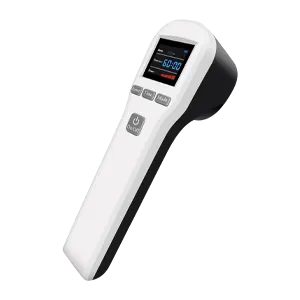
- Physical design: The device is handheld with a metal upper casing. Even the higher-powered version is compact enough to be genuinely portable. The metal construction contributes to heat dissipation but also means the device becomes noticeably warm during extended sessions, a direct result of the high power output. Customer reviews on the 880mW version echo this, with one noting the device becomes warm around the 15-minute mark.
- Physical design: The device is handheld with a metal upper casing. Even the higher-powered version is compact enough to be genuinely portable. The metal construction contributes to heat dissipation but also means the device becomes noticeably warm during extended sessions, a direct result of the high power output. Customer reviews on the 880mW version echo this, with one noting the device becomes warm around the 15-minute mark.
- Wavelength testing: Using a spectrometer, the reviewer found output peaks at approximately 810–811nm and 970–972nm on his configured unit, both slightly above the advertised wavelengths. The manufacturer confirmed minor deviations are expected and that absolute precision would require a significantly higher price point.
- Output testing: Irradiance at 6 inches ranged from 50 to 80 mW/cm², rising substantially at very close range. Interpreting these numbers requires understanding that laser irradiance measurements behave differently from LED panel measurements due to beam geometry.
- Usability: The screen and controls were straightforward in testing. The built-in timer and the 30-second beep interval were noted as genuinely useful practical features for managing treatment protocols.
- The key usability concern: When NIR lasers are active, there is no visible confirmation. No light is visible to the eye, and according to the reviewer, there’s no separate indicator LED to confirm the device is on. This is a real practical problem with a device powerful enough to cause eye damage — you don’t want uncertainty about whether it’s active or not.
Potential Benefits of the ZJZK Cold Laser Therapy Device
The following represent potential use cases based on the device’s specifications and the broader photobiomodulation research base. They are not guaranteed outcomes.
Targeted muscle and joint support
is the most straightforward application. A narrow laser beam lets you target one specific area like a single joint or tendon without affecting the surrounding tissue. For users who know exactly where their pain or discomfort is originating, that precision is a genuine practical advantage over a wide-beam LED device.
Recovery support
after exercise or physical strain is a commonly reported use case in customer reviews. The 808nm wavelength’s deeper tissue penetration makes it more relevant for muscle and joint recovery than surface-level red light alone.
Deep-tissue targeting
is where NIR laser wavelengths have a meaningful advantage over standard LED red light. At 808nm, light penetrates considerably deeper into tissue than the 650nm red light component, which is relevant for anyone trying to address structures that surface treatment can’t reach effectively.
Portable spot treatment
is one of the more practical selling points. Battery power and compact size mean this can be used at home, during travel, or at a gym without a power outlet or a fixed mounting setup.
Customizable treatment
through adjustable power levels, operating modes, and timer settings gives users control over how aggressive their sessions are a meaningful feature for people who are working through a structured protocol rather than using the device casually.
How to Use the ZJZK Cold Laser Therapy Device
Charge fully before first use. Put on the included protective eyewear before powering on, this applies every session, no exceptions. Select pulsed mode for general use, continuous mode only if specifically indicated by a protocol. Start at 25% or 50% power before progressing to higher levels. Position the device directly against or near the skin over the target area, set your timer, and follow the 30-second beep interval to move between adjacent zones. Power off completely after the session and store safely away from children. Follow manufacturer guidelines on session frequency 20 minutes, two to three times daily is the general recommendation.
Do not attempt cranial or brain applications without professional supervision and appropriate diagnostic testing.
Safety, Side Effects, and Precautions
Eye safety is the most critical concern with this device. The 808nm near-infrared laser is completely invisible to the human eye, and there is no visible indicator when it’s active — the included goggles must be worn throughout every session by the user and anyone nearby. This is not optional.
The device generates noticeable heat during extended sessions, particularly in continuous mode. Skin sensitivity has been reported. Anyone taking photosensitizing medications, anyone who is pregnant, or anyone with an active medical condition should consult a healthcare professional before use. Do not use over areas with active cancer, impaired skin integrity, or implanted electronic devices. Laser therapy on the brain or cranium without professional oversight is not appropriate regardless of intent.
Warning: Never expose the eyes to this device. Do not use for neurological or cranial applications without direct professional supervision.
Quick Facts & Features
| Product Type | Handheld cold laser / LLLT device |
|---|---|
| Wavelengths | 650nm (16 diodes x 5mW) + 808nm (4 diodes x 200mW) |
| Total Output | 880mW |
| Light Type | GaAlAs Diode Laser |
| Operating Modes | Continuous Wave + Pulsed Wave |
| Pulse frequency | 10Hz |
| Power Levels | 25% / 50% / 75% / 100% |
| Timer | 1 to 60 minutes |
| Battery | 3000mAh rechargeable lithium |
| Dimensions | 8.46 x 2.36 x 1.97 in |
| Weight | 0.55 lbs |
| Protective Eyewear | Included (2 sets) |
| Warranty | 1 year |
| Price | $149 |
ZJZK vs Alternatives
| Feature | ZJZK (880mW) | Novaa Extra-Strength Laser | Kineon MOVE+ Pro |
|---|---|---|---|
| Device Type | Handheld laser | Targeted laser device | Wearable + handheld |
| Technology | GaAlAs diode laser | Laser-based | Laser + LED combined |
| Primary Use | Focused spot treatment | Targeted recovery | Joint-focused treatment |
| Hands-Free | No | No | Yes (strap included) |
| Best For | High-power targeted use | Consumer-friendly laser | Convenient joint treatment |
| Safety Considerations | High — laser precautions essential | Follow manufacturer guidance | Follow manufacturer guidance |
The ZJZK’s output-to-price ratio is its clearest differentiator. Novaa offers a more conventional consumer experience with clearer brand support and a more established US-facing service structure. The Kineon MOVE+ Pro is the most practical choice for joint-focused users who want hands-free convenience, combining LED and laser technology in a wearable strap format without the manual-hold requirement.
Is the ZJZK Cold Laser Therapy Device Worth It?
At $149, this is an unusually high-output laser device for the price. That value proposition is real, and it’s the main reason the device has attracted attention in the photobiomodulation community. If you’re an experienced user specifically looking for targeted laser treatment and understand what you’re working with, the ZJZK delivers more raw output per dollar than almost anything else in this price bracket.
The caveats are equally real, though. The lack of a visible “on” indicator for the NIR laser is a design gap that shouldn’t exist in any device of this power level. The manual-hold requirement for 20-minute sessions is inconvenient, and the heat generation during extended sessions is something to manage. And the brand support experience, while reported as responsive by the independent reviewer, is not the same as buying from an established consumer wellness brand with a clear US-based service structure.
Whether the average home user actually needs this level of laser power is a fair question. For general red and NIR light therapy, a quality LED handheld or compact panel will serve most people well without the safety complexity. The ZJZK makes sense for a more specific buyer.
Customer Reviews
The buttons and screen are very simple to read and understand. The manual provides a good guide with suggested treatment time, mode, and power by condition. I started experimenting with Continuous mode and my skin couldn’t tolerate it, itching and stinging toward the end of the session. It’s fine when I use PW mode. The device gets heated around 15 minutes. Tolerable to continue using, but those with sensitive skin might find it affects them. – Jyn
Tore a ligament in my knee. The swelling is down considerably after using it 2 days, 3x daily. Was able to walk without agonizing pain. Highly recommend. – Rachel
It’s small and portable enough to aim onto the affected surface, which solves problems that larger flat devices create. However, after some time prior to the recommended 20 minutes, my arm tires. My plantar fasciitis seems to have responded. I like the treatment, but feel it is a little expensive for what it is.– Frugal Shopper
The reviews broadly reflect what independent testing found — real performance for targeted pain applications, heat generation during extended use, and the manual-hold requirement as the most common practical friction point.
Who Should Buy the ZJZK Cold Laser Therapy Device?
May be suitable for:
- Experienced photobiomodulation users specifically seeking laser rather than LED delivery
- People targeting a specific joint or muscle with precision spot treatment
- Users comfortable following strict laser safety protocols consistently
- Pet owners looking for an LLLT device for animal recovery
May not be suitable for:
- Beginners to light therapy
- Users wanting full-body or large-area coverage
- Anyone unwilling to follow laser eye safety precautions
- People looking for a simple, low-maintenance daily wellness device
- Anyone considering unsupervised brain or neurological protocols
Frequently Asked Questions
What is the ZJZK Cold Laser Therapy Device?
A: It’s a handheld, battery-powered low-level laser therapy (LLLT) device using 650nm red light and 808nm near-infrared laser diodes for targeted spot treatment of muscles, joints, and soft tissue.
What wavelengths does the ZJZK laser use?
A: The 880mW configuration uses 650nm (16 diodes) and 808nm (4 diodes). Other configurations with different wavelength combinations including 905nm and 980nm are available through the manufacturer.
Is the ZJZK device a laser or LED?
A: It is a laser device using GaAlAs diode technology. This is fundamentally different from LED panels and handhelds in terms of beam coherence, power density, and safety requirements.
How powerful is the ZJZK Cold Laser Therapy Device?
A: The official 880mW configuration delivers 880 milliwatts of total output. Higher-powered versions up to several watts are available through the ZJZK product range. Independent testing on a higher-powered version measured irradiance of 50 to 80 mW/cm² at 6 inches, rising significantly at closer range.
Is the ZJZK laser safe for the eyes?
A: Not without proper protective eyewear. The included goggles must be worn during every session. The 808nm NIR component is invisible to the eye, meaning there is no visible warning when the laser is active. Never direct the device toward the eyes.
Can the ZJZK laser be used on the brain?
A: This should only be approached under professional medical supervision with appropriate baseline diagnostic testing such as QEEG scanning, a structured protocol from a qualified practitioner, and ongoing monitoring. Attempting cranial laser therapy without these safeguards is not appropriate, regardless of what you may have read online. The current human evidence base for neurological applications is preliminary, and the consequences of misuse in this area are serious.
Is the ZJZK device suitable for joint or muscle treatment?
A: Targeted joint and muscle treatment is the most conventional and well-supported application for this type of device. The 808nm near-infrared wavelength penetrates into joint and muscle tissue effectively, and the narrow laser beam allows precise positioning over a specific area.
Conclusion
The ZJZK Cold Laser Therapy Device is a specialized laser tool that delivers real output at an accessible price. Its output-to-price ratio is its strongest selling point, and for experienced users who specifically want targeted laser delivery, it earns a straightforward recommendation. The dual wavelengths, adjustable settings, and battery portability make it a practical choice for localized spot treatment.
The design gaps are real though. No visible NIR indicator, manual-hold for every session, and a 1-year warranty are limitations that experienced buyers should factor in honestly. And for anyone new to photobiomodulation, the safety requirements alone make this the wrong starting device.
Think of it as a powerful laser that happens to be affordable for home use — and it delivers. Just don’t expect it to perform like a standard LED device, because it’s not one.