


Introduction
Your thyroid is a small butterfly-shaped gland at the base of your neck – but its influence on your body is anything but small. It governs your metabolism, energy levels, body temperature, mood, and hormonal balance. When it underperforms, the downstream effects are hard to ignore: persistent fatigue, unexplained weight gain, brain fog, hair thinning, cold sensitivity, and depression.
Hypothyroidism affects an estimated 5% of the U.S. population, and a significant portion of those cases stem from Hashimoto’s thyroiditis – an autoimmune condition in which the immune system attacks thyroid tissue. For many, standard medication helps, but it rarely addresses the root immune dysfunction driving the problem.
That’s where red light therapy (RLT) has started to draw serious attention. Over the past decade, a growing body of human research has examined whether targeted red and near-infrared (NIR) light exposure can support thyroid hormone production, reduce autoimmune antibodies, and potentially help patients lower their medication dose. The results, while still emerging, have been consistently encouraging.
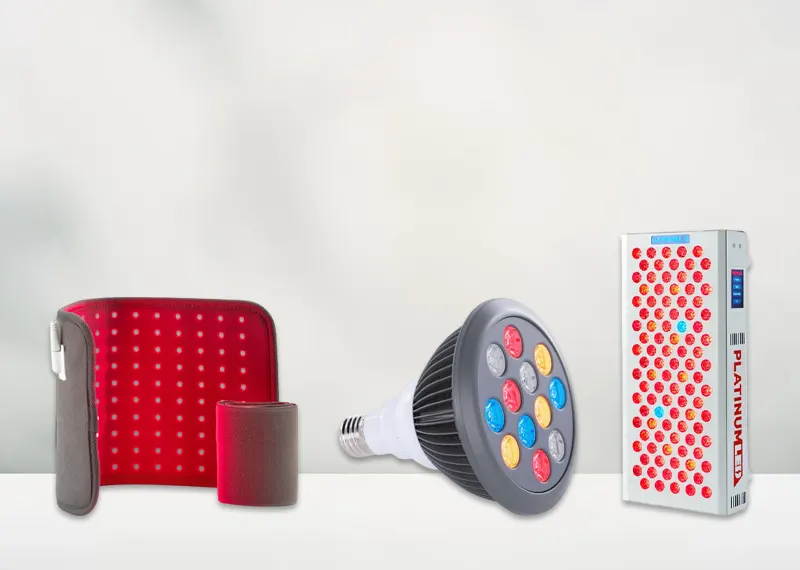
This guide covers what the science says, what wavelengths and dosing work best for thyroid treatments, and which devices are best suited for targeting the thyroid gland at home – starting with our top pick from NovaaLab.
Top Picks
![Novaa Light Pad]() Best overall for thyroid – flexible, wearable, targeted NIRNovaa Light PadGo to Review
Best overall for thyroid – flexible, wearable, targeted NIRNovaa Light PadGo to Review- At Official Website
![Hooga HG24]() Best budget-friendly targeted panelHooga HG24Go to Review
Best budget-friendly targeted panelHooga HG24Go to Review- At Official Website
![PlatinumLED Biomax 300]() Best multi-wavelength optionPlatinumLED Biomax 300Go to Review
Best multi-wavelength optionPlatinumLED Biomax 300Go to Review- At Official Website
![Thyro Light]() Best purpose-built thyroid deviceThyro LightGo to Review
Best purpose-built thyroid deviceThyro LightGo to Review- At Amazon
![Bon Charge Mini]() Best for travel and portabilityBon Charge MiniGo to Review
Best for travel and portabilityBon Charge MiniGo to Review- At Amazon
How Red Light Therapy Supports Thyroid Health
The Thyroid and Why It Struggles
The thyroid produces two primary hormones: thyroxine (T4), the storage form, and triiodothyronine (T3), the active form. T4 must be converted to T3 in peripheral tissues – primarily the liver and kidneys – for the body to use it. In hypothyroidism and Hashimoto’s, this conversion is often impaired, TSH (thyroid stimulating hormone) rises as the pituitary works harder to compensate, and the body’s metabolic machinery slows.
Hashimoto’s adds an autoimmune layer: elevated antibodies (TPO-Ab and TgAb) attack thyroid tissue progressively, leading to gland damage, reduced hormone output, and sometimes nodule formation. Treating hypothyroidism without addressing the autoimmune component means the damage continues even as medication compensates for lost output.
The Photobiomodulation Mechanism
Red and near-infrared light therapy works through a process called photobiomodulation (PBM). Light in the 600-1000 nm range is absorbed by cytochrome c oxidase (CCO), a key enzyme in the mitochondrial electron transport chain. This absorption increases the production of adenosine triphosphate (ATP) – the cell’s primary energy currency – while also modulating reactive oxygen species (ROS), nitric oxide, and local blood flow. According to Dr. Raymond Douglas, MD, PhD, photobiomodulation works at the mitochondrial level, where it helps increase ATP production. He explains that improved cellular energy may help reduce inflammatory burden, which is particularly relevant in conditions such as Hashimoto’s thyroiditis where chronic inflammation plays a central role.
In thyroid tissue specifically, improved mitochondrial function appears to:
- Normalize hormone synthesis – Adequate cellular energy supports the enzymatic processes required to produce T3 and T4
- Improve T4-to-T3 conversion – Mitochondria-rich cells in the liver and peripheral tissues convert more efficiently when energy production improves
- Reduce local inflammation – Lower inflammatory signaling within thyroid tissue may slow autoimmune-driven damage
- Modulate immune activity – PBM has demonstrated immunomodulatory effects, including reductions in pro-inflammatory cytokines associated with Hashimoto’s
What the Research Shows
There are approximately ten published human studies examining red and near-infrared light therapy for hypothyroidism, with the majority focusing specifically on Hashimoto’s thyroiditis. Across this body of research, the findings are notably consistent.
Common outcomes reported include:
- Reduced TSH levels – Indicating improved thyroid output without increased pituitary stimulation
- Increased free T3 – The active hormone that drives metabolic function
- Improved T4-to-T3 conversion – Better peripheral utilization of stored hormone
- Reduced TPO antibodies and TgAb – Markers of Hashimoto’s autoimmune activity
- Decreased thyroid gland volume – Suggesting reduced inflammation and nodule regression in some cases
- Reduced or eliminated need for levothyroxine – Several trials reported participants being able to lower their medication dose
The most notable recent trial followed participants over twelve months, comparing two groups. Both received selenium and vitamin D – nutrients critical for thyroid hormone synthesis and immune regulation. The second group additionally received near-infrared light therapy at approximately 820 nm. The light therapy group showed significantly greater improvements across all thyroid markers, including TSH, free T3, and gland volume, as well as improvements in metabolic indicators such as waist-to-hip ratio.
Earlier landmark studies – including a 2013 randomized controlled trial published in Lasers in Surgery and Medicine – demonstrated that patients receiving NIR laser therapy to the thyroid required significantly less levothyroxine after nine months compared to a placebo group.
Wavelengths That Matter for Thyroid Health
The majority of thyroid studies use near-infrared wavelengths in the 820-850 nm range. NIR penetrates deeper into tissue than red light – typically 3-5 cm – which is critical given the thyroid’s position beneath the skin and superficial neck muscles. Some research also includes red light at 660 nm, which contributes surface-level anti-inflammatory effects and can support local tissue healing.
For home use, devices that include both 660 nm (red) and 850 nm (NIR) are considered well-positioned for thyroid treatments. Devices with wavelengths closer to 820-830 nm align more directly with the studied protocols.
Dosing and Treatment Protocols for Home Use
Clinical laser studies sometimes report doses of several hundred joules per square centimeter (J/cm²), but these are delivered by medical lasers to very small target points – not comparable to home LED devices.
For LED-based home devices, the recommended starting range is 20-30 J/cm² per session, with gradual progression. Experienced practitioners suggest a maximum of up to 200 J/cm² over time with LEDs, though most users stay well below this ceiling. Sessions are typically performed 2-3 times per week over 8-12 weeks to assess initial response.
Because the thyroid is a small and anatomically specific target, starting conservatively and building slowly is important. Overexposure of surrounding tissues – including the brain and carotid structures – should be avoided by using a targeted device rather than a full-body panel.
Why Smaller, Targeted Devices Work Best
A full-body panel can technically deliver light to the thyroid, but it also irradiates a large surface area simultaneously, making precise dose control difficult. For thyroid health specifically, smaller handheld or wearable devices allow you to position the light directly over the front of the neck and deliver a controlled, consistent dose to the gland without unnecessary exposure to adjacent structures.
This is the primary reason the product recommendations below favor compact, targeted devices over larger panels – with the exception of the Biomax 300, which is included for users who already own a quality multi-wavelength panel and want to use it at close range for thyroid sessions.
Recommended Devices for Thyroid Light Therapy

1. Novaa Light Pad
Best For: Hypothyroidism and Hashimoto’s patients wanting precise, direct thyroid targeting with a wearable device
Key Features:
- Flexible, wearable pad design – conforms to the neck for direct thyroid contact
- Clinically optimized irradiance output for therapeutic dosing
- Lightweight, portable and Soft, skin-safe material
Price: ~$349.90

Pros & Cons
Pros
- Wearable design eliminates positioning challenges common with panels
- Dual wavelengths cover both surface-level anti-inflammatory (660 nm) and deep-tissue (850 nm) targets
- Consistent skin contact improves dose reliability compared to handheld or stand-mounted options
- Compact and travel-friendly for consistent treatment schedules on the go
- NovaaLab’s quality control ensures LED output stays within therapeutic ranges
Cons
- Smaller treatment surface limits coverage beyond the thyroid area
More to Know
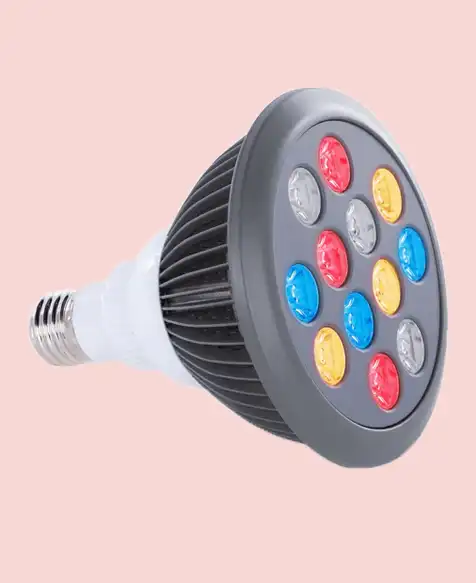
2. Hooga HG24
Best For: Budget-conscious users wanting a reliable entry-level device for targeted thyroid treatments
Key Features:
- 24W output – adequate irradiance for close-range thyroid sessions
- Small panel footprint – easy to position directly over the neck
- No EMF design – suitable for use close to the body
- Straightforward plug-and-use operation
Price: $45.00
Pros & Cons
Pros
- Strong irradiance for its size and price point
- Compact form makes thyroid targeting manageable
- 660 nm + 850 nm dual wavelength combination aligns with research protocols
- Reputable brand with independently tested specs
Cons
- Panel form factor delivers less precise dose control than a wearable pad
More to Know
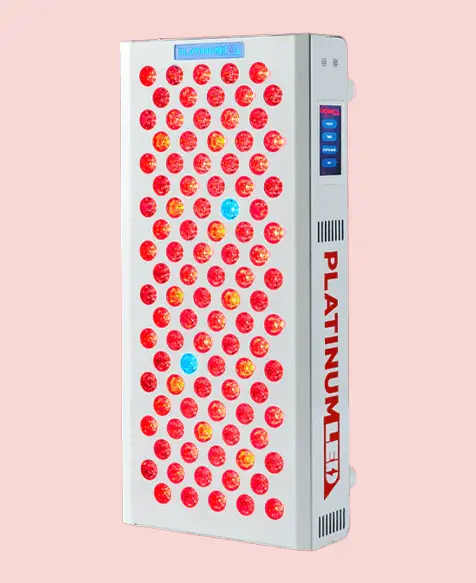
3. PlatinumLED Biomax 300
Best For: Users wanting the broadest wavelength coverage – especially the 810-830 nm range most studied for thyroid health
Key Features:
- Five therapeutic wavelengths
- Independent third-party lab tested irradiance
- Adjustable power modes for dose control
Price: $659
Pros & Cons
Pros
- 810 nm and 830 nm wavelengths are the closest match to thyroid clinical trial protocols among all panels reviewed
- Multi-spectrum output supports thyroid, skin, muscle, and systemic benefits in one device
- High irradiance enables therapeutic dosing at close range in shorter sessions
- Third-party tested and verified specs
Cons
- Larger panel format requires careful positioning for targeted thyroid use
- Not wearable or portable – stationary home use only
More to Know
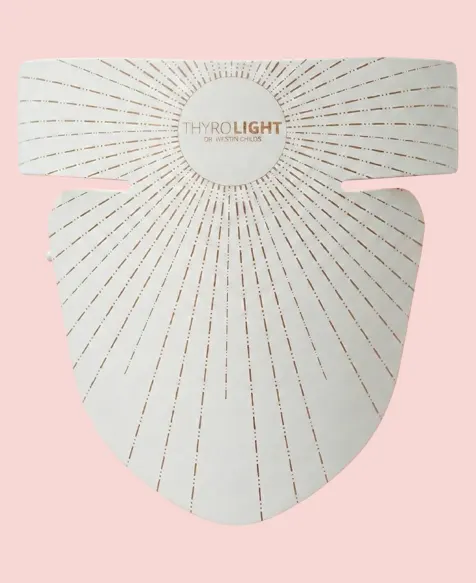
4. Thyro Light
Best For: Hypothyroidism patients wanting a device designed specifically and only for thyroid treatment
Key Features:
- Purpose-built form factor designed for thyroid neck placement
- Near-infrared wavelength output for deep thyroid tissue penetration
- Compact, neck-targeted coverage area
Price: $349.99
Pros & Cons
Pros
- Purpose-built design removes all positioning guesswork
- Neck-specific coverage area is ideal for thyroid targeting
- Simple to use with minimal setup
Cons
- Narrower application – less versatile than multi-purpose devices
- Fewer published independent reviews and spec verifications compared to established brands
More to Know
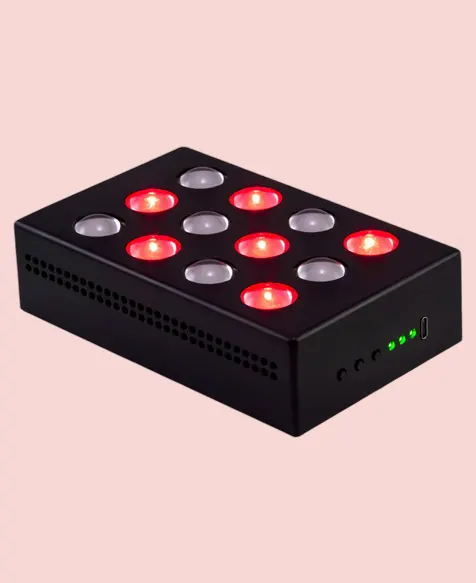
5. Bon Charge Mini
Best For: Frequent travelers who want to keep up thyroid RLT sessions while away from their primary device
Key Features:
- Ultra-compact form factor – fits in a carry-on or bag
- Rechargeable via USB-C – no adapter needed while traveling
- Held directly against the skin for close-contact thyroid sessions
Price: $299.00
Pros & Cons
Pros
- Most portable device on the list – travel-friendly
- 660 nm + 850 nm covers both studied wavelength bands
- Held directly against the neck for close-contact targeting
- USB-C charging is convenient for travel
Cons
- Lower total power output compared to dedicated panels or pads – requires longer sessions for equivalent dosing
- Not ideal as a sole primary device for consistent therapeutic dosing
- Smaller LED array covers a narrower treatment area
More to Know
Buying Guide: How to Choose the Right Red Light Therapy Device for Thyroid Health
Prioritize Near-Infrared Wavelengths
For thyroid health, near-infrared wavelengths – particularly in the 820-850 nm range – are the most researched and most effective. Red light at 660 nm supports surface-level anti-inflammatory effects and is a useful complement, but NIR is the primary driver in thyroid studies. Any device you choose should include at least one NIR wavelength in this range. Devices with 810 nm or 830 nm alongside 850 nm are well-positioned for thyroid protocol alignment.
Choose a Device That Fits the Thyroid’s Target Area
The thyroid is located at the front of the lower neck – a small, anatomically specific area. Devices that allow direct placement or close positioning over this area will always outperform large panels for thyroid targeting, because precise dose control to a small target is difficult when you’re also irradiating a wide area of body surface. Wearable pads, compact panels, and handheld devices all work better here than full-body panels.
Understand Irradiance and Dosing
Irradiance (measured in mW/cm²) determines how quickly a device delivers a therapeutic dose. For a starting target of 20-30 J/cm², you need to know both your device’s irradiance at your chosen treatment distance and how long to apply it. A device with 50 mW/cm² output at your treatment distance would take approximately 400-600 seconds (6-10 minutes) to reach 20-30 J/cm². Devices with independently verified irradiance specs – not just marketing claims – are worth the investment for therapeutic use.
Treatment Distance Matters More Than You Think
For targeted thyroid sessions, closer is generally better – provided your device’s irradiance spec is measured at that distance. Most home devices are spec’d at 6 inches. Using a device at 2-3 inches can significantly increase the dose delivered, which can be advantageous for thyroid targeting but also means you need to adjust session time accordingly to stay within the recommended dose range.
Expect Results Over Weeks, Not Days
The human trials showing meaningful thyroid marker improvements typically ran 8-12 weeks of consistent treatment, with the most compelling twelve-month study showing progressive gains over the full year. Commit to 2-3 sessions per week for at least two months before evaluating results. Monitor thyroid markers (TSH, free T3, TPO-Ab) with your physician to track objective progress.
Red Light Therapy Is a Complement, Not a Replacement
Even with promising research behind it, red light therapy works best as part of a broader thyroid support strategy. Nutritional status matters – selenium, vitamin D, zinc, magnesium, and iodine all play direct roles in thyroid hormone production and conversion. Stress management, sleep quality, and avoiding thyroid-disrupting environmental toxins are equally important. Never adjust thyroid medication without medical supervision, even as you add light therapy to your regimen.
Frequently Asked Questions
Can red light therapy replace thyroid medication?
How long does each thyroid light therapy session take?
A: Depending on your device’s irradiance, a starting dose of 20-30 J/cm² typically requires 6-10 minutes of direct exposure at close range. Higher-powered devices can reach this dose faster.
How close should the device be to my thyroid?
A: For most home LED devices, 2-6 inches is the recommended range for targeted thyroid sessions. Closer proximity increases irradiance and shortens session time, but verify your device’s irradiance at the distance you’re using.
Is red light therapy safe for the thyroid area?
A: Current research in humans shows a good safety profile with no adverse effects reported in thyroid studies. However, you should keep exposure controlled and avoid unnecessarily irradiating the eyes, face, or carotid arteries at high intensities. Starting with lower doses and building gradually is the safest approach.
How often should I do red light therapy for thyroid health?
A: Clinical trials most commonly use 2-3 sessions per week. Daily use is not recommended when starting out – allowing rest days gives thyroid tissue time to respond between sessions.
Do I need both red and near-infrared, or just NIR?
A: NIR (820-850 nm) is the primary wavelength studied for thyroid health. Red light (660 nm) adds complementary anti-inflammatory effects. A device with both is ideal, but if choosing between them, prioritize NIR.
How long before I see results?
A: Most clinical trials report measurable improvements in thyroid markers after 8-12 weeks of consistent treatment. Some participants notice symptomatic improvements – better energy, less brain fog – within a few weeks, though lab markers take longer to shift.
Can I use red light therapy if I have Hashimoto’s thyroiditis?
A: Yes – Hashimoto’s is actually the most studied indication for thyroid RLT, with multiple trials showing reductions in TPO antibodies and improvements in thyroid hormone balance in Hashimoto’s patients specifically.
Conclusion
For anyone managing hypothyroidism or Hashimoto’s, red light therapy has moved well beyond the emerging trend into a genuinely evidence-supported complementary tool. The research is consistent, the mechanism is well-understood, and the protocol requirements – targeted NIR wavelengths, 2-3 sessions per week, progressive dosing – are achievable with the right home device. Of all the options we reviewed, the Novaa Light Pad stands out as the strongest choice for thyroid use: its wearable, flexible pad design removes the positioning challenges that every panel-based device presents, its dual 660 nm and 850 nm output covers the full studied spectrum, and NovaaLab’s clinical-grade LED quality means you can trust the dose you’re actually delivering to your thyroid. Pair it with proper nutrition, regular thyroid monitoring with your physician, and consistent sessions over 2-3 months, and it represents a well-grounded addition to your thyroid health strategy.

**This is a subjective assessment based on the strength of the available information and our estimation of efficacy.
*Result may vary. The information contained in this website is provided for general informational purposes only. No medical claims are implied in this content, and the information herein is not intended be used for self diagnosis or self treatment of any condition.
Disclosure of Material connection: Some of the links in the post above are "associate sales links." This means if you click on the link and purchase an item, we will receive commission. Regardless, we only recommend products or services which we use personally and/or believe will add value to our readers. We are disclosing this in accordance with the Federal Trade Commission's 16 CFR, Part 255: "Guides Concerning the Use of Endorsements and Testimonials."
Related Articles

Can a Flashlight Replace Red Light Therapy? What the Science Says
Find out whether a regular flashlight can deliver therapeutic light, how it compares with purpose-built RLT devices, and what to look for when choosing an affordable option.
READ REVIEW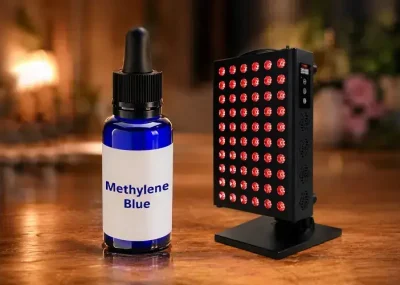
Methylene Blue and Red Light Therapy: Potential Benefits, Mitochondrial Effects, and Safety
Explore the science behind combining methylene blue with red light therapy, including mitochondrial mechanisms, current research, potential benefits, medication interactions, and important safety considerations.
READ REVIEW
PEMF and Red Light Therapy: How They Work, How They Differ, and When a Combined Mat Makes Sense
PEMF and red light therapy work through completely different mechanisms - and that's exactly why they pair well. Here's what each one does, where the evidence is solid, and what to look for in a combined mat.
READ REVIEW