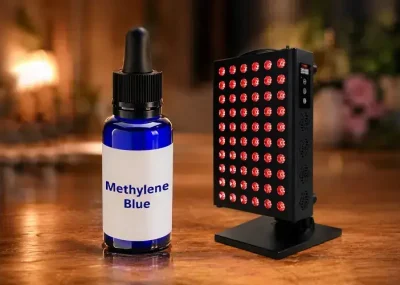
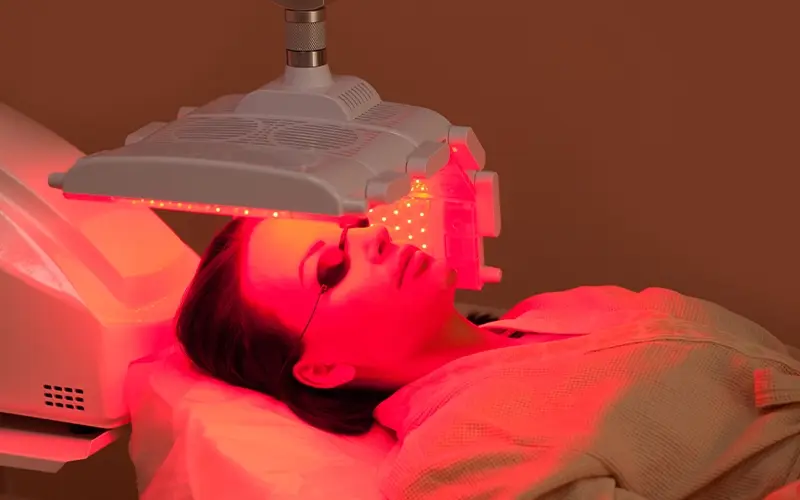


A quality red light therapy device isn’t cheap. With quality panels, wraps, and clinical-grade masks often costing $200 to $800 or more, it’s no surprise that many people wonder if they can use HSA or FSA funds to pay for them. In many cases, the answer is yes—but it isn’t always automatic.
Buying a device without the right documentation or reimbursement process could result in a denied claim or unexpected tax consequences.
Here’s what the IRS rules actually say, when you need extra documentation, and how to navigate the process without surprises.
HSA vs. FSA: The Difference That Changes Your Strategy
Before getting into red light therapy eligibility specifically, it helps to understand how these two account types differ – because the rules aren’t identical, and the difference affects when and how you should spend.
Health Savings Account (HSA)
An HSA is available to anyone enrolled in a qualifying high-deductible health plan (HDHP). The money you contribute goes in pre-tax, grows tax-free, and comes out tax-free when used for qualified medical expenses. For 2025, the contribution limits are up to $4,300 for individuals and $8,550 for families.
There’s no “use it or lose it” rule – unspent funds roll over indefinitely, and the account is yours even if you change employers or health plans.
That rollover feature is significant for larger purchases like red light therapy devices. You can save HSA funds across multiple years and spend them strategically without any year-end pressure.
Flexible Spending Account (FSA)
FSAs are employer-sponsored and also funded with pre-tax dollars, but they work differently. The 2026 contribution limit is $3,400 per person, up $100 from 2025. Most FSAs operate on a use-it-or-lose-it basis – funds must generally be used within the plan year, though some plans offer a grace period of up to two and a half months, and others allow a carryover of up to $660. Unused funds beyond those provisions are forfeited.
This creates a real strategic opportunity: if you have FSA funds approaching year-end that you’ll otherwise lose, a red light therapy device that qualifies as a medical expense is a legitimate and practical way to use them.
The tax math is worth understanding. Because HSA and FSA contributions come from pre-tax income, using these funds is effectively equivalent to getting a 22–37% discount on whatever you buy, depending on your federal tax bracket – before factoring in state income taxes. On a $400 device, that’s a real $88–$148 in savings.
One important note for 2026: the One Big Beautiful Bill Act, signed into law in late 2025, introduced several HSA changes effective January 1, 2026 – including gym memberships becoming HSA-eligible up to $500/year for individuals. While this doesn’t directly change red light therapy eligibility, it signals a broader expansion of what HSAs can cover, and it’s worth staying current on IRS guidance as the landscape evolves.
Does Red Light Therapy Qualify as an HSA/FSA Expense?
The governing document is IRS Publication 502 – Medical and Dental Expenses. Under it, qualifying medical expenses are defined as amounts paid for “the diagnosis, cure, mitigation, treatment, or prevention of disease, and for treatments affecting any part or function of the body.”
Red light therapy falls into what the IRS classifies as a dual-purpose item – a product or service that can be used for either general wellness or for treating a specific medical condition. This classification is key, and it’s where most of the confusion comes from.
Here’s how the IRS draws the line:
Qualifies – if the device is purchased primarily to treat, manage, or prevent a diagnosed medical condition. Examples: chronic pain from arthritis, wound healing after surgery, skin conditions like eczema or psoriasis, inflammation management for an autoimmune condition.
Does not qualify – if the device is purchased for general wellness, anti-aging, skin appearance improvement, or routine fitness recovery without a documented medical need.
The same device can be eligible or ineligible depending entirely on why you’re buying it and whether you have documentation to support that purpose. A red light therapy panel bought to treat diagnosed chronic back pain qualifies. The same panel I bought because you read it’s good for skin glow does not.
Under 26 U.S.C. § 213(d)(9), the tax code explicitly excludes cosmetic procedures from the definition of medical care – meaning any procedure directed primarily at improving appearance, without meaningfully promoting the proper function of the body or treating illness, is out. Anti-aging and general skin rejuvenation land squarely in that excluded category.
When You Need a Letter of Medical Necessity
This is the piece most buyers don’t know about until their claim gets denied.
Because red light therapy is a dual-purpose item, many HSA and FSA administrators require a Letter of Medical Necessity (LMN) before approving the expense. The LMN is a document from a licensed healthcare provider – your primary care physician, dermatologist, physical therapist, rheumatologist, or other relevant specialist – that establishes the medical basis for the purchase.
A valid LMN typically includes:
- Your name and the provider’s contact information and license number
- Your diagnosed condition (specific, not vague – “chronic pain” is better documented as “osteoarthritis of the knee”)
- A clear statement that red light therapy is recommended as part of your treatment plan
- The expected duration of treatment
- The date (which must be on or before the date of purchase – backdated LMNs are not valid)
Without an LMN on file, you run real risk. If you use an FSA debit card for a purchase that gets flagged as ineligible, you may be required to repay the amount, face account restrictions, or in a worst case, have the amount treated as taxable income.
Two practical paths to getting an LMN:
The first is your own healthcare provider. Your primary care doctor, dermatologist, physical therapist, or specialist can write one. Some providers are unfamiliar with the format – if that’s the case, you can explain the IRS requirement and ask them to include the elements listed above. Most providers willing to recommend the therapy will write the letter without much friction.
The second path is through services like TrueMed or similar platforms that partner with retailers to streamline the LMN process. After a short health assessment reviewed by a licensed provider, qualifying customers receive an LMN within 24–48 hours. Several major red light therapy brands – including Hooga, Celluma, and LifePro – have integrated TrueMed directly into their checkout process.
One important caveat: some devices are marketed as straightforwardly HSA/FSA eligible and sold at retailers that accept HSA/FSA cards at checkout without requiring an LMN upfront. This is possible when a device has FDA clearance for a specific medical indication – clearance signals that the device has been reviewed for safety and efficacy in treating a condition, which can make eligibility more straightforward. But even with an FDA-cleared device, keeping documentation of your medical purpose is a good practice if your plan ever audits the expense.
Which Conditions Qualify Red Light Therapy for HSA/FSA Use
The condition matters more than the device. Here are the medical indications most commonly documented in LMNs for red light therapy:
Chronic pain and musculoskeletal conditions – Osteoarthritis, rheumatoid arthritis, lower back pain, neck pain, tendinopathy, and plantar fasciitis all have clinical evidence supporting red light therapy as a pain management tool. This is the most commonly cited qualifying category.
Wound healing and post-surgical recovery – Red light therapy’s role in accelerating tissue repair is among its best-documented applications.
Post-surgical healing and diabetic foot ulcers are specifically supported by clinical trial data.
Inflammatory skin conditions – Eczema, psoriasis, and rosacea are recognized medical conditions that red light therapy can help manage. These differ from cosmetic skin concerns – they involve actual disease processes, not appearance preferences.
Acne vulgaris – When diagnosed by a dermatologist, acne qualifies as a medical condition. Red and blue light therapy devices used for acne treatment have FDA clearance for this indication and are among the more straightforward HSA/FSA eligible purchases.
Hair loss (androgenetic alopecia) – FDA-cleared laser and LED devices for pattern hair loss are frequently approved for HSA/FSA use, particularly when hair loss is diagnosed and documented by a dermatologist or physician.
Neuropathic pain and nerve conditions – Peripheral neuropathy, carpal tunnel syndrome, and similar nerve-related pain conditions have emerging evidence for PBM benefit and are often included in LMNs.
What doesn’t qualify: General skin rejuvenation, anti-aging, body contouring, and wellness or recovery use without a diagnosed condition. These are cosmetic or general health purposes under IRS definitions, even when the device is high-quality and scientifically legitimate.
Step-by-Step: How to Buy a Red Light Therapy Device with HSA/FSA Funds
Step 1: Identify your qualifying condition Be specific. “I have chronic lower back pain” is less useful than “I have been diagnosed with lumbar disc degeneration and chronic lower back pain by my physician.” The documentation trail starts with the diagnosis.
Step 2: Talk to your healthcare provider Before purchasing, mention to your doctor, physical therapist, or dermatologist that you’re considering a red light therapy device and ask if it’s appropriate for your condition. If they agree it’s reasonable, ask them to write an LMN. Get this before you buy – not after.
Step 3: Choose an eligible device FDA-cleared devices are the safest choice for HSA/FSA purposes. FDA clearance means the device has undergone regulatory review for a specific medical indication, which provides a cleaner paper trail. Look for devices that explicitly state HSA/FSA eligibility and have the documentation to back it up – not just marketing language.
Step 4: Pay using your HSA/FSA card or request reimbursement Some retailers accept HSA/FSA debit cards directly at checkout. Others require you to pay out of pocket and submit for reimbursement with your receipt and LMN. Both are valid. Keep copies of everything – the IRS recommends retaining documentation for at least three years.
Step 5: Store your documentation Your LMN, receipt, and any supporting medical records should be filed somewhere accessible. Most HSA/FSA administrators will never ask for them, but if yours does, having them ready immediately protects you.
FSA Year-End Strategy: Using It Before You Lose It
For FSA holders approaching year-end with unspent funds, a red light therapy device is one of the smarter ways to put that money to work – provided you have a qualifying medical purpose. The use-it-or-lose-it clock is real, and a $300–$600 device purchase beats forfeiting the money entirely.
A few tactical notes:
The device must be purchased within your plan year to qualify – not ordered and pending delivery, but purchased. Check your plan’s specific rules on what date counts.
If your plan offers a grace period (usually through March 15 of the following year), you have more flexibility but still need documentation of medical purposes.
If your FSA includes a $660 carryover provision, there’s less urgency – but spending down remaining funds on a device you’d benefit from therapeutically is still a sound financial move.
A Note on In-Clinic Sessions vs. Home Devices
The same HSA/FSA eligibility rules apply to both at-home devices and professional red light therapy sessions at a clinic, spa, or physical therapy office. The determining factor is always medical purpose – not where the therapy takes place.
In-clinic sessions may actually be easier to document because the provider administering the treatment can generate the supporting paperwork directly. For home devices, the LMN from your own physician serves the same function.
One nuance: if a clinic bills red light therapy as part of a physical therapy or dermatology session, it may be automatically coded as a qualifying medical expense in your insurance records, which can simplify reimbursement. If billed as a standalone wellness service, the same documentation requirements apply.
Frequently Asked Questions
Can I use my HSA for red light therapy?
A: Yes, when the device or treatment is for a diagnosed medical condition. Under IRS Publication 502, red light therapy qualifies as a medical expense when used to treat, manage, or prevent illness – not when used for general wellness or cosmetic purposes. A Letter of Medical Necessity from a healthcare provider is often required to document the medical purpose.
Does HSA cover red light therapy for anti-aging or skin rejuvenation?
A: No. The IRS specifically excludes cosmetic procedures from the definition of medical care under 26 U.S.C. § 213(d)(9). Anti-aging and appearance-focused use of red light therapy does not qualify, even with a physician’s general endorsement. The use must be tied to a diagnosed condition.
What is a Letter of Medical Necessity and do I always need one?
A: An LMN is a document from a licensed healthcare provider confirming that a product or treatment is medically appropriate for your specific condition. For dual-purpose items like red light therapy devices, many HSA/FSA administrators require one. FDA-cleared devices may simplify the process, but having an LMN is always the safer approach.
What’s the difference between HSA and FSA for this purpose?
A: Both can be used for eligible red light therapy purchases. The key differences: HSA funds roll over indefinitely and require HDHP enrollment; FSA funds are use-it-or-lose-it within the plan year (with limited carryover), are employer-sponsored, and don’t require HDHP enrollment. For a large purchase like a device, HSA funds are more flexible. For year-end spending, FSA is often the driver.
What’s the difference between HSA and FSA for this purpose?
A: Both can be used for eligible red light therapy purchases. The key differences: HSA funds roll over indefinitely and require HDHP enrollment; FSA funds are use-it-or-lose-it within the plan year (with limited carryover), are employer-sponsored, and don’t require HDHP enrollment. For a large purchase like a device, HSA funds are more flexible. For year-end spending, FSA is often the driver.
What are the contribution limits for 2025 and 2026?
A: For HSAs: $4,300 individual / $8,550 family in 2025. For FSAs: $3,300 in 2025, rising to $3,400 for 2026, with a $660 maximum carryover.
Can I get reimbursed if I already bought a device?
A: Yes, as long as the purchase date falls within your plan year and you have appropriate documentation. Submit your receipt and LMN to your FSA/HSA administrator. Note: the LMN must be dated on or before the purchase date – you can’t get it after the fact and apply it retroactively.
Are red light therapy sessions at a clinic HSA/FSA eligible?
A: Yes, under the same conditions as home devices – the therapy must be for a documented medical condition. In-clinic sessions may be easier to document if billed as part of a physician or physical therapy visit.
The Bottom Line
Red light therapy is genuinely HSA and FSA eligible – but “eligible” comes with conditions that are easy to overlook. The device doesn’t make the purchase qualify; the medical purpose does. Get the diagnosis documented, get the LMN before you buy, choose a device with FDA clearance when possible, and keep your paperwork.
Done right, using pre-tax benefits to fund a therapeutic device you’d be buying anyway is one of the more straightforward ways to stretch your healthcare dollars. At a 22–37% effective discount depending on your tax bracket, a $400 device effectively costs $250–$310 in real take-home income. That’s a meaningful difference – and it’s sitting in an account you’ve already funded.