

 Fact Checked

Editor's Rating
Red Light Rising Advantage 900 2.0
Overview
Choosing a red light therapy panel involves more than comparing LED counts or wavelengths. Panel size, controls, setup, and overall cost can all influence how practical a device feels in regular use.
The Advantage 900 is Red Light Rising’s larger Advantage panel, designed for full-body standing sessions at home or in a clinic. What distinguishes the current configuration is its combination of five wavelengths 630nm, 660nm, 810nm, 830nm, and 850nm six preset Advantage Modes, custom settings, touchscreen controls, wireless remote operation, and modular connectivity. The preset modes also provide guidance on intensity, session timing, and recommended standing distance.
This Red Light Rising Advantage 900 2.0 Review examines the panel’s performance specifications, usability, features, value, and limitations. It also considers how this Red Light Rising red light therapy panel compares with other full-body options, while avoiding the assumption that more wavelengths or higher output automatically translate into better results.
What Is the Red Light Rising Advantage 900 2.0?
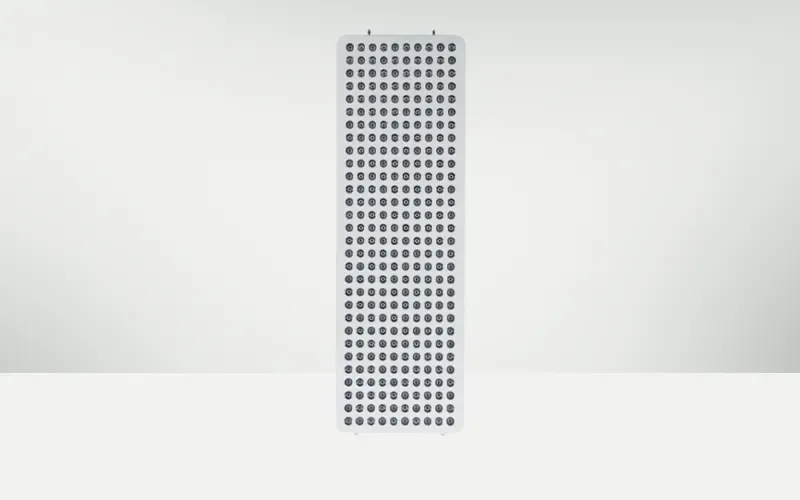
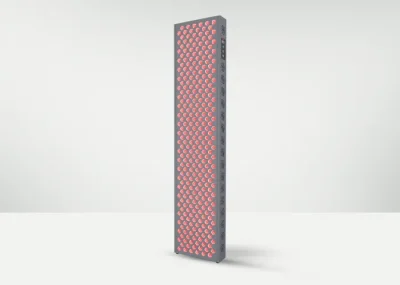
The Advantage 900 red light therapy panel is a full-body red and near-infrared light therapy device designed for home use. It contains 300 × 3W LEDs across five wavelengths: 630nm, 660nm, 810nm, 830nm, and 850nm.
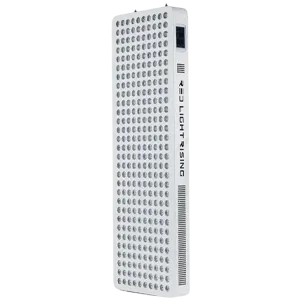
According to the manufacturer, the panel measures 91 × 30 × 6.5 cm, weighs 11 kg, and is intended for standing full-body sessions. Actual coverage can vary depending on user height, positioning, and distance from the panel.
The smaller Advantage 450 uses 150 LEDs and measures 45 × 30 × 6.5 cm, making it better suited to targeted areas or smaller spaces.
As noted in this Red Light Rising Advantage 900 2.0 Review, the 900 includes a door/wall hanging kit, with optional stand configurations available. It also supports modular expansion, allowing up to four compatible panels to connect for a taller or wider setup controlled by one remote.
How Does It Rate?
Red Light Rising Advantage 900 2.0
 3.9/5Quality
 3.5/5User Friendly
 3.8/5Value
 3.6/5Customer Satisfaction
Pros
- Five red/NIR wavelengths in one panel.
- Six preset modes with distance and timing guidance.
- Touchscreen and remote offer two ways to manage sessions.
- Can form part of an expanded panel arrangement.
- Three-year warranty and a 365-day trial for eligible personal purchases.
Cons
- Its 11 kg weight makes frequent moving less convenient.
- One panel may not cover the entire body evenly in one position.
- Most LEDs are assigned to 660nm and 850nm.
- App control and pulsing are absent from the reviewed configuration.
- Returns require retained packaging and generally involve shipping costs.
About Red Light Rising
Red Light Rising was founded in 2017 by James Strong and Bryan Gohl. The company focuses on red light therapy, offering panels, handheld devices, wraps, and related lighting products for home use.
Its panel range includes the Advantage 450 and Advantage 900. The Red Light Rising Advantage 2.0 series combines five wavelengths with touchscreen controls and preset modes. The smaller 450 suits targeted sessions, while the 900 offers broader coverage.
The brand serves UK and European customers, with customer support and free Zoom onboarding to explain setup, positioning, and device controls. In this Red Light Rising Advantage 900 2.0 Review, these services matter when considering how easily buyers can set up their panel and follow its instructions from the start.
How Does the Red Light Rising Advantage 900 2.0 Work?
The Advantage 900 red light therapy panel uses photobiomodulation, or PBM. This involves light absorption by cells, which may influence cellular energy processes and signaling. Understanding this mechanism is part of our Red Light Rising Advantage 900 2.0 Review, although it does not establish guaranteed benefits.
630nm and 660nm Red Light
These visible wavelengths create the panel’s red glow and are studied for skin and superficial tissue applications. Research explores skin appearance and collagen-related processes, with findings depending on the equipment, dose, and treatment schedule used.
810nm, 830nm and 850nm Near-Infrared Light
These wavelengths are largely invisible to the eye and provide exposure beneath the skin’s surface. How much light reaches deeper tissue depends on tissue characteristics, intensity, and positioning. Wavelength alone cannot establish the dose reaching a muscle or joint.
Five Wavelengths in One Panel
The five-wavelength design combines red and near-infrared light in one device. Users can adjust the red and NIR groups separately. Having more wavelengths does not automatically mean better results; treatment distance, intensity, session length, and the intended application also matter.
Scientific Evidence Behind the Red Light Rising Advantage 900 2.0
This Red Light Rising Advantage 900 2.0 Review separates general light therapy research from product-specific evidence. Studies involving other devices do not establish clinical benefits for this panel.
Evidence on 630nm and 660nm Red Light
A controlled study involving 136 volunteers examined red-only and broader-spectrum light. Participants showed improvements in skin roughness and collagen density. However, the equipment and treatment schedules differed from those of the Advantage 900 red light therapy panel.
Separate research tested pulsed 660nm LEDs in reconstructed skin and a human split-face study. It found collagen-related laboratory changes and improvements in skin appearance. Its pulsed delivery differs from this panel’s configuration.
Wound-healing research includes a clinical study involving chronic diabetic leg ulcers. These findings concern supervised treatment and should not be taken as evidence that this panel can treat wounds.
Evidence on 810nm, 830nm and 850nm NIR Light
An 810nm laser trial involving 28 soccer athletes reported improvements in selected performance and recovery markers at certain doses, but no reduction in delayed muscle soreness.
Research has also examined 830nm laser exposure around exercise. Localized laser treatment differs from exposure through a larger panel.
Do More Wavelengths Mean Better Results?
Not necessarily. The skin study found no advantage for broader-spectrum treatment over red-only exposure. Wavelength selection, irradiance, dose, distance, duration, and intended application all matter when assessing potential benefits.
Key Features of the Red Light Rising Advantage 900 2.0
This Red Light Rising Advantage 900 2.0 Review covers features:
Five Wavelengths
The Advantage 900 red light therapy panel contains:
| Wavelength | LED count |
|---|---|
| 630nm | 30 |
| 660nm | 120 |
| 810nm | 20 |
| 830nm | 20 |
| 850nm | 110 |
Together, 660nm and 850nm account for 230 of 300 LEDs, or about 77%. This reflects LED allocation rather than measured optical output. The other wavelengths have fewer LEDs.
Six Advantage Modes
Joint Care, Face and Eyes, Skin, Sleep, Workout, and Mood and Wellness automatically set the wavelength blend, intensity, and session duration, with a recommended distance. Mode names do not establish proven outcomes.
Touchscreen + Remote
The touchscreen provides controls for mode selection, timer, and intensity, with separate red/NIR adjustment. The remote allows changes without reaching the panel.
Full-Body Coverage
The 91 × 30 cm panel is designed for standing sessions over larger areas. Coverage varies with mounting height, distance, and position.
Modular Connectivity
Up to four panels can connect through patch cables and operate through one remote. Adding panels creates a taller or wider setup but requires space.
Flicker and EMF
Listed measurements are 0% flicker, a 1.2 mG magnetic field, and a 0 V/m electric field at 15 cm. These manufacturer measurements do not mean zero electromagnetic emissions.
Included Accessories
Included accessories are a power cable, patch cable, door/wall hanging kit, remote, eye protection, and user guide.
First-Hand Testing Experience With the Advantage 900 2.0: Published Observations
For this Red Light Rising Advantage 900 2.0 Review, we examined published hands-on testing rather than presenting the device as personally tested.
Unboxing and Setup
At 11 kg, the panel requires careful lifting and a secure mounting point. The included door-hanging setup provides a straightforward installation option, although users need enough space to access the controls and stand at the recommended distance. Packaging quality and exact setup time were not independently documented, so keeping the original box and protective materials is advisable for returns.
Touchscreen Testing
Independent reviewer Alex Fergus described the touchscreen as responsive and easy to navigate. Mode selection appears intuitive, although visibility under different lighting conditions was not independently assessed.
Testing the Preset Modes
The six preset modes reduce setup guesswork by automatically guiding intensity, session duration, and recommended distance. This may make the Advantage 900 2.0 review experience more approachable for users who prefer guided settings.
Light Output Testing
Fergus reported a peak irradiance of 106 mW/cm² and a nine-point average of 75 mW/cm², with readings as low as 55 mW/cm². Testing also showed stronger output around 660nm and 850nm. However, the published review does not clearly specify the measurement distance or exact sampling positions.
Treatment Experience
Verified measurements for heat, fan noise, and brightness were unavailable. Practical comfort therefore depends on positioning, distance, room space, and how easily the user can maintain a full-body stance.
Remote & Screen Behavior
The remote was described as simple to use for mode selection. Fergus also noted that the touchscreen darkens after about one minute and requires a tap to check remaining time.
Overall First-Hand Impression
Published observations favor the touchscreen, remote, and guided modes, while output uniformity, heat, fan noise, and positioning comfort remain less clearly documented.
Red Light Rising Advantage 900 2.0 Quick Facts & Specifications
| Specification | Advantage 900 2.0 |
|---|---|
| Product type | Full-body red/NIR therapy panel |
| Wavelengths | 630nm, 660nm, 810nm, 830nm, 850nm |
| LEDs | 300 × 3W |
| Irradiance | 86.4 mW/cm² at 15 cm, manufacturer measured |
| Real power | 430W |
| Rated power | 900W |
| Dimensions | 91 × 30 × 6.5 cm |
| Weight | 11 kg |
| EMF at 15 cm | 1.2 mG magnetic; 0 V/m electric |
| Flicker | 0%, manufacturer reported |
| Modes | Six preset modes + custom settings |
| Controls | Built-in touchscreen + wireless remote |
| Coverage | Full body (standing) |
| Modular | Multiple panels can connect |
| Warranty | Three years; manufacturing faults |
| Trial | 365-day money-back trial |
Red Light Rising Advantage 900 2.0 Benefits
The potential benefits discussed in this Red Light Rising Advantage 900 2.0 Review are based on the panel’s wavelength configuration and broader photobiomodulation research. These findings should not be interpreted as proof that the device will produce the same outcomes for every user.
Skin and Facial Wellness
The 630nm and 660nm red-light wavelengths are commonly studied for skin-focused applications, including skin appearance and collagen-related processes. This makes the Red Light Rising red light therapy panel relevant to users interested in cosmetic light exposure. However, available studies use different devices, doses, and treatment schedules, so specific results with this panel cannot be predicted.
Muscle and Recovery Support
Red and near-infrared light have also been investigated in exercise and recovery research. Some studies report changes in selected recovery or performance markers, while others show limited or no measurable benefit. The panel may therefore offer a convenient way to include light exposure in a recovery routine, but outcomes can vary.
Joint and Deep-Tissue Applications
The 810nm, 830nm, and 850nm near-infrared wavelengths are commonly studied for applications involving tissues beneath the skin surface. Their presence may be relevant for users interested in joint or deeper-tissue exposure, although wavelength alone does not determine how much light reaches a specific joint or muscle.
Sleep and Relaxation
The manufacturer includes a dedicated Sleep mode among the six presets. This may simplify evening use, but the presence of the mode does not establish that the panel improves sleep quality or treats insomnia.
Full-Body Convenience
One practical advantage is broader, hands-free exposure compared with a small handheld device. The larger panel can cover more surface area during a session, although actual coverage depends on the user’s height, distance, positioning, and available space
How to Use the Red Light Rising Advantage 900 2.0
This Red Light Rising Advantage 900 2.0 Review found that the panel offers guided preset modes as well as custom controls for users who prefer to adjust session settings manually.
Using an Advantage Mode
- Secure the panel using the supplied hanging system or a compatible stand.
- Select the desired Advantage Mode on the touchscreen.
- Follow the recommended distance displayed on the screen.
- Start the session and allow the panel to manage the programmed settings automatically.
According to the manufacturer, typical sessions with the Advantage 900 red light therapy panel last around 5–15 minutes, depending on the selected mode.
Creating a Custom Session
Custom settings allow users to adjust red and near-infrared intensity independently, set the timer, and follow the appropriate treatment distance. Where broader coverage is needed, compatible Advantage panels can also be connected in a modular setup. Users should follow the manufacturer’s supplied instructions when selecting custom session settings.
Safety, Side Effects and Precautions
As noted in this Red Light Rising Advantage 900 2.0 Review, red light therapy may not be suitable for every user or condition. The American Academy of Dermatology notes possible temporary irritation or discomfort and advises checking for medications or conditions that increase light sensitivity.
Use the eye protection recommended by the manufacturer and avoid staring directly into the LEDs unless following an appropriate protocol. New users of the Advantage 900 red light therapy panel should begin conservatively and follow the manual’s guidance on distance, intensity, and session length.
People taking photosensitizing medications or managing light-sensitive conditions should seek medical guidance before use. Stop use if discomfort, excessive heat, eye irritation, or persistent skin reactions occur.
Is the Red Light Rising Advantage 900 2.0 Worth It?
For buyers comparing features and usability, this Red Light Rising Advantage 900 2.0 Review shows a panel built around guided full-body sessions rather than maximum specifications alone. The Advantage 900 combines 300 LEDs, five wavelengths, six preset modes, touchscreen and remote controls, and modular connectivity. The manufacturer currently lists 86.4 mW/cm² at 15 cm, while published third-party testing reported lower average output with variation across the panel.
The Advantage 900 red light therapy panel also includes a three-year warranty and a 365-day trial for eligible personal buyers. Current offers may include a stand, although buyers should confirm included accessories and total delivered cost before ordering.
Its main limitations are the lack of app control and pulsing, along with heavier wavelength allocation toward 660nm and 850nm. Overall, it makes the strongest case for buyers prioritizing guided modes, broader coverage, and a long trial period.
Red Light Rising Advantage 900 2.0 Customer Reviews
Customer feedback considered for this Red Light Rising Advantage 900 2.0 Review is generally positive, although not every review refers specifically to the 900 model.
What Users May Like
Reviews on the manufacturer’s Advantage page frequently mention ease of setup, build quality, straightforward controls, and useful preset programs. One verified buyer specifically praised the side control panel and responsive customer service, while another described the built-in mode selector and timer as easy to use.
Broader Trustpilot feedback also mentions helpful communication, secure packaging, and satisfactory delivery experiences.
Potential Complaints
Price appears as a concern in some feedback. One 2026 Trustpilot reviewer also reported delayed communication and confusion involving a floor stand, while other reviews mention courier-related delivery problems.
For the Advantage 900 red light therapy panel, current reviews provide less consistent detail about panel weight, heat, fan noise, or control limitations, so these areas remain harder to assess from customer feedback alone.
Who Should Buy the Red Light Rising Advantage 900 2.0?
Best suited for: As highlighted in this Red Light Rising Advantage 900 2.0 Review, the panel may suit users wanting full-body coverage, preset modes, five red/NIR wavelengths, and the option to expand to multiple panels. UK/EU buyers may also value regional support.
Consider another panel if: The Advantage 900 red light therapy panel may be less suitable if you prioritize portability, app control, pulsing, blue light, 1060nm, or a more evenly distributed wavelength configuration.
Quick Comparison: Advantage 900 2.0 vs. RLT Home ULTRA vs. PlatinumLED BioMAX 900
This Red Light Rising Advantage 900 2.0 Review compares the panel with two full-body alternatives. The specifications highlight differences in panel size, wavelength selection, output, and controls rather than establishing which device produces better results.
| Feature | Advantage 900 2.0 | RLT Home Total Spectrum ULTRA | PlatinumLED BioMAX 900 |
|---|---|---|---|
| Type | Full-body red/NIR panel | Tall full-body panel | Full-body multiwavelength panel |
| Wavelengths | 630, 660, 810, 830, 850nm | 480, 630, 660, 810, 830, 850, 1064nm | 480, 630, 660, 810, 830, 850, 1060nm |
| LEDs | 300 | 480 | 300 |
| Size | 91 × 30 × 6.5 cm | 163.5 × 30 × 7.5 cm | 35.83 × 11.81 × 2.76 in |
| Power consumption | 430W | 850W | 380W/490W |
| Irradiance | 86.4 mW/cm² at 15 cm | 119.28 mW/cm² at 6 in | Third-party lab report available |
| Controls | Touchscreen + remote | Touch + voice; presets and pulsing | Touchscreen + remote; optional app controls |
| Mounting | Hanging kit; stand options | Electric stand included | Hanging hardware; optional stands |
| Warranty | 3 years | 3 years | 3 years |
| Best For | Full-body coverage | Broad-spectrum full-body use | High-output full-body use |
FAQs About the Red Light Rising Advantage 900 2.0
How does it differ from the Advantage 450?
A: The 900 has twice the LED count and a taller body. Choose based on the areas you want to expose and the available mounting space.
Does one panel cover the whole body?
A: It covers a large area, but full head-to-toe coverage is not assured for every person. Position, height, and distance matter, and the front and back require separate exposure.
Can you adjust red and NIR separately?
A: Yes. Custom settings allow independent intensity adjustment for the red and NIR groups. This does not mean each of the five wavelengths is individually adjustable.
Can US customers order it?
A: The site discusses international shipping, but that alone does not confirm every destination and variant. Ask for an order-specific delivery and customs estimate.
How soon should you expect results?
A: There is no verified Advantage 900-specific timeline in the evidence reviewed. Outcomes depend on the concern and protocol, and some users may notice no benefit.
Final Verdict: Is the Red Light Rising Advantage 900 2.0 a Good Red Light Therapy Panel?
This Red Light Rising Advantage 900 2.0 Review finds that the panel’s strongest feature is its guided six-mode touchscreen experience combined with five red/NIR wavelengths and full-body coverage. Published third-party testing also indicates respectable average irradiance, although output varies across the panel.
The Advantage 900 red light therapy panel places most of its LEDs around 660nm and 850nm and lacks app, voice, and pulsing controls offered by some competitors.
It may suit buyers who value guided protocols, straightforward controls, and a full-body setup. Those prioritizing maximum output, 1060nm, advanced connectivity, or more evenly distributed wavelengths should compare alternatives. Accessory costs, regional availability, and total setup requirements are also worth considering before purchase.




Rating Snapshot:
Review this product & share your experiences with other customers. Don't see your question? Ask away!
Add a YouTube video