

 Fact Checked

Editor's Rating
Mito Red Adapt 4.0 Max
Overview
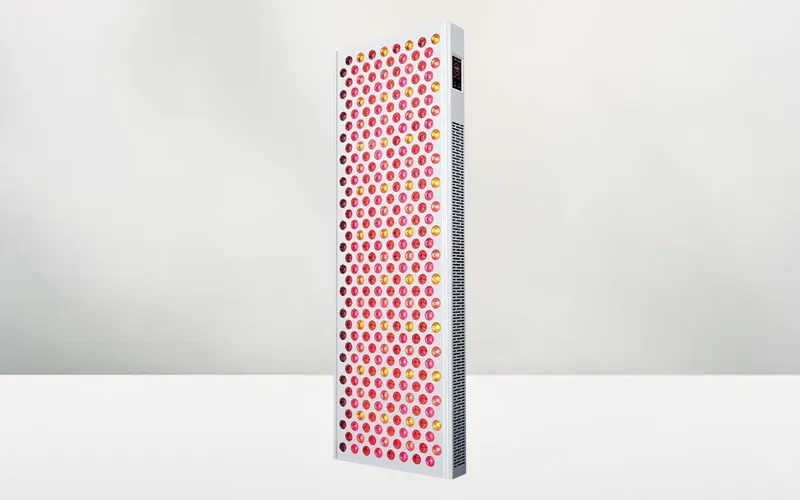
The Mito Red Adapt 4.0 Max is a large red light therapy panel designed for broad, near-full-body treatment rather than small targeted areas. It is the largest individual model in the MitoADAPT 4.0 lineup, measuring 36 inches tall and offering enough coverage for the back, torso, legs, and other large areas. The panel combines eight red and near-infrared wavelengths, ranging from 590 nm to 940 nm, with 11 selectable wavelength modes. Users can also adjust brightness, session time, Bluetooth controls, and near-infrared pulsing. These customization options make the Mito Red Adapt 4.0 Max better suited to experienced red light therapy users or buyers wanting a flexible home setup, although its size and advanced controls may be unnecessary for beginners.
This MitoADAPT Max review looks at whether those additional wavelengths and controls translate into meaningful value, rather than assuming that more settings automatically make a better light therapy panel.
What Is the Mito Red Adapt 4.0 Max?
The MitoADAPT MAX 4.0 sits above the MIN and MID models. The MIN is intended for targeted areas, the MID covers larger portions of the body, and the MAX uses a 12 × 36-inch panel with 288 LED lenses containing 576 chips.
It can operate on its own using the supplied hanging hardware or be incorporated into larger two- and four-panel arrays. Optional floor and universal stands are available separately.
The main difference between this generation and simpler Mito panels is its eight-circuit TruDUAL architecture. Each wavelength has its own circuit, allowing the device to offer 11 predetermined combinations rather than activating every wavelength simultaneously. However, users cannot freely select every individual wavelength to create completely custom combinations.
How Does the Mito Red Adapt 4.0 Max Rate?
The panel scores well for construction, spectral variety, independent testing, warranty coverage, and control options. What keeps the overall score lower is its $1,499 price, separate stand cost, somewhat complicated interface, and output that does not lead its price category in independent hands-on testing.
Mito Red Adapt 4.0 Max

 3.9/5Quality
 3.8/5Ease of Use
 4.3/5Value
 4.1/5Customer Satisfaction
Pros
- Eight wavelengths across visible red and NIR ranges
- 11 selectable wavelength combinations
- Large 12 × 36-inch treatment surface
- Independent LightLab output testing available
- App, brightness, timer, and 10 Hz NIR pulse controls
- 3-year warranty and 60-day trial
Cons
- Expensive at $1,499
- Stand costs extra
- Moderate output compared with some similarly priced panels
- No fully independent control of every wavelength
- Small touchscreen can feel crowded
- Tested amber peak differed from the advertised 590 nm
About Mito Red Light
Mito Red Light was founded in Scottsdale, Arizona, in 2018 by Scott Chaverri. The company focuses primarily on red and near-infrared photobiomodulation products, including panels, wearable systems, helmets, belts, and skincare-related light devices.
The ADAPT line is positioned as one of its more configurable panel ranges, above simpler models that use fewer wavelengths and treatment modes. Mito states that its panels undergo third-party output and electrical safety testing and operate from a physical Scottsdale headquarters.
How Does the Mito Red Adapt 4.0 Max Work?
Like other photobiomodulation devices, the MitoADAPT exposes tissue to specific wavelengths of visible red and near-infrared light.
Red wavelengths are generally used where more superficial exposure is desired, while near-infrared light can penetrate further into tissue. At a cellular level, one proposed mechanism involves photon absorption by mitochondrial chromophores such as cytochrome c oxidase. This may influence mitochondrial activity, ATP production, nitric oxide, reactive oxygen species, and downstream cell-signalling processes.
These mechanisms are more complicated than the common claim that red light simply “boosts mitochondria.” The biological response also depends heavily on wavelength, irradiance, treatment duration, distance, and total delivered energy.
That makes dosing important. A stronger panel does not automatically produce better results, and more exposure is not necessarily better.
Scientific Evidence Behind Red and Near-Infrared Light Therapy
The broader research on photobiomodulation provides a reasonable scientific basis for red and near-infrared light therapy, but it does not clinically validate every MitoADAPT mode or every benefit associated with those modes on the manufacturer’s website.
Skin Health and Appearance
Red and amber light have been investigated for skin appearance and photoaging. A randomized split-face clinical trial involving 137 women compared red and amber PBM protocols and reported improvements in periocular wrinkle measurements.
This supports the idea that certain light parameters may have cosmetic applications, but the study did not evaluate the MitoADAPT MAX or its Mode 2 or Mode 7 presets. Photobiomodulation Reduces Periocular Wrinkle Volume.
Muscle Recovery and Exercise
Exercise research is more mixed. A 2024 meta-analysis of 34 randomized trials found that pre-exercise photobiomodulation produced modest improvements in muscle endurance and strength recovery, although results varied according to activity level and treatment protocol.
Pain and Joint Support
PBM has also been researched for musculoskeletal applications. A study published in the Physical Therapy and Rehabilitation Journal found a reduction in resting pain versus placebo, but the certainty of evidence was rated very low and the authors did not support PBM as a standalone treatment.
Other Potential Applications
Research also exists in areas such as sleep, neurological applications, wound healing, and inflammation. That does not mean Mito’s specific modes for cognition, thyroid support, metabolism, immunity, lymphatic drainage, or body composition have been demonstrated clinically.
Those preset labels should therefore be viewed as suggested use cases rather than proven therapeutic protocols.
Key Features of the Mito Red Adapt 4.0 Max
Multi-Wavelength Light Output
The MAX uses eight advertised peak wavelengths:
- 590 nm amber
- 630 nm red
- 660 nm red
- 670 nm deep red
- 810 nm near-infrared
- 830 nm near-infrared
- 850 nm near-infrared
- 940 nm near-infrared
Mito states that the visible-light allocation is divided evenly between the four red/amber wavelengths, with the four NIR wavelengths receiving the same 25% distribution within their group. Eight independent circuits create 11 selectable modes.
The spectral variety is unusual, but eight wavelengths should not automatically be interpreted as eight times the benefit. Evidence is stronger for some wavelengths and applications than others.
Large Treatment Coverage
The panel itself measures 12 × 36 inches and weighs approximately 25 pounds.
That works well for exposing the back, torso, upper legs, or similarly large areas without constantly moving a small device. It is less accurate to call it true one-position “full body” coverage because a 36-inch panel cannot illuminate an average adult from head to toe simultaneously.
Adjustable Intensity and Controls
The touchscreen controls treatment mode, brightness, session duration, and Bluetooth connectivity. The companion app adds session-history tracking and lets users record subjective feedback.
One limitation is that the 11 modes are fixed combinations. Despite the eight separate internal circuits, users do not receive unrestricted manual wavelength mixing.
Pulsing or Frequency Features
Pulsing is available, but it is much more limited than the broad frequency ranges offered by some competing devices.
The MitoADAPT can pulse near-infrared light at 10 Hz or leave pulsing off. Visible red light does not pulse. There is currently little reason to assume this 10 Hz option is inherently more effective than continuous light for general home use.
Design and Build
The panel has a polished touchscreen interface and active cooling. Published hands-on testing describes the construction as solid and the display as sharp.
Hanging hardware is supplied, but a floor stand is not. Mito currently lists its single-panel floor stand at $139 and its vertical/horizontal universal stand at $349, making positioning an additional expense for users who do not want a door- or wall-hanging setup.
First-Hand Testing Experience
Unboxing and Setup
The MAX includes a power cable, manual, opaque goggles, Mito Red IR3 glasses, an over-the-door hook, hanging cables, and hanging straps.
Setup is relatively straightforward if hanging the device, but users who want a freestanding or horizontal system need an additional stand. At 25 pounds, the MAX is movable, though it is not something most users will want to reposition every day.
Build Quality and Design
Hands-on testing found the housing and overall finish solid, with a good-quality manual and high-resolution touchscreen. There is no obvious concern with basic construction quality.
The interface itself is less convincing. Eleven modes, brightness, timer, Bluetooth, and pulsing controls occupy a relatively small touchscreen. The result is functional but not particularly intuitive when making frequent adjustments.
Controls and User Experience
The app is arguably easier to navigate than the onboard display. It can control sessions and store usage history by treatment mode.
The bigger learning curve comes from remembering what the numbered modes mean. Although the manufacturer’s website associates modes with terms such as skin, recovery, cognition, or deep NIR, the interface does not make every intended use equally obvious. Users may initially find themselves referring back to the manual.
Treatment Coverage and Positioning
At 36 inches tall, treatment coverage is one of the panel’s better qualities. A torso or much of the back can be illuminated at once.
Mito recommends operating at around 6–12 inches. At that distance, larger muscle groups and body regions can be covered efficiently, although full front-and-back treatment still requires turning around, and head-to-toe use may require repositioning.
Heat, Noise and Comfort
The device uses active cooling, so it is not silent. However, no reliable standardized decibel figure is currently published for the MAX.
Sessions are bright, particularly when the visible wavelengths are operating at full intensity. Protective eyewear is included. Users sensitive to intense light may prefer lowering brightness or using the supplied goggles.
Output and Performance Testing
This is where the Mito Red Light Adapt 4.0 review becomes more interesting.
An independent hands-on nine-point measurement reported:
- Peak irradiance: 74 mW/cm²
- Average irradiance: 58 mW/cm²
- Measured therapeutic output: 133 watts
Spectrometer testing also confirmed multiple wavelength peaks, but the advertised 590 nm amber channel reportedly peaked closer to 599 nm. That does not make the device unusable, but it is worth noting for buyers specifically interested in 590 nm output.
Mito’s ISO/IEC 17025 LightLab report provides another useful data set at six inches:
- Average irradiance: 49.4 mW/cm²
- Peak irradiance: 59.3 mW/cm²
- Radiant power: 142.5 W
- 10-minute average dose: 29.63 J/cm²
These values are more informative than a simple headline intensity number.
There is also a presentation inconsistency worth noting. Mito’s current comparison table shows “>140/>60 mW/cm²” and its footnote labeling appears to associate the larger number with professional testing. Yet the explanation directly underneath says consumer solar meters generate higher readings, while Mito’s independent testing page specifically places >140 mW/cm² in the solar-meter column.
For practical comparison, the accredited LightLab figures of roughly 49–59 mW/cm² are the more useful numbers rather than treating >140 mW/cm² as uniform usable irradiance across the treatment area.
Mito Red Adapt 4.0 Max Quick Facts & Specifications
| Specification | Mito Red Adapt 4.0 Max |
|---|---|
| LEDs | 288 lenses / 576 chips |
| Wavelengths | 590, 630, 660, 670, 810, 830, 850, 940 nm |
| Dimensions | 12 × 36 inches |
| Weight | 25 lb |
| Power Consumption | Approx. 456–460 W |
| Independent Irradiance | 49.4 mW/cm² average; 59.3 peak at 6″ |
| Beam Angle | Not clearly disclosed on current product page |
| Treatment Area | Large-area / near-full-body |
| Timer | Adjustable |
| Brightness Control | Yes |
| Pulsing | 10 Hz NIR only |
| EMF | No detectable EMF claimed at 6″+ |
| Cooling System | Active cooling |
| Rated Lifespan | Not clearly published |
| Warranty | 3 years |
| Trial/Return Period | 60 days |
| Current Price | $1,499 |
These Mito Red Adapt 4.0 Max specifications were checked against current manufacturer and independent-test information.
Mito Red Adapt 4.0 Max Benefits
The realistic Mito Red Adapt 4.0 Max benefits come more from its physical design and flexibility than from assuming every preset health claim is established.
Supports Larger Treatment Areas
The 36-inch panel can expose considerably more skin and muscle at once than a desktop panel, making regular large-area sessions more practical.
May Support Muscle Recovery
Several PBM trials and meta-analyses have reported muscle-related effects, particularly with localized treatment. Whether the MAX’s full-body modes reproduce those findings has not been established.
May Support Skin Health
Its 590–670 nm visible range overlaps with wavelengths researched for cosmetic skin applications. The ability to use visible-light-focused modes may be useful for users primarily interested in skin routines.
May Be Useful for Post-Workout Wellness Routines
Extensive coverage means users can expose the thighs, back, shoulders, or other large muscle groups without treating many tiny areas separately.
Offers More Treatment Customization
Eleven combinations, variable brightness, session timing, app tracking, and optional NIR pulsing provide considerably more adjustment than a simple red/NIR panel.
How to Use the Mito Red Adapt 4.0 Max
- Secure the panel using the supplied hanging system or compatible stand.
- Position bare skin toward the light.
- Choose one of the 11 wavelength modes.
- Adjust brightness and the timer.
- Enable 10 Hz NIR pulsing only if desired.
- Position yourself approximately 6–12 inches from the panel.
- Mito generally suggests around 10 minutes per treatment area and approximately 4–7 sessions per week.
- Avoid assuming that doubling session length will double the benefit.
People new to the device may find Mode 1, which activates the full spectrum, simpler while learning the controls.
Safety, Side Effects and Precautions
Red and near-infrared light therapy is generally considered well tolerated when used appropriately, but more exposure is not automatically safer or more effective.
Use the supplied eye protection if the brightness is uncomfortable. People taking photosensitizing medications or using photosensitizing skincare products should check compatibility before treatment.
Those who are pregnant, have an existing medical condition, are receiving medical treatment, or are unsure whether light exposure is appropriate should speak with a healthcare professional.
It is also important to distinguish regulatory terminology. Mito describes its panels as FDA Class II registered. Registration does not mean the MitoADAPT MAX is FDA approved or FDA cleared to treat the individual medical conditions mentioned in some marketing material. Mito itself states that its panels are intended for general wellness.
Quick Comparison: Better Alternatives to the Mito Red Adapt 4.0 Max
For buyers comparing Mito Red Adapt alternatives, the Hooga Ultra 1500 and PlatinumLED BioMAX 900 offer different priorities.
| Feature | MitoADAPT MAX 4.0 | Hooga Ultra 1500 | PlatinumLED BioMAX 900 |
|---|---|---|---|
| Panel Size | 36 × 12″ | 39.5 × 8.6″ | 35.8 × 11.8″ |
| Wavelengths | 8 | 4 | 7 |
| LEDs | 288 lenses | 300 | 300 |
| Output | 49.4 mW/cm² lab average at 6″ | 165 mW/cm² manufacturer figure | Higher independent output reported |
| Controls | Touchscreen + app | Touchscreen | Touchscreen + app/remote |
| Pulsing | 10 Hz NIR | 1–9999 Hz | No |
| Stand Included | No | No | No |
| Warranty | 3 years | 3 years | 3 years |
| Price | $1,499 | $1,399 | $1,299 |
| Best For | Wavelength variety | Broad pulse/intensity control | Higher-output value |
Hooga currently lists four wavelengths, separate red/NIR brightness adjustment, 1–9999 Hz pulsing, and a $1,399 price. PlatinumLED lists the BioMAX 900 at $1,299 with seven wavelengths and 300 LEDs.
Direct irradiance comparisons should be treated cautiously because brands and independent reviewers often use different meters and methodologies.
In simple terms, Mito Red Adapt 4.0 Max vs these competitors comes down to priorities: Mito emphasizes wavelength variety and preset combinations, while alternatives can provide more output or broader pulse control for less money.
Is the Mito Red Adapt 4.0 Max Worth It?
At $1,499, the MAX sits firmly in premium-panel territory.
Its strongest argument is not raw power. It is flexibility. Eight wavelengths, 11 combinations, app-based session tracking, brightness adjustment, 10 Hz NIR pulsing, independent laboratory data, and a sturdy 36-inch design make it one of the more configurable panels available.
Its value becomes less clear if you primarily intend to use standard 660/850 nm-style red and NIR sessions. In that situation, much of what you are paying for may go unused.
The optional stand cost matters too. A basic MAX plus Mito’s $139 floor stand brings the practical setup cost to roughly $1,638 before taxes or other accessories.
Worth considering for:
- Users who want a large treatment area.
- Experienced PBM users who enjoy adjusting protocols.
- Buyers interested in a broad range of wavelengths.
- People who value independent laboratory data.
May not be the best fit for:
- Beginners wanting plug-and-play simplicity.
- Users treating only the face or one joint.
- People with limited space.
- Buyers prioritizing maximum output per dollar.
Mito Red Adapt 4.0 Max Customer Reviews
Mito’s product page currently reports 4.6/5 from 108 reviews, with 87 five-star ratings and 92% of reviewers saying they would recommend the product. Because these reviews appear on the manufacturer’s own store, they are useful for identifying recurring experiences but should not be treated as independent evidence of effectiveness.
Daniel R. — 4/5
The panel feels very solid and covers most of my back without much repositioning. The controls are useful once you learn them, but setup took longer than expected. My main complaint is the price, especially since a floor stand costs extra.
Marcus T. — 4/5
I like the build quality and how easy it is to switch between different light modes after getting familiar with the touchscreen. Sessions are comfortable, and coverage is good, but the panel is fairly heavy and definitely needs dedicated space.
Rachel M. — 3/5
The light output feels strong, and I’ve enjoyed adding it to my recovery routine, but the overall experience could be smoother. Shipping was fine, though setting up the hanging system was awkward. At this price, I expected a stand to be included.
Who Should Buy the Mito Red Adapt 4.0 Max?
Good for:
- People wanting large-area red and NIR exposure.
- Experienced light-therapy users interested in multiple wavelength combinations.
- Buyers who want adjustable brightness, app tracking, and a timer.
- Users with enough room for a 36-inch panel and mounting system.
Consider alternatives if:
- You need a travel-friendly device.
- Your primary goal only involves the face or another small area.
- You want the lowest possible upfront cost.
- You prefer two or three simple controls rather than 11 modes.
- Maximum measured output matters more than spectral variety.
Mito Red Adapt 4.0 Max FAQs
Is the Mito Red Adapt 4.0 Max worth buying?
A: It can be worth considering for users who specifically want eight wavelengths, large treatment coverage, and more control over sessions. It is harder to justify if you only need basic red and NIR exposure because less expensive panels can perform that simpler role.
What wavelengths does the Mito Red Adapt 4.0 Max use?
A: It uses advertised peaks of 590, 630, 660, 670, 810, 830, 850, and 940 nm. Independent hands-on spectrometer testing found most peaks close to their specifications but measured the advertised 590 nm channel nearer 599 nm.
How powerful is the Mito Red Adapt 4.0 Max?
A: Accredited LightLab testing measured average irradiance of 49.4 mW/cm² and peak irradiance of 59.3 mW/cm² at six inches. A separate hands-on review measured an average of approximately 58 mW/cm² and a 74 mW/cm² peak.
How much area can the Mito Red Adapt 4.0 Max cover?
A: The panel is 36 inches tall and 12 inches wide. It can illuminate large portions of the torso, back, or legs at once, but most adults will need repositioning for complete head-to-toe exposure.
Can you control red and near-infrared light separately?
A: Yes, the panel provides red-focused, NIR-focused, and combined modes. However, users cannot freely switch every one of the eight wavelengths on and off to build completely custom combinations.
Does the Mito Red Adapt 4.0 Max have pulsing?
A: Yes, Near-infrared light can operate in a 10 Hz pulse mode. Visible red light remains continuous.
How often should you use the Mito Red Adapt 4.0 Max?
A: Mito generally suggests sessions of around 10 minutes per treatment area at 6–12 inches, with approximately 4–7 sessions per week. Appropriate exposure can vary according to distance, intensity, and individual goals.
What is the warranty on the Mito Red Adapt 4.0 Max?
A: Mito provides a three-year warranty and a 60-day return period. There is no restocking fee, although customers may be responsible for return shipping unless optional return protection was purchased. Original packaging should also be retained.
What are the best alternatives to the Mito Red Adapt 4.0 Max?
A: The Hooga Ultra 1500 may appeal to buyers wanting extensive pulse-frequency adjustment, while the PlatinumLED BioMAX 900 is a relevant option for people prioritizing stronger independently measured output and a lower purchase price. Neither is automatically better; each prioritizes different specifications.
Final Verdict: Is the Mito Red Adapt 4.0 Max a Good Red Light Therapy Panel?
The MitoADAPT MAX 4.0 is a well-built and unusually flexible panel. Eight wavelengths, 11 modes, a large treatment surface, adjustable brightness, app integration, independent LightLab testing, and a three-year warranty give it genuine strengths.
The limitations are equally important. Its output is respectable rather than class-leading, its $1,499 price is high, stands cost extra, the interface takes some learning, and the additional wavelengths have not been shown clinically to make this device superior to simpler panels.
The gap between broad photobiomodulation research and Mito’s highly specific mode descriptions is also worth keeping in mind.
For users who value customization and spectral variety, the MAX has a distinctive feature set. For beginners or buyers mainly concerned with value and straightforward red/NIR sessions, its additional complexity and cost may be unnecessary. Comparing the alternatives before purchasing makes sense.




Rating Snapshot:
Review this product & share your experiences with other customers. Don't see your question? Ask away!
Add a YouTube video