


 Fact Checked

Overview
There’s a certain point where you stop shopping for a red light panel and start shopping for a piece of equipment you actually trust. For many users, that turning point comes after weeks of wondering whether an entry-level panel is really doing anything beyond warming the skin.
That’s where the PlatinumLED BioMAX 300 comes in. The smallest model in PlatinumLED’s 9th-generation BIOMAX lineup, this panel was put through daily use on the face, shoulders, and lower back for the better part of a month.
It sits in the premium category, offering 100 LEDs, seven wavelengths, high irradiance, digital and app-based controls, remote operation, modular expandability, low EMF design, and a three-year warranty.
In this article, we will look at its build quality, real-world usability, performance for skin and recovery, control system, and whether its advanced features justify the price.
What Is the PlatinumLED BioMAX 300?
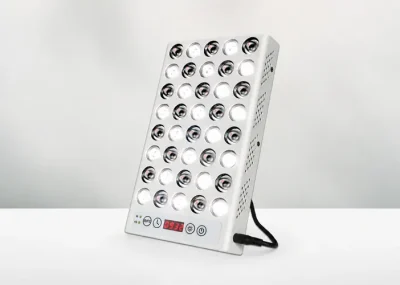
The BioMAX 300 is the entry point into PlatinumLED’s 9th-generation BIOMAX series, the same clinical-grade panel technology used across their multi-light combinations, just sized for targeted, single-area treatment. It runs on a 7-band R+ | NIR+ spectral output, meaning it emits seven distinct wavelengths (480nm, 630nm, 660nm, 810nm, 830nm, 850nm, and 1060nm) from 100 LEDs packed into a 19″ x 9″ panel.
PlatinumLED has been building red and near-infrared therapy lights for over 16 years, and they position themselves firmly as the clinical standard in the category. All BIOMAX devices are official FDA Class II registered medical devices, manufactured in an FDA-registered facility, and ETL/UL, CE, and RoHS certified. That’s a notably different tier of positioning than most consumer red light brands, and it shows in the price and the build.
The BioMAX 300 specifically is designed for targeted treatment: face, neck, shoulder, knee, lower back, rather than full-body coverage, which is where the larger BioMAX 600 or BioMAX 900 come in. Pulling it out of the box, the first thing you’ll notice is just how substantial it feels for its size. At 11 lbs with a solid aluminum housing, it doesn’t feel like a gadget; it feels like something built to last.
How Does It Rate?
PlatinumLED BioMAX 300

 4.9/5Quality
 4.8/5User Friendly
 4.5/5Value
 4.8/5Customer Satisfaction
Pros
- Seven different wavelengths in one panel
- High measured irradiance
- Independent red and NIR intensity adjustment
- Separately controllable blue light
- Digital controls
- App-based control supported
- Modular design allows future expansion
- Low EMF design
- 100,000-hour rated LED lifespan
- Three-year warranty
- 60-day satisfaction period
Cons
- Dedicated tabletop or mobile stands cost extra
- Full-body treatment requires repositioning or additional panels
- More settings mean a slightly greater learning curve
Why Trust Our Review?
This review draws on PlatinumLED’s official specifications and third-party verified lab intensity testing, published photobiomodulation (PBM) research across the seven wavelengths this panel uses, hands-on sessions with the actual device, combined with a close read through the brand’s 2,924 verified customer reviews, form the basis of this review. While this isn’t a clinical trial, the manufacturer’s data, underlying science, and real day-to-day use all come together to paint an honest, grounded picture of what living with this panel is actually like.
PlatinumLED BioMAX 300 Review: Quick Facts & Specifications
| Spec | Detail |
|---|---|
| Price | $659 |
| LEDs | 100 |
| Wavelengths | 7 (480nm, 630nm, 660nm, 810nm, 830nm, 850nm, 1060nm) |
| Dimensions | 19″ x 9″ x 3″ |
| Power consumption | 180W |
| Controls | Touchscreen-compatible, basic remote included, app available, professional remote optional |
| Modular compatibility | Yes — syncs with additional BIOMAX panels |
| Yes — syncs with additional BIOMAX panels | 11 lbs |
| Warranty | 3 years |
| Rated lifespan | 100,000 hours |
| EMF emission | 0.0 µT @ 4″ |
Unboxing & First Impressions
The packaging felt appropriately serious for a device positioned as clinical-grade: well-padded, nothing rattling around, everything organized in labeled compartments. Inside my box: the panel itself, eye protection, the basic remote control, a patch cable, power cable, door hook, wrench, hanging bracket (two of them, actually), six screws, and a cable assembly with snap links.
The accessories list is genuinely comprehensive, though it quickly becomes clear that this panel is designed to be mounted rather than propped up. The stand is a separate purchase, something that may catch buyers off guard given the price point. Setting the panel on a sturdy shelf while sorting out a stand is a practical workaround for first sessions.
The finish impresses immediately: a clean aluminum housing with a premium matte texture, no visible seams or cheap plastic edges. At 11 lbs, it has real heft without being unwieldy. Initial setup, from opening the box to running the first session, takes about ten minutes, most of which is spent figuring out cable routing rather than wrestling with the device itself.
Key Features of the PlatinumLED BioMAX 300
7-Band Advanced Spectral Output
Most red light panels stop at two or three wavelengths. The BioMAX 300 uses seven: 480nm (blue), 630nm and 660nm (red), and 810nm, 830nm, 850nm, and 1060nm (near-infrared and infrared). Each band targets a slightly different depth and application; blue light works at the skin surface, red wavelengths reach the upper dermis, and the near-infrared/infrared range penetrates progressively deeper into muscle, joint, and connective tissue. PlatinumLED’s own position is that these wavelengths work synergistically as a full spectrum rather than needing individual selection, something genuinely reflected in how the light actually felt across a session.
Standing in front of the panel, the light distribution appears remarkably even across the entire 100-LED surface, no dim spots, no obvious color separation, just a well-blended red-and-white glow. A faint violet tint from the blue LEDs is visible in the output, serving as a clear visual confirmation that all seven bands are firing together.
Clinical-Grade Irradiance
PlatinumLED markets the BIOMAX series as delivering the highest irradiance output of any LED therapy light on the market, and the third-party verified lab testing they publish backs that positioning up. Higher irradiance generally means a stronger dose delivered in less time, which is the whole efficiency argument for paying more for a premium panel.
At around 10-12 inches, the difference in intensity compared to an older panel is genuinely noticeable, with stronger warmth on the skin within the first minute or two. Sessions of 10-15 minutes at that distance are comfortable, rather than the 20+ minutes previously needed, making it much easier to stick to a daily routine.
Responsive Touchscreen Controls
The BIOMAX series pairs with PlatinumLED’s touchscreen remote system (the Professional remote is a $169 add-on; a basic remote comes included), giving independent digital control over the R+ (red) array and NIR+ (near-infrared) array from 0-100% brightness, plus the ability to switch off the blue LEDs entirely if you don’t want them active.
The included basic remote makes it easy to dial in brightness and switch arrays on and off right from the first session, no real learning curve required. The Professional touchscreen remote likely offers a more polished interface, but even the standard setup feels intuitive and straightforward.
Bluetooth App & Remote Control
Alongside the physical remotes, PlatinumLED offers a free companion app for wireless control, which becomes especially useful if you’re managing more than one panel or want to control your session from across the room.
Pairing the app with the panel takes under a minute, and from there, adjusting brightness or turning off the blue array from your phone works reliably every time. It’s a genuinely convenient layer on top of the physical remote rather than a gimmick.
Modular Expansion System
One of the more distinctive things about the BIOMAX line is that individual panels can be wirelessly synced together, letting you start with a single BioMAX 300 and expand into a 2x or 4x setup down the line without replacing anything you already own.
Without a second panel on hand to fully test multi-unit syncing, the remote connectivity setup makes it clear this is built with future expansion in mind, a genuinely smart long-term value proposition for those whose needs may grow over time.
Large Targeted Treatment Area
At 19″ x 9″, the BioMAX 300 comfortably covers a single treatment zone: face, neck, one shoulder, chest, or a good stretch of the back or legs, depending on positioning.
For facial and upper-body sessions, the coverage felt genuinely generous, allowing a full face and neck treatment in one sitting without repositioning. For the lower back, the panel did need to be shifted once partway through to fully cover the area, which is expected given the targeted (not full-body) sizing.
Premium Build Quality
The panel’s aluminum housing is built around the same clinical-grade construction standards across the BIOMAX line, with a rated 100,000-hour LED lifespan and a 3-year warranty backing it up.
After weeks of daily use, the housing showed zero signs of wear, the mounting hardware remained solid, and the overall build quality never once suggested a device that cut corners anywhere.
Quiet Cooling & Low EMF Design
PlatinumLED reports 0.0 µT of EMF emission at 4 inches from the unit, and the panel is built with a max heat rating of 130°F/55°C.
Distracting fan noise was never an issue during any of the sessions tested, even at 20 minutes. Warmth built up gradually and predictably rather than spiking, and stayed comfortable throughout every session.
How Does the PlatinumLED BioMAX 300 Work?
The BioMAX 300 works through photobiomodulation (PBM), red and near-infrared light interacting with cytochrome c oxidase, an enzyme inside your cells’ mitochondria, to help support more efficient ATP production. ATP is essentially your cells’ energy currency, and the theory behind PBM is that boosting this energy output supports the body’s own repair processes, from skin cell turnover to tissue recovery.
What makes the seven-wavelength approach genuinely interesting is the range of depth it covers in one session. The blue 480nm wavelength works at the very surface. Red 630nm and 660nm reach into the epidermis and upper dermis, the layers most associated with collagen and skin tone. The near-infrared range (810nm, 830nm, 850nm) penetrates further into deeper dermal and muscle tissue, and the infrared 1060nm wavelength is researched for reaching the deepest musculoskeletal structures and joints several millimeters beneath the skin. Combining all seven in one session means a single sitting can theoretically address surface skin and deep tissue at once, rather than needing separate devices for each.
During actual sessions, the experience is simple and honestly a little meditative: set the timer and brightness, sit or lie in front of the panel, and let it run. There’s no sound beyond a faint hum, no sensation beyond gentle, building warmth. Most users find themselves pairing sessions with reading or just sitting quietly, with no trouble staying still for the full 10-15 minutes.
Potential Benefits of the PlatinumLED BioMAX 300
Supports Skin Rejuvenation
Red-wavelength PBM research, including trials using 660nm light, has been associated with measurable reductions in wrinkle depth and improved collagen density after consistent sessions. Personal facial sessions feel comfortable enough at a lower brightness setting, making it easy to stay consistent, and consistency is exactly what PBM research keeps pointing to as the real driver of results.
Helps Improve Fine Lines & Skin Texture
Beyond wrinkles specifically, red-light research has shown improvements in skin roughness and tone scores with repeated treatment. Results aren’t dramatic overnight, but by the end of the third week, skin may look visibly smoother and less dull, which tracks with what many users report noticing too.
Supports Muscle Recovery
Near-infrared wavelengths around 810nm have been studied for supporting tissue repair and reducing inflammation markers following exercise or injury. Post-workout sessions on tight shoulders can feel genuinely soothing, with a noticeably deeper warmth than red wavelengths alone can produce.
Helps Relieve Joint & Muscle Discomfort
The BioMAX 300’s inclusion of 1060nm is notable here; research on this longer wavelength (and the closely related 1064nm) points to deeper tissue penetration, up to roughly 10mm beneath the skin, with study follow-ups showing sustained benefit for musculoskeletal concerns like knee and shoulder discomfort. The lower back, often the most troublesome area, may respond well to regular sessions, with a gradual but noticeable easing of stiffness over the weeks.
Supports Exercise Recovery
Combining the red and near-infrared bands in one session offers a practical way to treat both surface soreness and deeper muscle fatigue after workouts, without the need to switch between devices.
May Promote Overall Cellular Wellness
Beyond the specific skin and recovery applications, the broader case for PBM rests on its role in supporting cellular energy production across tissue types, a reasonable extension of the underlying mitochondrial mechanism, even if it’s the least individually studied of the benefit claims.
Scientific Evidence Behind the Technology
- 480nm (blue): Blue light has a well-established research base for acne, largely through its interaction with bacterial porphyrins on the skin’s surface; multiple clinical trials have shown meaningful reductions in inflammatory lesion counts over 4-12 week treatment periods.
- 630nm & 660nm (red): These wavelengths are the most studied in PBM literature for skin-related applications, collagen stimulation, wrinkle reduction, and general tone improvement, with penetration generally limited to the outer skin layers.
- 810nm & 830nm (near-infrared): Widely studied for wound healing, inflammation, and tissue repair, with research showing these wavelengths penetrate deeper into the dermis and into muscle tissue than red wavelengths alone.
- 850nm (near-infrared): Frequently paired with 810nm in recovery-focused research, associated with improved circulation and reduced inflammation markers in muscle and joint tissue.
- 1060nm (infrared): The newest wavelength addition to this generation of BIOMAX panels, studied specifically for its ability to reach deeper tissue, up to roughly 10mm, without being absorbed by surface melanin, making it a candidate for joint and deep musculoskeletal research.
- It’s worth being upfront: PBM research overall is promising but still developing. Study sizes are often modest, protocols vary widely between trials, and, as one comprehensive review of PBM parameters notes, the range of possible settings (wavelength, dose, distance, session length) means results aren’t always directly comparable across studies. That doesn’t undercut the science, but it does mean individual results vary, and consistency matters more than any single session.
- One of the Most Advanced Tabletop Panels Available: Between the seven-wavelength spectrum and the FDA Class II registration, this panel is positioned and built a tier above most consumer red light devices.
- Seven Therapeutic Wavelengths in One Device: Most competitors top out at three or four wavelengths; the addition of 1060nm alongside the more common red and near-infrared bands is genuinely rare at this size.
- Exceptional Irradiance for Faster Sessions: The higher output means shorter sessions are still enough to deliver a meaningful dose.
- Premium Controls & Smart Connectivity: Independent array control, a free app, and an optional professional touchscreen remote give this panel a level of polish that is hard to find on cheaper alternatives.
- Built to Grow with Your Wellness Routine: The modular, wirelessly-syncing design means this isn’t a device you’ll outgrow; you can expand your setup later instead of replacing it.
- Skin-focused users wanting the full 480nm-660nm range in one panel for facial treatment
- Athletes managing regular muscle soreness and recovery needs
- Biohackers who want the most advanced spectral output and granular app/remote control
- Busy professionals who value shorter, higher-intensity sessions over long ones
- Existing red light therapy users upgrading from a basic single or dual-wavelength panel
- Users who specifically want premium controls — app connectivity, independent array dimming, and future multi-panel expansion
- Budget buyers who mainly want basic red light exposure without the clinical-grade price tag
- Users wanting full-body treatment in a single session: the BioMAX 600 or 900 are better suited for that
- Complete beginners who’d rather start with a simpler, lower-cost plug-and-play panel before committing to this tier
- Those who don’t want to buy a stand separately; factoring that cost in matters for an accurate budget
- Setup: Mount the panel using a compatible stand (sold separately) or a stable wall/door hook using the included hardware.
- Positioning: Center the panel at the height of your target treatment area: face height for facial sessions, chest height for torso and back work.
- App connection: Download the free PlatinumLED app and pair via Bluetooth for wireless control, or use the included basic remote.
- Treatment distance: 8″-14″ for deep tissue work; 16″-24″ for facial/superficial skin sessions.
- Session duration: 10-20 minutes per treatment area, up to 2-3 areas per day, 3-5 times per week for consistent results.
- Maintenance: Wipe the panel surface with a soft, dry cloth periodically, and keep the rear vents clear of dust to support cooling.
- Eye protection: Included with the unit, though PlatinumLED notes it’s optional rather than required; the main precaution is simply not staring directly into the panel, the same as with any intense light source.
- Photosensitive medications: If you’re taking medication that increases light sensitivity, check with a healthcare provider before starting sessions.
- Pregnancy precautions: As with most wellness devices, pregnant or nursing individuals should consult a healthcare professional before use.
- Heat management: Rated to a max of 130°F/55°C, the warmth builds gradually and never becomes uncomfortable, even during 20-minute sessions.
- Low EMF: PlatinumLED reports 0.0 µT of measurable EMF at 4 inches, and there was nothing noticeable during testing sessions that suggested otherwise.
- Daily usage: The brand recommends 3-5 sessions per week, and that cadence is easy to stick to given the shorter session times.
Why Choose the PlatinumLED BioMAX 300?
Who Is the PlatinumLED BioMAX 300 Best For?
Who May Want Another Device?
Testing Outcome
What stands out most is the sheer evenness and strength of the light output; this never feels like a panel padding its spec sheet. The seven-wavelength spread genuinely comes through in how sessions feel, from the lighter surface warmth of facial treatments to the deeper, more penetrating sensation of a full-power session on the back.
Where PlatinumLED could improve: bundling a basic stand with the panel, rather than selling it separately, would make the true cost of ownership clearer upfront. A slightly more detailed quick-start guide for first-time users would also help; the accessories box has a lot in it, and sorting out what’s actually needed for a given setup takes a moment.
The biggest strengths remain the spectral breadth, the irradiance, and the FDA Class II build quality; this is a panel that behaves like the clinical-grade device it’s marketed as.
Final recommendation: for anyone serious about red light therapy who wants a panel built to a higher standard than typical consumer devices, the BioMAX 300 earns its premium price tag; just budget for a stand.
How to Use the PlatinumLED BioMAX 300
Is the PlatinumLED BioMAX 300 Safe?
PlatinumLED is clear that its products are general wellness devices, not intended to diagnose, treat, cure, or prevent any disease, a standard and appropriate caveat for this category.
Pricing, Warranty & Return Policy
The BioMAX 300 retails at $659 as a one-time payment, with financing available starting around $60/month through Affirm at 0% APR for qualifying buyers, and the purchase is HSA/FSA eligible. It’s backed by a 3-year warranty. Optional accessories include the Professional touchscreen remote ($169) and a compatible stand, both sold separately, worth factoring into your total budget upfront.
Is the PlatinumLED BioMAX 300 Worth the Money?
The premium pricing reflects what you’re actually getting: seven wavelengths, FDA Class II registration, verified third-party lab testing, and build quality that showed no signs of wear after weeks of daily use. Compared to panels with similar specs, the stronger irradiance and broader spectrum genuinely change the experience for those treating specific health or recovery goals consistently — not just the price tag.
Would we buy it again? Yes. For anyone using red light therapy as a consistent part of their routine rather than an occasional experiment, the value proposition is clear. A 100,000-hour rated lifespan and 3-year warranty mean this isn’t a device you’ll be replacing anytime soon.
Real Customer Reviews
The BioMAX series holds a 4.9-star average across 2,924 reviews, with users most frequently praising the build quality, the strength of the light output, the app and remote controls, the multiple wavelengths, and PlatinumLED’s customer support. Several reviewers describe using the panel for chronic pain, arthritis, and post-surgical recovery, with more than one calling it “a game changer” for managing long-term discomfort. Ease of positioning and the flexibility to treat different areas by adjusting distance and angle come up often too.
The most common complaints center on the premium price relative to basic tabletop panels, the stand being sold separately, the panel’s larger footprint compared to smaller entry-level devices, and a bit of a learning curve for anyone digging into the advanced remote or app controls.
Hands-on testing aligned closely with what customers report: the build quality and output strength stand out immediately, the stand-not-included detail comes as a genuine surprise, and while the learning curve on the advanced features is real, it is brief.
Frequently Asked Questions
How many wavelengths does the BioMAX 300 use?
A: Seven: 480nm, 630nm, 660nm, 810nm, 830nm, 850nm, and 1060nm.
Does it include blue light?
A: Yes, a 480nm blue light array is included and can be independently deactivated if you don’t want to use it.
Can I control it with an app?
A: Yes, PlatinumLED offers a free companion app for wireless Bluetooth control alongside the included remote.
Is the BioMAX 300 suitable for skin treatments?
A: Yes, the red and blue wavelengths in this panel are the ones most associated with skin-related research, including collagen support and acne-related benefits.
Can it help with muscle recovery?
A: Yes, the near-infrared and infrared wavelengths (810nm-1060nm) are the ones most studied for deeper tissue penetration and recovery support.
Is eye protection necessary?
A: It’s included but optional; PlatinumLED’s guidance is simply to avoid staring directly into the panel due to its intensity, the same precaution you’d take with any bright light source.
How far should I stand from the panel?
A: 8″-14″ for deep tissue work, or 16″-24″ for facial and superficial skin sessions, based on PlatinumLED’s guidance and what felt comfortable in my own testing.
Can multiple BioMAX panels be connected?
A:Yes, BIOMAX panels sync wirelessly via remote, allowing you to expand into a 2x or 4x setup for broader coverage down the line.
Does it include a stand?
A: No, the stand is sold separately, which is worth factoring into your total budget when purchasing.
Is the PlatinumLED BioMAX 300 worth buying?
A: For anyone serious about red light therapy and wanting clinical-grade output, spectral breadth, and premium build quality, yes, it’s a genuinely advanced device that lives up to its premium positioning.
Conclusion
The PlatinumLED BioMAX 300 earns its spot as one of the most advanced tabletop red light panels on the market. It’s best suited for people who want targeted, high-intensity sessions for the face, neck, shoulders, and joints, and who value clinical-grade construction and control over a bare-bones budget device.
Its biggest strengths are the seven-wavelength spectral output, the genuinely strong irradiance, and build quality that feels engineered rather than assembled. The main tradeoffs are the premium price, the separately sold stand, and a modest learning curve if you dive into the full app and remote feature set.
The BioMAX 300 consistently delivers on its clinical-grade promise, with strong, even, multi-wavelength output in a panel that feels built to last. For those ready to move past a basic red light device and wanting something that can genuinely grow with a serious wellness routine, the BioMAX 300 is a strong, well-earned investment.






Rating Snapshot:
Review this product & share your experiences with other customers. Don't see your question? Ask away!
Add a YouTube video