

 Fact Checked

Overview
There’s a moment every red light therapy fan eventually reaches: you’ve been using a basic panel for a while, it’s done its job, but you start noticing its limits. Maybe the light feels thin. Maybe you’re stuck with one wavelength option and wish you had more control.
That’s the exact itch the Hooga Ultra 360 is built to scratch, and after spending real time with it on the desk, face, shoulders, and knees, it’s easy to see why this panel has become Hooga’s flagship “step-up” device.
In this review, we will look at its real-world performance, build quality, ease of use, treatment versatility, and whether its advanced settings actually translate into better daily results for skin, recovery, and general wellness routines.
What Is the Hooga Ultra 360?
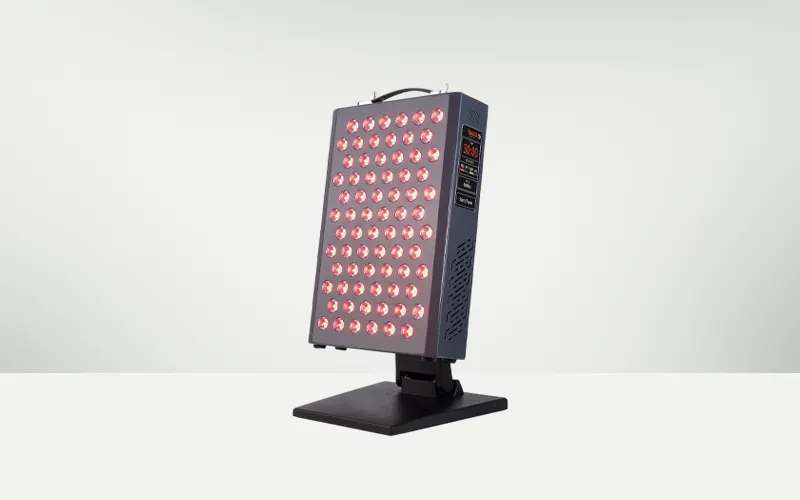
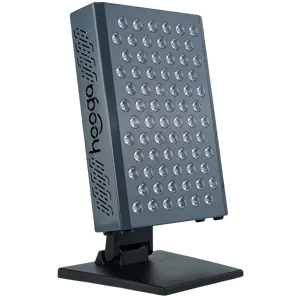
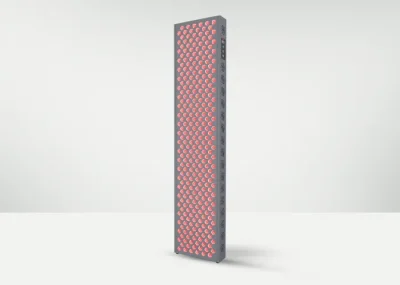
The Hooga Ultra 360 is a tabletop red light therapy panel built around 72 quad-chip LEDs, each one emitting four separate wavelengths, 630nm, 660nm, 810nm, and 850nm, from a single diode. It sits at 360 watts, delivers over 132 mW/cm² of irradiance at six inches, and is designed specifically for targeted, close-range sessions rather than full-body treatment.
Hooga Health has built a reputation around straightforward, well-engineered red and near-infrared light devices, and the Ultra Series is their most advanced lineup to date. The Ultra 360 sits at the entry point of that series, alongside the Ultra 750, Ultra 1500, and Ultra 4500, but “entry point” undersells it. This is still a serious, feature-dense panel, just sized for focused use rather than covering your whole body at once.
It’s really designed for people treating specific areas: the face for skin-related goals, a shoulder or knee for recovery, or the neck after a long day at a desk. The compact footprint, built-in stand, and carrying handle all point toward one use case: a panel you can set up on a desk or nightstand and actually use consistently, not something you have to wrestle out of a closet.
Right out of the box, the build quality immediately stands out. At around 12 lbs, it carries a satisfying heft; the aluminum housing feels substantial rather than flimsy, and the touchscreen panel looks more like something off a premium kitchen appliance than a typical wellness gadget.
Hooga Ultra 360 Rating
Hooga Ultra 360
 4.9/5Quality
 4.8/5User Friendly
 4.5/5Value
 4.8/5Customer Satisfaction
Pros
- Four wavelengths from each quad-chip LED
- Strong >132 mW/cm² irradiance at six inches
- Independent red and near-infrared brightness controls
- Adjustable pulse frequency from 1Hz to 9,999Hz
- Responsive touchscreen interface
- Built-in tabletop stand
- Compact enough for smaller spaces
- Protective goggles included
- Three-year warranty
- 60-day trial period
- Compatible with HSA/FSA payment options
Cons
- Not intended for simultaneous full-body coverage
- Advanced pulse controls may be unnecessary for casual users
- Larger ULTRA panels provide greater treatment coverage
Why Trust Our Review?
This review pulls from Hooga’s official specifications, published photobiomodulation (PBM) research on the wavelengths involved, hands-on testing sessions with the actual panel, and a close read of the 37 verified customer reviews on Hooga’s site. We’re not a lab, and this isn’t a clinical evaluation, but between the manufacturer’s data, the underlying science, and real usage, this review aims to give a grounded, practical picture of what owning this panel is actually like.
Hooga Ultra 360 Review: Quick Facts & Specifications
| Spec | Detail |
|---|---|
| Detail | $399 |
| LEDs | 72 quad-chip LEDs |
| Wavelengths | 630nm, 660nm, 810nm, 850nm |
| Irradiance | 132+ mW/cm² at 6 inches |
| Max coverage at 18″ | |
| Skin Type | 31″ x 27″ |
| Pulse frequency | 1Hz–9,999Hz |
| Brightness adjustment | 1%–100%, red and NIR independently |
| Controls | Touchscreen with slider controls |
| Timer | 1–30 minutes |
| Weight | 12 lbs |
| Power consumption | 116.4W |
| Warranty | 3 years |
| Purchase | Official website |
Unboxing & First Impressions
The Ultra 360 arrives well-packaged, with everything sitting securely in place, exactly what you want for a device with a glass touchscreen face. In the box: the panel, a built-in stand, a carrying handle, a remote for syncing with other Ultra panels, and a power cable.
Build quality is immediately noticeable. The metal housing feels dense and well-machined, the finish is clean, and there are no loose parts or cheap-feeling components. It has a solidity to it that lower-tier panels simply don’t deliver.
Setup is quick. Unfold the stand, plug it in, tap the screen to power on; start to finish, it took about two minutes. The integrated stand locks into position without any wobble, and the touchscreen lit up and responded instantly. No instructions needed.
Key Features of the Hooga Ultra 360
Quad-Chip LED Technology
Most red light panels, even good ones, use single or dual-chip LEDs, meaning each individual diode only emits one or two wavelengths. That creates a checkerboard-style light pattern across the panel, where different spots emit different wavelengths. The Ultra 360 flips that by packing four chips into every LED, so all 72 LEDs emit all four wavelengths simultaneously.
Standing in front of it, the difference was immediately noticeable. The light looked more even and blended than the checkerboard-style panel used previously. No patchy zones, just a smooth, diffused glow across the whole surface, with no flicker detected at any brightness level.
Four Therapeutic Wavelengths (630nm, 660nm, 810nm & 850nm)
The two red wavelengths (630nm and 660nm) target more superficial layers of skin, while the two near-infrared wavelengths (810nm and 850nm) reach deeper into muscle and joint tissue. Having all four in one panel means you’re not choosing between a “skin panel” and a “recovery panel”; it’s built to do both.
Facial sessions at lower brightness felt warm without any harsh glare. When cranked up for a sore shoulder, the near-infrared felt noticeably deeper and more penetrating. Switching from one use case to the other was just a brightness slide away.
High Irradiance for Targeted Therapy
At over 132 mW/cm² measured at six inches, the Ultra 360 delivers a genuinely strong dose of light in a short window, which matters because irradiance directly affects how long you need to sit in front of a panel to get a meaningful session in.
A distance of 6-10 inches tends to be the sweet spot, close enough to feel the warmth, yet far enough to cover a wider area comfortably. A 10-15 minute session at that distance feels plenty intense, without needing to sit uncomfortably close to get a real dose of heat.
Interactive Touchscreen Controls
The touchscreen lets you independently adjust red and near-infrared brightness, set a session timer from 1-30 minutes, and dial in pulse frequency, all through slider-based controls rather than clunky button presses.
The screen responds well immediately, and the sliders are intuitive after a couple of uses. The first session may involve some exploration of the menu to get familiar with the layout, but by the third session, adjusting settings becomes second nature. This tabletop panel genuinely offers more control than any other comparable option on the market.
Adjustable Pulse Frequency (1Hz–9999Hz)
Pulsed light mode cycles the light on and off at a set frequency rather than staying continuously on, which some users and practitioners believe may enhance cellular response compared to constant light exposure. Having a full 1Hz-9,999Hz range to experiment with is unusual at this price point.
Switching between continuous and pulsed mode is a single tap away. The lower pulse frequencies are ideal for an evening wind-down session, offering a gentler feel, while continuous mode works best for standard daytime sessions. It’s a nice feature to have available, though not something that requires much mastering.
Precision Brightness Control
Independent 1%-100% brightness sliders for red and near-infrared light mean you can dial in exactly the intensity you want for a given session.
Dropping the brightness down for facial sessions makes a real difference in comfort, less glare and gentler warmth on the skin, while going full power on a stiff knee feels appropriately intense. This is one of those features that sounds like a spec-sheet checkbox until you actually use it, and then it just becomes the setting you reach for every session.
Built-in Stand & Carrying Handle
The Ultra 360 comes with an integrated tabletop stand and a handle, designed for moving between rooms rather than permanent wall mounting.
Moving this from a desk to a bedside table takes just seconds, making it effortlessly portable. The stand holds its angle securely through every session without drifting, and at just 12 lbs, it can be carried one-handed without any strain.
Quiet Cooling System & Flicker-Free Operation
The panel runs a built-in cooling system to manage heat during longer sessions, and Hooga specs it as flicker-free with essentially zero measurable EMF output.
The fan produces a soft hum rather than anything distracting, even through a full 30-minute reading session. There is some warmth, but it never gets uncomfortable, and there’s no flicker at any brightness level, even when viewed from the corner of the eye.
How Does the Hooga Ultra 360 Work?
The Ultra 360 works through photobiomodulation (PBM), the use of specific red and near-infrared wavelengths to interact with mitochondria inside your cells. Research on the mechanism points to cytochrome c oxidase, an enzyme inside the mitochondria, as the primary target: red and near-infrared light is thought to help this enzyme work more efficiently, supporting ATP production, the energy currency your cells run on. More efficient energy production is the proposed basis for many of PBM’s downstream effects, from tissue repair to reduced inflammation.
Each of the Ultra 360’s four wavelengths plays a slightly different role. The red wavelengths (630nm, 660nm) are absorbed more by superficial skin layers, which is why they’re associated with collagen and skin-related benefits. The near-infrared wavelengths (810nm, 850nm) penetrate further into muscle and joint tissue, which is why they’re the wavelengths most associated with recovery and pain-related research.
During actual sessions, the experience is straightforward: sit or stand in front of the panel, set the timer and brightness, and let it do its thing. There’s no sensation beyond a gentle warmth, no vibration, and no sound beyond a quiet fan. This makes it easy to pair sessions with scrolling through your phone or catching up on a podcast, so it never feels like a chore.
Potential Benefits of the Hooga Ultra 360
Supports Healthier Skin & Collagen Production
A randomized controlled trial using 660nm red light on facial skin found meaningful reductions in periocular wrinkle volume after a month of consistent sessions. Facial sessions at lower brightness are comfortable enough to maintain most evenings consistently, and consistency is what PBM research keeps pointing to as the real driver of results, more than any single session.
Helps Reduce Fine Lines & Improve Skin Texture
Beyond wrinkle volume specifically, red-wavelength PBM has been associated in clinical research with improved intradermal collagen density and skin roughness scores over repeated sessions. That gradual, cumulative pattern is hard to ignore: no overnight transformation, just a steady, low-effort addition to any daily routine.
Supports Muscle Recovery
An 810nm randomized, placebo-controlled trial in Photomedicine and Laser Surgery examining pre-exercise near-infrared light found it improved measures of skeletal muscle performance and recovery when dosed appropriately. Post-workout sessions targeting the shoulder and knee feel genuinely soothing, with the deeper NIR warmth noticeably different from the more surface-level warmth of red wavelengths on their own.
Helps Relieve Joint & Muscle Discomfort
Near-infrared wavelengths in the 810-850nm range are the most frequently studied for deeper tissue penetration, and PBM research broadly associates this range with reduced inflammation markers and improved local circulation. A stiff knee from an old injury can respond well to regular full-brightness NIR sessions. While results aren’t dramatic, there is a real, noticeable easing of tightness the more consistently the device is used.
Encourages Overall Wellness
Beyond the specific skin and recovery applications, the broader case for PBM rests on its role in cellular energy production, and Hooga’s own marketing leans into this “recharge the human battery” framing. It’s a reasonable extension of the mitochondrial mechanism, even if it’s the least specifically studied of the benefit claims.
Scienific Evidence Behind the Technology
630nm and 660nm (red light): These wavelengths sit in the range most studied for skin applications, collagen stimulation, wrinkle reduction, and general skin tone improvement, with penetration depth generally limited to the outer layers of skin.
810nm and 850nm (near-infrared): These wavelengths penetrate deeper into muscle, joint, and connective tissue, and are the wavelengths most associated in the literature with recovery, circulation, and pain-related outcomes.
It’s worth being upfront here: PBM research is genuinely promising but still evolving. Study sizes are often modest, protocols vary a lot between trials (different doses, distances, and session lengths), and results don’t always replicate perfectly across studies. One review of 810nm pre-exercise laser therapy, for example, found mixed results on muscle performance depending on the device and protocol used. That doesn’t mean the science isn’t real; it means results can vary between individuals, and consistency matters more than any single session.
Why Choose the Hooga Ultra 360?
- Premium Quad-Chip Technology at a Competitive Price: At $399, the Ultra 360 isn’t cheap, but compared to other panels offering true four-wavelength quad-chip coverage, it’s genuinely competitive.
- Advanced Controls Rarely Found in Tabletop Panels: Independent brightness sliders, a 30-minute timer, and full pulse frequency control are simply not standard features on panels in this size class.
- Powerful Targeted Treatments Without a Large Panel: You get serious irradiance and full wavelength coverage without needing floor space for a full-body panel.
- Excellent Choice for Skin & Recovery: The dual-purpose design, red for skin, NIR for recovery, makes it genuinely versatile rather than a single-use device.
- Great Upgrade from Entry-Level Devices: If you’ve used a basic single-wavelength panel and felt like you were missing something, this is the natural next step up.
Who Is the Hooga Ultra 360 Best For?
- Facial treatment users who want dedicated, low-brightness sessions for skin health
- Home wellness users looking for a serious device that doesn’t take over a room
- Biohackers who want granular control over brightness and pulse settings
- Recovery-focused users managing joint or muscle soreness from training or old injuries
- Small-space users who need a compact, portable panel
- Existing Hooga customers upgrading from a basic panel and wanting more precision and power
Who May Want Another Device?
- Users wanting full-body coverage; the Ultra 360’s treatment area tops out around 31″ x 27″ at 18 inches, so larger panels like the Ultra 1500 or Ultra 4500 make more sense for full-body sessions
- Clinics treating multiple people daily may want a larger-capacity, multi-panel setup
- Budget buyers who mainly want basic red light exposure without advanced controls may be better served by an entry-level panel
- Users treating multiple people regularly who’d benefit from a bigger panel that doesn’t require repositioning between sessions
Expert Opinion
What stands out most about the Ultra 360 is how evenly the light distributes across the panel. The quad-chip design isn’t just a marketing term; it’s a visible difference when standing in front of it, especially compared to a checkerboard-style panel. The touchscreen controls also feel like they belong on a device costing considerably more.
Where Hooga could improve: the touchscreen menu, while responsive, isn’t the most intuitive on first use. A more guided onboarding experience built right into the screen would smooth out that early learning curve. The coverage area is also a real limitation for those hoping to treat larger areas in one go; repositioning is often needed for anything bigger than a shoulder or knee.
The biggest strengths remain the four-wavelength quad-chip technology, the precision controls, and the overall build quality. This never feels like a device that cuts corners.
The final verdict: for those wanting the most advanced targeted panel Hooga makes, and who are treating specific areas rather than the whole body, the Ultra 360 earns its premium price tag.
How to Use the Hooga Ultra 360
- Initial setup: Unfold the built-in stand, position the panel on a stable surface, and plug it in.
- Positioning: Set the panel at face height for facial sessions, or angle it toward the target area for joint or muscle work.
- Treatment distance: 6-12 inches is a comfortable, effective working range for most sessions.
- Timer settings: Start with 10-15 minutes for new users, working up toward the full 30-minute maximum as you get more comfortable with your routine.
- Pulse recommendations: Continuous mode works well for straightforward sessions; try lower pulse frequencies for a gentler, more relaxing feel.
- Cleaning: Wipe the panel surface and touchscreen with a soft, dry or slightly damp cloth; avoid harsh cleaners on the screen.
- Maintenance: Keep the rear vents clear of dust to support the cooling system, and store the panel folded when not in use to protect the stand hinge.
Is the Hooga Ultra 360 Safe?
Red light therapy panels like the Ultra 360 are generally well tolerated, but a few practical precautions are worth knowing:
- Eye protection: Avoid looking directly into the panel at close range for extended periods; protective glasses (sold separately by Hooga) are a sensible add-on, especially for facial sessions.
- Photosensitive medications: If you’re on medication that increases light sensitivity, check with a healthcare provider before starting sessions.
- Pregnancy precautions: As with most wellness devices, pregnant or nursing individuals should consult a healthcare professional before use.
- Heat generation: The panel does generate some warmth during use, but nothing that feels uncomfortable during extended 20-30 minute sessions.
- Fan cooling: The built-in cooling runs quietly throughout use, never once becoming a distraction.
- Pulse mode considerations: Individuals with light sensitivity or certain neurological conditions should be cautious with pulsed light settings and consult a professional if unsure.
Hooga’s own materials are clear that the device is intended for general wellness support, not for diagnosing, treating, curing, or preventing any medical condition, a standard and appropriate caveat for this category of product.
Pricing, Warranty & Return Policy
The Hooga Ultra 360 retails at $399, with 4 interest-free installment options available for those who’d rather spread out the cost. It comes backed by a 3-year warranty and a 60-day trial period, giving new users a reasonably generous window to decide if it’s the right fit. Shipping is complimentary on US orders over $100, with international shipping options also available.
Is the Hooga Ultra 360 Worth the Money?
Quad-chip technology genuinely does justify a chunk of the price premium here; the even light distribution isn’t a marketing gimmick; it’s a real, testable difference from cheaper checkerboard-style panels. Whether it’s worth upgrading from a standard tabletop panel really comes down to how much you value precision: if you’re happy with a basic on/off red light panel, this may feel like overkill. But if you want independent wavelength control, pulse settings, and a device that can grow with you as you refine your routine, the upgrade makes sense.
After spending real time with it, I’d recommend it specifically for people focused on targeted sessions – face, joints, specific muscle groups – rather than full-body treatment. The long-term value proposition is solid too: a 50,000+ hour LED lifespan and 3-year warranty mean this isn’t a device I’d expect to replace anytime soon.
Real Customer Reviews
Hooga’s Ultra 360 currently holds a 4.9-star average across 37 reviews. Users consistently highlight the quad-chip LED design, the overall build quality, and the touchscreen controls as standout features, along with appreciating the compact size that fits into smaller spaces without sacrificing power. Several reviewers specifically mention using it for muscle recovery, knee pain, and general soreness, with more than one describing themselves as “converts” after trying red light therapy for the first time with this panel. Easy setup and a smooth first-use experience also come up frequently.
The most common complaints center on the premium price compared to more basic tabletop panels, and a handful of users note the treatment area feels limited if you’re hoping to cover larger areas at once. A slight learning curve with the more advanced controls comes up occasionally as well, though most reviewers describe getting comfortable with it quickly.
Testing experience closely aligns with what customers report: the build quality and light evenness stand out immediately, the learning curve is real but brief, and the compact size is consistently a practical advantage in day-to-day use rather than a drawback.
Frequently Asked Questions
Is the Hooga Ultra 360 suitable for daily use?
A: Yes, it’s designed for regular use, with most PBM research suggesting consistent, moderate sessions produce better results than infrequent, longer ones.
What makes quad-chip LEDs different?
A: Each LED contains four separate chips, one per wavelength, so every point on the panel emits all four wavelengths evenly, rather than alternating wavelengths across different diodes.
Does it use four wavelengths simultaneously?
A: Yes, all four wavelengths (630nm, 660nm, 810nm, 850nm) can be active at the same time, or you can adjust red and near-infrared brightness independently.
Is the touchscreen easy to use?
A: After a session or two, the interface becomes intuitive. The slider-based controls are easy to grasp quickly, even if the first use involves a bit of exploring.
Can I adjust brightness and pulse frequency?
A: Yes, brightness adjusts from 1-100% for red and near-infrared independently, and pulse frequency ranges from 1Hz to 9,999Hz.
Is it good for facial treatments?
A: Yes, lower brightness settings make facial sessions comfortable, and the red wavelengths (630nm, 660nm) are the ones most associated with skin-related research.
Can it help with muscle recovery?
A: Yes, the near-infrared wavelengths (810nm, 850nm) are the ones most studied for deeper tissue and recovery-related applications.
How far should I sit from the panel?
A: Roughly 6-12 inches worked well, balancing intensity with comfortable coverage of the treatment area.
Is eye protection required?
A: IIt’s not strictly required, but protective glasses are a sensible precaution, particularly for close-range facial sessions.
Is the Hooga Ultra 360 worth buying?
A: For anyone focused on targeted sessions and wanting more precision and power than a basic panel offers, yes, it’s a well-built, genuinely advanced device that holds up to its premium positioning.
Conclusion
The Hooga Ultra 360 earns its place as Hooga’s premium targeted panel. It’s best suited for people upgrading from a basic device, anyone focused on facial or joint-specific treatment, and wellness enthusiasts who want real control over their sessions rather than a simple on/off switch.
The biggest strengths – quad-chip LED technology, touchscreen precision, and genuinely excellent build quality – are hard to find together in a tabletop panel at this size. The main tradeoffs are the price relative to basic panels and the more limited coverage area compared to Hooga’s larger Ultra Series options.
Across my own hands-on time with it, the panel consistently delivered on its core promise: even, powerful, four-wavelength light output in a compact, easy-to-live-with package. If you’ve outgrown a basic panel, or you’re starting fresh and want a device that won’t feel limiting a year from now, the Hooga Ultra 360 is a genuinely strong pick.




Rating Snapshot:
Review this product & share your experiences with other customers. Don't see your question? Ask away!
Add a YouTube video